With the media partnership of Formiche and Decode39, the event underscores Trieste’s strategic position in the development of the IMEC corridor and in the convergence between the Mattei Plan, Global Gateway, and the EU–India FTA.
Why it matters: Italy aims to position itself within the emerging economic and geopolitical space connecting India, the Gulf, the Mediterranean, and Europe. Trieste stands out as one of the most competitive gateways to capture IMEC-related flows.
Driving the news: During her recent mission to Bahrain for the GCC summit, Prime Minister Giorgia Meloni proposed a new “GCC-Med” summit to be hosted in Italy. The goal: to build an “ambitious” framework for dialogue between the Gulf and Mediterranean regions.
- Meloni described economic interconnections as “increasingly decisive in today’s globalised and highly innovative economy.” In this context, IMEC is seen as a strategic catalyst.
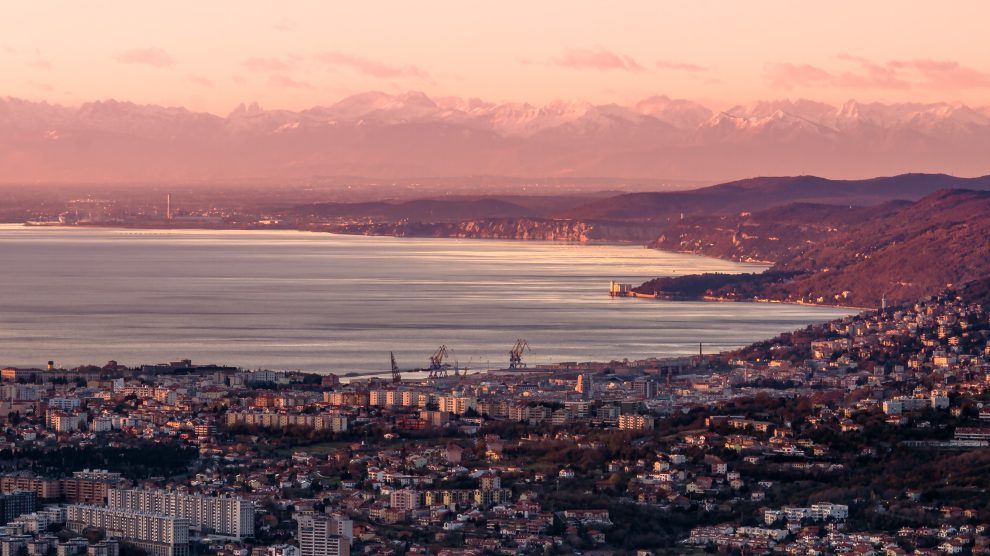
- The India–Middle East–Europe Corridor, she said, “would allow our economies and companies to unleash enormous potential, and Italy intends to play a leading role.” Meloni added that Italy can rely on “a crucial hub like Trieste, the northernmost port of the Mediterranean and a historic maritime gateway to the Balkans and Central and Eastern Europe.”
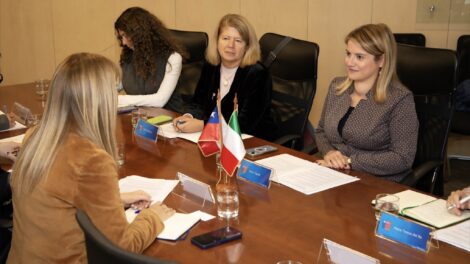
State of play: The Indo-Mediterranean Business Forum is taking place in Trieste, marking the first international conference entirely dedicated to the Indo-Mediterranean region and to IMEC’s role as both an economic and political driver.
- The Forum gathers ministers, deputy ministers, CEOs, and port authorities from Europe, the Mediterranean, India, and the Gulf — consolidating Trieste’s position as a strategic venue for Indo-Mediterranean dialogue. Topics include:
- The convergence among IMEC, the Mattei Plan, and Global Gateway;
- The status of the EU–India FTA;
- Technical analysis of Mediterranean trade routes (with a focus on the Adriatic);
- The connectivity enabled by the Three Seas Initiative, which could align with IMEC, could offer Italy — via Trieste — a significant competitive advantage.
- Italian government presence:
- Luca Ciriani, Minister for Parliamentary Relations
- Edoardo Rixi, Deputy Minister for Infrastructure and Transport
- Vannia Gava, Deputy Minister for Environment and Energy Security
- International representation:
- Filip Radulović, Minister of Transport and Maritime Affairs of Montenegro
- Denisa Žiláková, Deputy Minister of Infrastructure and Transport of Slovakia
- Delegations from Croatia, Hungary, Serbia, and Poland
- Industrial and logistics stakeholders
- Port authorities from Trieste, Koper, and Rijeka, and industrial groups including Fincantieri, Cosulich, Technital, Sparkle, ICOP, as well as companies from Israel, Turkey, India, Morocco, and Gulf countries.
What they’re saying: According to Francesco S. Parisi, president of the historic Parisi Shipping Group and head of the Trieste Summit Association, the Forum confirms the growing strategic relevance of Trieste in global connectivity networks:
- “Trieste, as the northernmost port of the Mediterranean and already better connected than any other port to Central-Eastern Europe, strengthens its candidacy as IMEC’s European gateway.”
- On competition among ports: “It is absolutely normal to have competitors — it shows that the corridor is viewed as a significant generator of new activity, not just by us. And there will be multiple endpoints: no one will go to Madrid from Trieste, just as no one will go to Budapest from Marseille. Each endpoint will have major spillovers across a wide basin of ports.”
- On the broader significance for the region: “There is a growing awareness of the potential importance of Indo-Mediterranean trade for our territory, including in high-value-added activities; international guests understand that local entrepreneurs are committed and ready to work hard; and government representatives confirm their commitment to IMEC and to Trieste.”
Between the lines: The Indo-Mediterranean map is rapidly Europeanizing. Central and Eastern Europe, the Balkans, and countries within the Three Seas Initiative see IMEC as a strategic tool to diversify trade routes and partnerships — especially amid instability in the Red Sea.
The bottom line: Trieste is emerging as one of the most credible European terminals for IMEC. The Forum reinforces the notion that Italy can play a decisive role in shaping the new connectivity architecture linking India, the Gulf, and the Mediterranean.