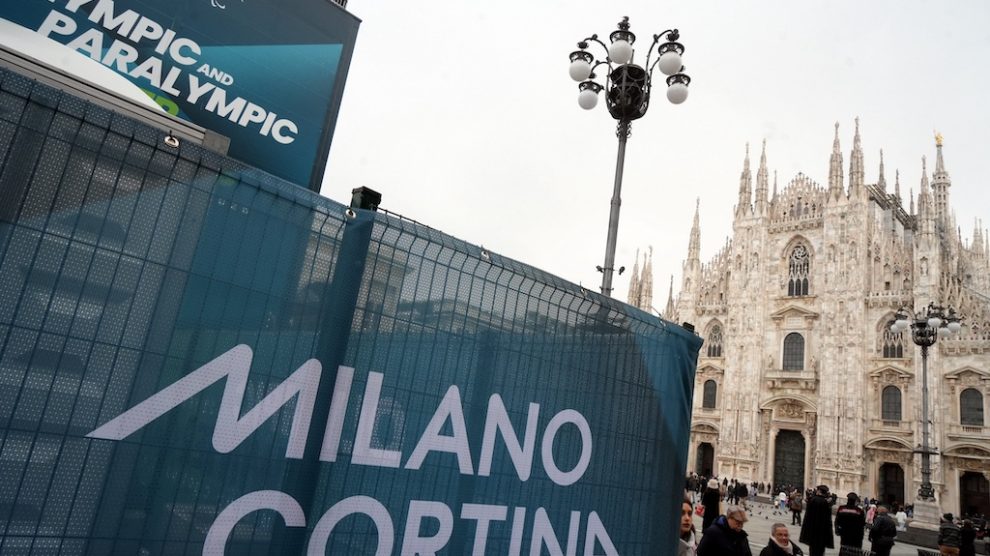
As Milan–Cortina approaches, a technical component of the Olympic security architecture has become the trigger for a broader political clash. Slogans, mobilisations, and alarmist narratives have elevated ICE into a symbol, often detached from its real mandate. In a climate of renewed anti-American rhetoric and systemic tensions, the risk is that noise replaces facts—obscuring both the operational logic of security cooperation and the vulnerabilities large events inevitably generate.
Why he matters: Arije Antinori is Professor of Criminology at Sapienza University of Rome and an expert at the EU Knowledge Hub for the prevention of radicalisation. His work focuses on extremism, security governance, and the dynamics of infiltration within protest movements, placing him at the intersection of academic analysis and real-world security assessment.
Q: The presence of ICE in the Milan–Cortina security framework has sparked political controversy. Why, in your view, is there so much confusion around its role?
A: It is first necessary to clarify some basic facts about ICE’s projection in Italy. What I am seeing are distorted reconstructions that fail to explain either the agency’s actual mandate or its operational reach. ICE is being portrayed as an omnipresent operational force, which it is not. This kind of narrative creates misunderstanding rather than clarity.
Q: How should ICE be understood within the broader U.S. security and intelligence system?
A: One of the core problems is the limited public understanding of the complex ecosystem of agencies that make up the U.S. security and intelligence architecture. ICE is embedded within the Department of Homeland Security and carries, among other things, a national-security mandate. It is neither an isolated body nor an anomalous one.
Q: When ICE operates outside U.S. territory, what kind of activities does it actually perform?
A: This is a crucial point. When ICE works abroad, it is no longer acting solely as ICE in the narrow sense. Its activities fall within the perimeter of Homeland Security Investigations: analysis, research, logistical support, information sharing, and the protection of infrastructure, including in the cyber domain.
Q: So there will be no ICE agents patrolling Italian cities during the Olympics?
A: We should avoid misleading narratives. There will be no ICE agents patrolling Italian streets. Saying that “three ICE agents are arriving” as if it were an invasion is a simplification that helps no one. What is being done with ICE today is something Italy has been doing for years with the FBI.
Q: Beyond recent events in the United States, why has ICE become such a focal point of political attention?
A: ICE has been turned into a propaganda tool. It has ended up at the centre of the storm, even though the activity planned for Milan–Cortina is exactly the kind of cooperation that would have taken place with the FBI. What we are seeing is a political and distorted use of an agency that has existed for decades.
Q: Is there also a form of historical amnesia in this debate?
A: Absolutely. ICE was active even during the Obama administration. Today it is presented as a disruptive novelty, but that is an artificial representation. International cooperation on security matters did not begin yesterday.
Q: Milan–Cortina is a high-exposure event. How does that factor into security assessments?
A: Any major event represents a potential window for destabilisation. The Olympics are, by definition, a symbolic target. This is precisely why Italian intelligence is doing solid work, focusing on prevention and on identifying weak signals before they escalate.
Q: Does this debate reflect a broader resurgence of anti-American sentiment?
A: Yes, we are witnessing a re-emergence of anti-American and anti-NATO narratives. These narratives are not new, but they are being reactivated by exploiting high-visibility contexts such as the Olympics.
Q: Dissent is part of democratic life. Where should the line be drawn?
A: Dissent is always legitimate. The problem arises when infiltrations occur within democratic mobilisations and use these events as tools for destabilisation. Demonstrating is lawful; doing so violently is not.
Q: Analysts often focus on traditional antagonistic movements. Is that sufficient?
A: No. Attention should not stop at classic antagonism. There is a much broader spectrum of anti-government and anti-system movements that cut across different fronts. The actors are multiple, and the Olympics can act as a multiplier.
Q: Are you referring to groups such as Askatasuna?
A: We are in a grey zone between party-political confrontation and what lies outside formal politics, where extremist experiences emerge. But these are not closed boxes—these worlds are porous.
Q: What do you mean by “porous”?
A: When we observe these phenomena, we see how relatively easy it is to infiltrate democratic and peaceful movements. Events like the Olympics, combined with the current geopolitical environment, open windows of opportunity both to create new narratives and to recycle old ones.
Q: What is the key message you would leave in this context?
A: Demonstrating democratically is legitimate. Dissent is part of democracy. Channelling it into violence is unacceptable.
The bottom line: The controversy over ICE at Milan–Cortina reveals less about security realities than about the political instrumentalisation of symbols.
- Large events inevitably attract both dissent and attempts at infiltration; the challenge is to distinguish legitimate protest from destabilising manipulation—without allowing propaganda to obscure the operational facts of international security cooperation.