Decoding the news: Rome is positioning itself as a political and industrial stakeholder in the West’s emerging strategy on critical minerals — not as a bystander.
- Foreign Minister Antonio Tajani’s presence in Washington signals Rome’s intent to shape how transatlantic and European coordination on strategic supply chains will take shape.
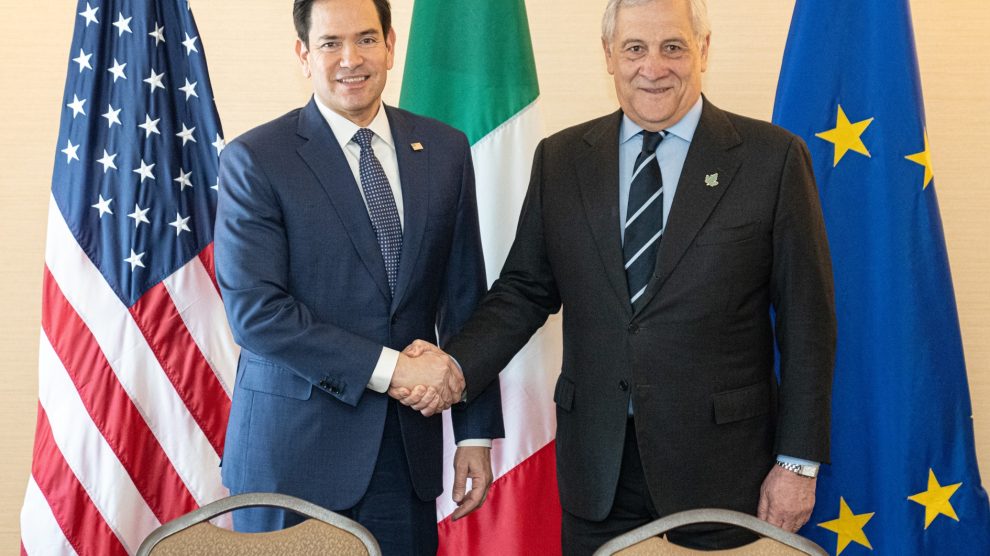
The mission: Italian FM Tajani will be in Washington to take part in the Critical Minerals Ministerial convened by U.S. Secretary of State Marco Rubio and opened jointly with Vice President J.D. Vance.
- More than a diplomatic stop, the meeting marks a turning point in how critical raw materials are treated — no longer as a technical issue, but as a core foreign‑policy and industrial priority.
Driving the agenda: The ministerial will showcase the reconfiguration of the Mineral Security Partnership, set to evolve into a structured multilateral initiative.
- The goal goes beyond alignment among allies: it aims to secure cooperation across the entire value chain—from extraction and processing to recycling and supply‑chain resilience.
- Washington is making explicit a strategy that links economic security, industrial policy, and alliances in response to global technological competition and the politicisation of resources.
Why Tajani matters: Tajani will speak in the opening session as the only Western representative, alongside his South Korean counterpart — a signal of the growing alignment between the Euro‑Atlantic and Indo‑Pacific axes on critical minerals and strategic supply chains, at a moment when policy coordination is still taking shape.
- Rome’s core argument is straightforward: for Europe’s second‑largest manufacturing country and the world’s fourth‑largest exporter, reliable and predictable value chains are not a sectoral concern but a structural condition of competitiveness.
- Critical minerals underpin the energy transition, digital technologies and defence-related capabilities — making them a strategic issue by definition.
Europe’s move: On the eve of the Washington meeting, today, Italy and Germany jointly submitted a political guidance paper to the European Commission on critical raw materials.
- Led by Tajani and his German counterpart, the initiative calls for renewed EU engagement to reduce strategic dependencies and build secure, resilient supply chains for European industry.
- It follows commitments made at the January 23 Italy‑Germany summit and a joint declaration by industry ministers.
Big picture: Tajani’s Washington visit reinforces Italy’s broader line under the Meloni government: supply‑chain security cannot be addressed at the national level alone and requires coordinated transatlantic and European responses.
- The approach mirrors what some analysts describe as a “Pax Silica” logic — stability built not on resource control, but on trusted access to the infrastructures and inputs that sustain technological power.
What to watch: Beyond the ministerial, Tajani will hold talks with Rubio on key international dossiers, from Ukraine to the Middle East and the Indo‑Pacific, underscoring how critical minerals now intersect with wider geopolitical tensions.
- The question is whether Washington’s push will translate into lasting EU‑U.S. alignment—and whether Italy can consolidate its role as a bridge between European industrial interests and the transatlantic security agenda.