

Why it matters: Rome is moving from political messaging to operational partnerships in Africa, with research, innovation and human capital at the core. Kenya is emerging as a testing ground for this shift.
The big picture: Italy’s engagement in Africa is entering a more operational phase.
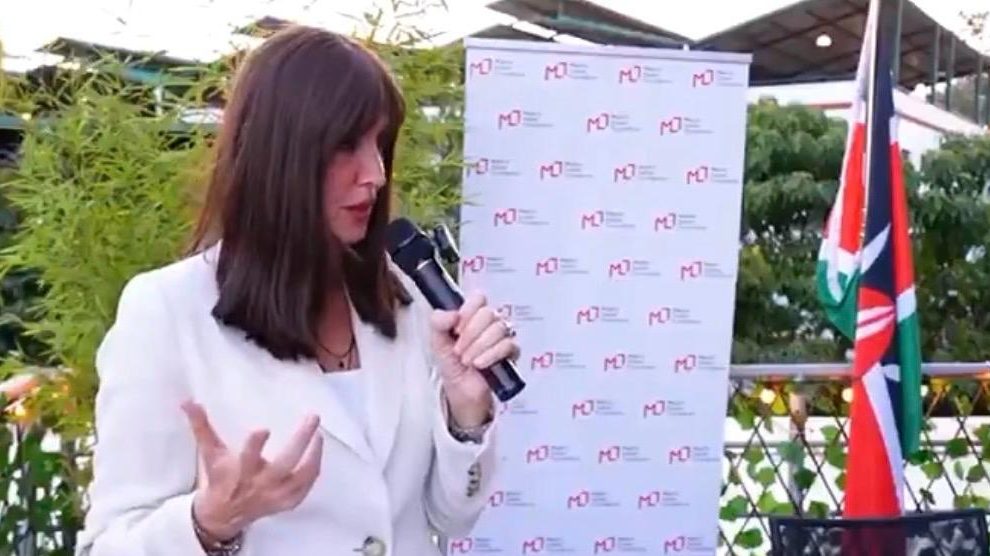
- During a mission to Kenya, Italy’s Minister for Universities and Research Anna Maria Bernini outlined Rome’s push to strengthen scientific, technological and educational cooperation with African partners, while inaugurating Med-Or Italian Foundation’s first overseas office in Nairobi.
- The visit comes at a moment of high diplomatic intensity for Italy–Africa relations, as Rome seeks to anchor long-term partnerships that go beyond aid-based models and focus instead on skills, institutions and shared infrastructure.
What Bernini is doing in Kenya: Bernini’s mission — the first by an Italian minister for universities and research to the country — focuses on expanding cooperation in areas such as space, digital health, green energy and advanced training.
- A key initiative is the Strength project, coordinated by Sapienza University of Rome with the University of Nairobi.
- The programme aims to reinforce African universities’ capacity to design and manage research projects and technology transfer, investing directly in local institutional capabilities.
- Another pillar is the Luigi Broglio Space Centre in Malindi, a long-standing Italian-operated facility that continues to serve as a hub for joint research and training activities.
AI moves from vision to execution: Artificial intelligence is emerging as a central component of this cooperation agenda.
- Bernini’s visit coincides with the Nairobi AI Forum, framed not as a traditional conference but as an execution-oriented working platform focused on infrastructure, cross-border partnerships and access to finance.
- The goal: move beyond fragmented pilot projects and build scalable, context-specific AI systems aligned with local energy availability, skills and market needs.
Where Med-Or fits in: Against this backdrop, Bernini inaugurated Med-Or Italian Foundation’s first foreign headquarters in Nairobi.
- The new office is designed as an operational platform for Africa-oriented activities, allowing Med-Or to maintain a permanent presence on the ground, coordinate projects and deepen engagement with local governments, institutions and private-sector actors. Nairobi was chosen for its role as a regional diplomatic, technological and economic hub for East Africa.
- Bernini described Med-Or’s role as “a concrete investment in training, knowledge and innovation,” highlighting the value of linking public institutions, research and industry to support sustainable economic and social transformation.
Inside Med-Or’s Africa strategy: Speaking at the opening, Umberto Tavolato, Med-Or’s director of Special projects, framed the Nairobi office within a broader geopolitical vision.
- “In today’s world of uncertainty, the global order as we know it has effectively ended,” Tavolato said. “We face a choice: either a new international order is built for us, or we take part in building it ourselves — with Africa, in Africa.”
- He pointed to Med-Or’s growing portfolio across the continent, including agricultural and post-conflict reintegration projects in Ethiopia, institutional and diplomatic training in Somalia, and cybersecurity capacity-building programmes involving officials from 11 African countries, Kenya included.
- In Kenya, Med-Or is focusing in particular on blue economy and climate-related initiatives, with the Nairobi office acting as a coordination and delivery hub.
The bottom line: Italy’s Kenya mission signals a broader strategic shift: combining research, innovation and operational presence to build long-term partnerships in Africa.
- The opening of Med-Or’s Nairobi office underscores Rome’s intent to translate political ambition into sustained, on-the-ground capacity.