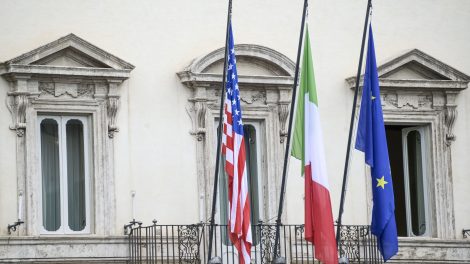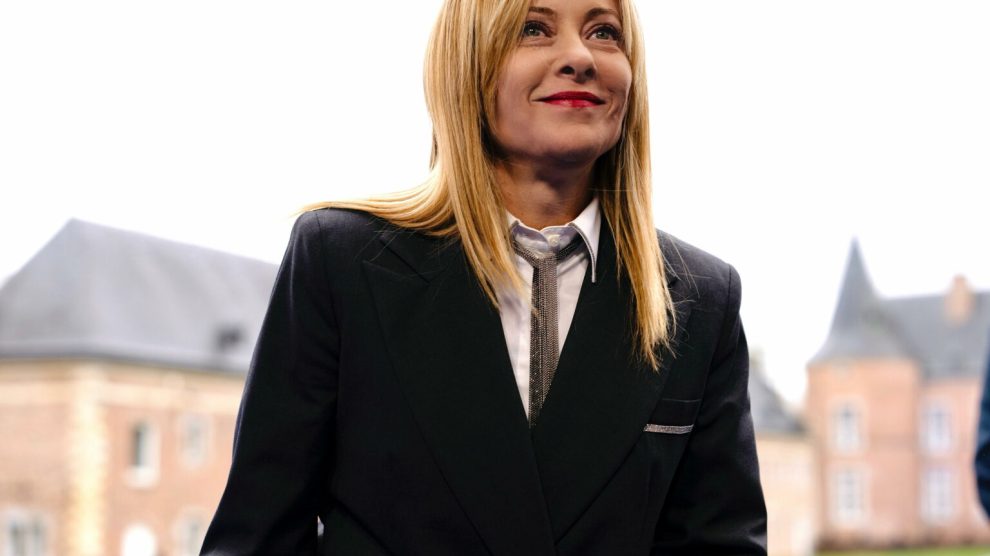
The pre-meeting that gathered 19 countries, including Italy, ahead of the 27-member informal session. Alongside Italy, Germany, Belgium and the European Commission, participants included Austria, Bulgaria, Cyprus, Croatia, Denmark, Finland, France, Greece, Luxembourg, the Netherlands, Poland, the Czech Republic, Romania, Slovakia, Sweden and Hungary.
What’s on the table: Leaders focused on three priorities outlined in a discussion paper prepared by Italy, Germany and Belgium: completion of the Single Market; regulatory simplification and lower energy prices; and an ambitious, pragmatic trade policy. Particular attention was devoted to initiatives aimed at reviving Europe’s industrial base, starting with a swift revision of emissions taxation mechanisms (ETS and CBAM), as well as ensuring rapid and faithful follow-up to the political priorities set by the European Council.
- PM Meloni spoke of a “relaunch in relations” and in coordination capacity between Italy and Germany in the current European political phase, stressing the “very positive” role played by Chancellor Merz.
- “I am grateful to Friedrich, because we are doing good work together,” she said.
Against bureaucracy, for competitiveness. The debate also featured criticism of EU bureaucracy, which the prime minister argued has “far exceeded” its role. The new format aims to establish structured coordination so that the European Council provides clear guidance to the Commission, which in turn can rely on those indications to “rein in a bureaucracy that in Europe is far exceeding its role.”
- According to Italian sources, “Leaders agreed to meet again already on the margins of the March European Council to keep competitiveness high on the agenda and help define concrete objectives and precise deadlines.”
- European Council President Antonio Costa described 2026 as “the year of EU competitiveness,” identifying four priorities: deepening the Single Market; increasing the size of European companies, including large ones, through more vibrant capital markets; pursuing a proactive trade policy; and investing more and better, with both private and public capital.
Decoding the news: The new Italy-Germany-Belgium format aims to create permanent political coordination on competitiveness, replicating the model already tested on migration.
- The message is twofold: strengthen the Rome-Berlin axis and reassert the European Council’s central role in political guidance, with closer oversight of the Commission’s action.
What they’re saying:
- In an interview with our sister website Formiche, majority MP Giangiacomo Calovini said he expects “An Europe that protects, that innovates, that supports those who create value. After difficult years, I believe we are finally seeing the light at the end of the tunnel. With Meloni and Merz, the possibility opens for a new European political phase: more concrete, closer to citizens, and above all more competitive in the world.”
- In another interview with Formiche, ECR MEP Elena Donazzan said that “Italy is functional to German industry and German industry needs our long supply chain, which is very territorially concentrated and therefore easier to manage. I view this coming together very positively, given a history of complementary production chains between Italy and Germany. We are not competitors, we are allies.”
The bottom line: In a recent op-ed on Decode39, German Ambassador to Italy Thomas Bagger described 2026 as a rare “year of opportunity.”
- He wrote: “As Ambassador of Germany to Italy, I look with confidence to 2026, a rare ‘year of opportunity’ in which the shared interests and strong political will of our leaders can provide Europe with a much-needed spark of energy and optimism in a complex and challenging geopolitical context.”
- Go deeper: How Rome and Berlin view the Indo-Mediterranean.