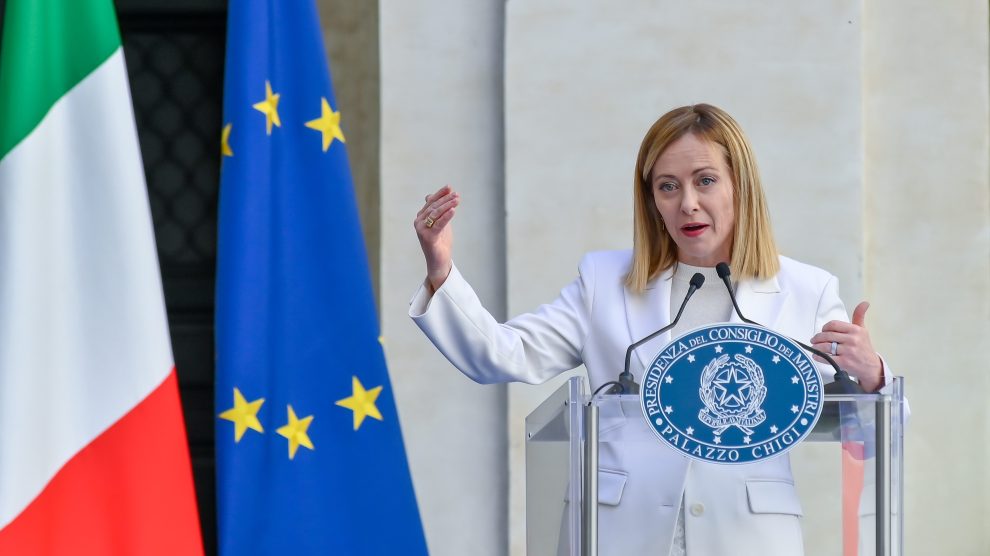
The today’s Italy–Africa Summit represents for Italy an opportunity to reaffirm its commitment to African growth and further strengthen its partnership with the African continent. The meeting will offer Prime Minister Giorgia Meloni the opportunity to consolidate the objectives of the Mattei Plan two years after its official launch and to demonstrate to African and international partners that, through steady funding and large-scale projects, Italy has given concrete shape to its vision.
Only last year, the Mattei Plan implemented projects in key sectors, including energy, water, agriculture, and infrastructure, worth about €1.4 billion. These included financing from international organisations such as the United Nations Development Programme and the World Bank, African institutions such as the African Development Bank, and also Gulf states such as the United Arab Emirates. Fundamental to Italy’s integration with the EU’s Global Gateway has been the European Commission’s announcement of over €100 billion in funding under the instrument, to be allocated to Mattei Plan projects across the African continent.
A good combination of national and European policies that positions Italy as a leader in EU policy toward the continent.
The innovation of these initiatives lies above all in the way the narrative departs from the past: the emphasis is on co-creation, rather than on “saving Africa,” focusing on how Europeans can help channel financial support and know-how to sustain African development.
In geopolitical terms, the Mattei Plan helps the EU outline a concrete and ambitious offer to the region, which is unlikely to match the scale of Russian and Chinese engagement. Still, it is supported by positive results, including a strong human dimension that goes beyond migration. Italy and the EU must do more to promote this type of narrative across the continent, given the persistence of a certain degree of scepticism among African interlocutors about the intentions underlying European support.
This policy also appears to fit well with the Meloni–Merz duo’s vision of the need to establish priority trade and industrial agreements with emerging regions of the globe, from Latin America to India and, in particular, Africa.
This summit will be crucial in shaping this type of discourse. Italy will also use the meeting, which will take place in Africa for the first time, as an opportunity to illustrate the future direction of the Mattei Plan.
In this sense, Meloni will likely project the Mattei Plan first and foremost as a national strategy. In doing so, she should also insist that it is rooted in the broader European policy for Africa, thereby demonstrating Italy’s key role in shaping the Union’s cooperation with the continent. Meanwhile, Italy should use the summit to underline to European interlocutors that economic engagement should also translate into greater attention to security issues, such as the presence of armed groups in the Sahel, which have direct consequences for development investments and increase instability, pushing people away from their countries of origin. If security objectives are not consistent with the strategy, economic objectives will also remain unmet, and Italy, as well as Europe as a whole, will be forced to chase the consequences of political and security crises.