Why it mattars: Global electricity demand is accelerating faster than overall energy consumption, driven by artificial intelligence, data centres, electrification and industrial reshoring — forcing major utilities to concentrate investments in the most dynamic markets.
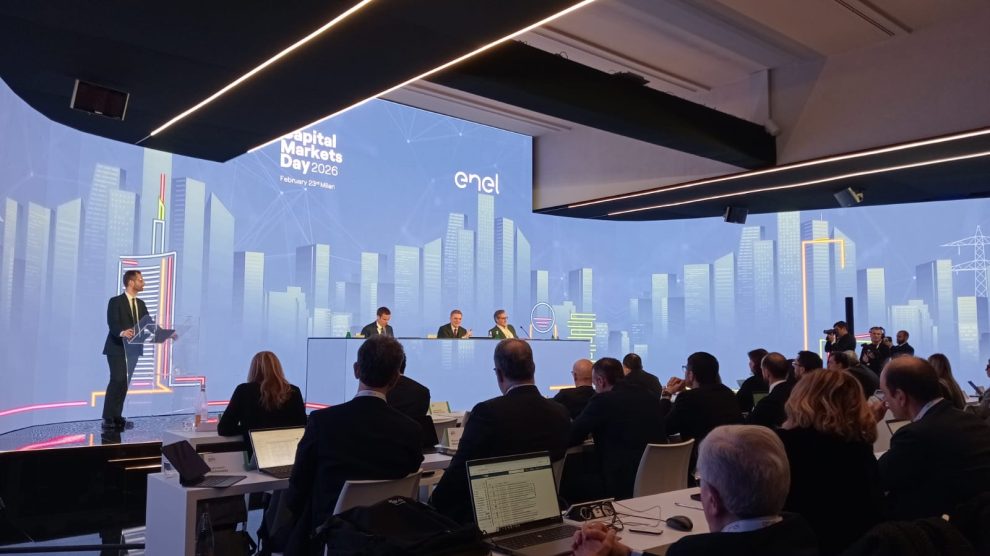
Driving the news: Italy’s Enel presented its 2026–2028 industrial plan with a clear priority: expanding in fast-growing electricity markets, led by the United States but also including Australia, Canada, Germany, Chile and South Africa.
- CEO Flavio Cattaneo indicated that the U.S. remains a strategic and stable market despite political uncertainty, citing rising power prices and surging demand linked to AI infrastructure.
By the numbers:
- Global electricity demand will grow 3.6% annually between 2026 and 2030, according to the International Energy Agency
- That pace is 50% faster than the previous decade
- Demand will rise from 28,200 TWh in 2025 to 33,600 TWh by 2030
- Electricity consumption will grow at least 2.5 times faster than total energy demand
Electricity demand is also expected to outpace global GDP growth through 2030.
The big picture: Utilities are repositioning around a world increasingly powered by electricity rather than fossil fuels.
- Key drivers include:
- Artificial intelligence and data centres
- Robotics and automation
- Electrification of transport
- Industrial recovery
- Cybersecurity infrastructure
- Rising defense spending
Some regions are moving faster than others — particularly the United States.
What Enel is doing:
- Signed agreements with Excelsior Energy Capital to acquire 830 MW of wind and solar capacity in the U.S.
- Previously reached a power purchase agreement with Meta for 115 MW from the Rockhaven wind farm in Oklahoma
The company plans to accelerate growth by focusing on the most dynamic geographies, according to its strategic plan.
What they’re saying — Cattaneo on global markets:
- In the United States: “The U.S. is not a risky market for the sector — on the contrary, we consider it an excellent market because prices are rising and consumption will restart more quickly with data centres for Artificial Intelligence.”
- He added that the market is stable because, beyond Trump’s statements, investments take much longer than political cycles, and that energy is needed now, so strategy cannot be based on the president currently in office.
- Cattaneo said Enel sees multiple promising markets beyond the United States: “We consider other markets promising, in addition to the American one. Some are far away, such as Australia; others are closer, like Germany. But there is also Canada. Australia, for example, performs quite well — there is strong growth — and so does South Africa.”
- He said that in Europe, Germany remains an excellent market and that Chile will also be one, describing it as “a stable country where there has been an important political change, with less populism.”
- Brazil: stay and expand. Cattaneo also dismissed speculation about a possible exit from Brazil:
- “In Brazil, we are not interested in selling. On the contrary, I hope we will be given the possibility to invest further in the country.”
- He said the company has met all criteria for the electricity grid concession and described how São Paulo’s overhead network runs through trees, causing repeated damage during extreme weather events that crews must continually repair.
- He added that burying the network would be very costly and cutting trees has environmental implications, so Enel has proposed replacing them with lower vegetation to create electric corridors, noting they are about to send a letter to President Lula and stressing that “there is a market, and there are rules — Enel has respected them and will not be unfairly pressured.”
The bottom line: As artificial intelligence and electrification reshape the global economy, utilities like Enel are pivoting toward markets where electricity demand is rising fastest and regulatory conditions allow long-term investment.