Italy’s national security is no longer defined only by its borders.
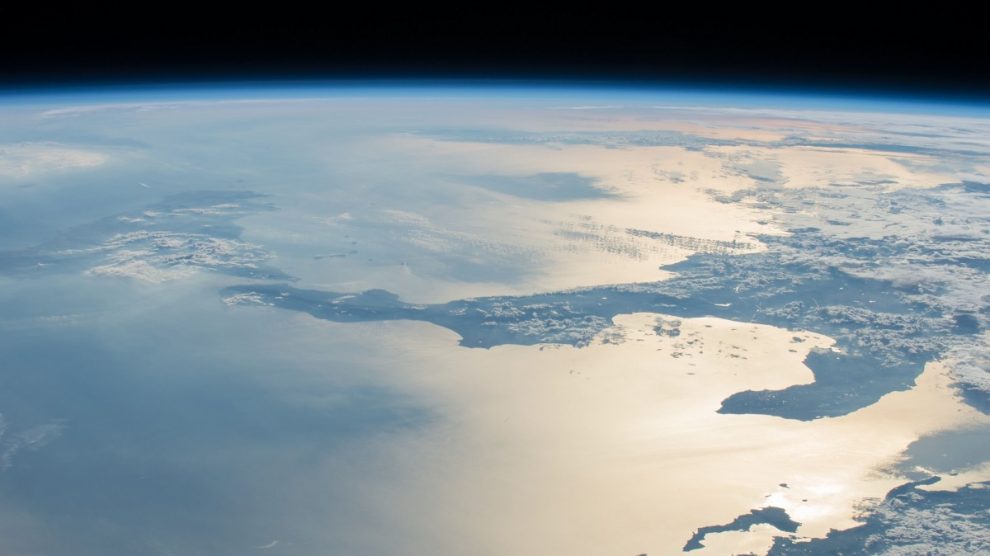
The big picture: According to the intelligence report presented in Rome, it now unfolds across a vast geopolitical space that connects the Mediterranean, the Middle East, and the Indo-Mediterranean corridor.
- In this environment — shaped by great-power competition and persistent “below-threshold” conflicts — Europe’s Southern Flank is becoming one of the world’s most volatile regions.
- Recent events have made that assessment even more relevant.
- The military escalation between the United States, Israel and Iran has expanded tensions from the Persian Gulf to the Levant and the Eastern Mediterranean — reinforcing the intelligence community’s warning about a widening arc of instability across the Indo-Mediterranean space.
The Iran factor. The Persian Gulf is emerging as the most critical theatre.
- The report had already identified a turning point in 2025 with the so-called “Twelve-Day War”, the U.S.–Israeli military campaign against Iran’s nuclear program.
- But the latest developments have pushed the confrontation to a new level.
- Joint U.S. and Israeli strikes targeted military and strategic infrastructure inside Iran, culminating in the killing of Supreme Leader Ali Khamenei and the subsequent elevation of his son Mojtaba Khamenei under the influence of the Islamic Revolutionary Guard Corps.
- Iran’s response has quickly expanded beyond its borders.
- Tehran has launched retaliatory attacks against U.S. and allied infrastructure across several Gulf countries — transforming the confrontation into a wider regional crisis.
Why sea lanes matter. For Italy, the implications are immediate.
- The intelligence report highlights that threats to maritime security — particularly along the energy corridor passing through the Strait of Hormuz — could disrupt global supply chains and energy flows.
- Iran’s retaliatory posture and the persistent threat posed by the Houthis in the Red Sea turn maritime chokepoints into strategic pressure points.
- For a country like Italy — heavily dependent on maritime trade and energy imports — protecting these routes is a national priority.
- According to the intelligence assessment, the deployment of Italian naval assets in international missions across the region is therefore not merely tactical. It reflects a long-term strategic imperative to protect Euro-Atlantic trade routes.
Rome’s response. The Italian government has already begun preparing for potential fallout and assessing possible impacts on energy markets and supply security.
- At the same time, Italy has intensified diplomatic outreach across the region.
- PM Giorgia Meloni has been in contact with leaders in Saudi Arabia, the United Arab Emirates, Qatar, and Kuwait, while coordinating with European partners and EU institutions to contain escalation and safeguard energy corridors linking the Middle East to Europe.
The Levant: a fragile balance. The intelligence report also highlights growing instability in the Levant.
- Following the Sharm El Sheikh Peace Plan, Gaza has entered a complex transitional phase focused on governance and reconstruction — both of which depend on the critical condition of Hamas’ disarmament.
- In Lebanon, the fragile ceasefire reached along the Blue Line in November 2024 now appears increasingly precarious.
- Israel has intensified strikes against Hezbollah targets in Beirut and launched a limited ground operation in southern Lebanon aimed at establishing a buffer zone between Iranian-backed militias and Israeli northern communities.
- According to the United Nations, the fighting has already displaced roughly 30,000 people, while the UN peacekeeping mission UNIFIL has begun evacuating non-essential personnel.
- Meanwhile, Syria’s post-Assad transition remains highly uncertain. The new transitional government in Damascus faces the challenge of managing sectarian tensions, countering potential ISIS resurgence and rebuilding the country’s shattered infrastructure.
The Sahel: Russia fills the vacuum in Africa. Further south, the report identifies the Sahel as another critical front.
- Western influence in Mali, Burkina Faso and Niger has sharply declined following a series of coups and the withdrawal of Western military missions.
- Russia has moved quickly to fill the vacuum by deploying the Afrika Corps, expanding its influence across the region.
- For Italy and Europe, the consequences are significant.
- The intelligence report warns that the combination of jihadist expansion, economic fragility and rapid population growth in North African and Sahelian countries could trigger new migration pressures toward the Central Mediterranean route.
- These structural dynamics also challenge Italy’s broader Africa strategy, including the government’s flagship Mattei Plan.
The bottom line: The intelligence assessment paints a clear picture: crises across the Wider Mediterranean are no longer isolated.
- Instability in the Sahel, tensions in the Levant and confrontation with Iran are increasingly interconnected — all unfolding within a broader landscape of geoeconomic competition and great-power rivalry.
- In what Italian Prime Minister Giorgia Meloni increasingly describes as the “Global Mediterranean,” the challenge for Europe is to move beyond reactive crisis management.
- Instead, the region now requires a long-term political, economic and security strategy capable of addressing the interconnected risks shaping the Indo-Mediterranean space.