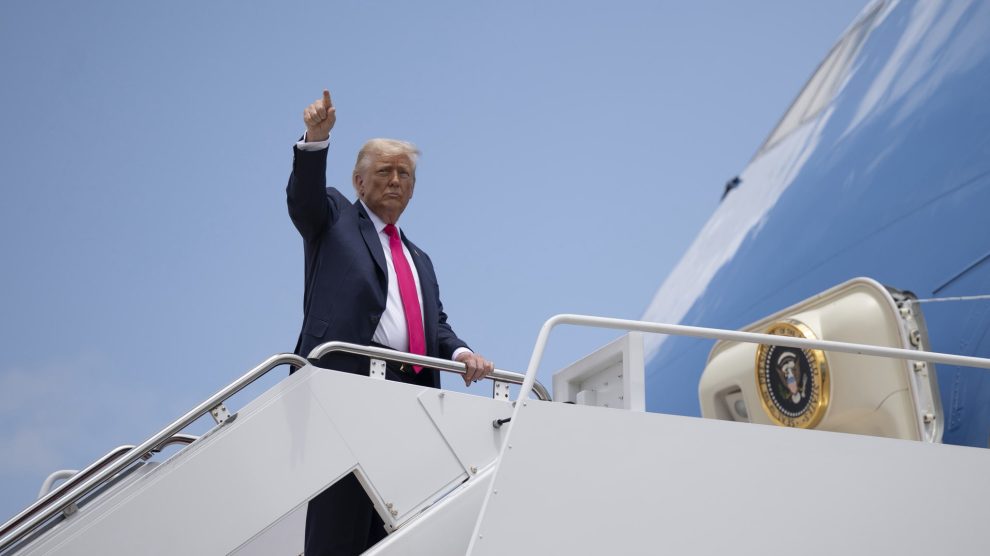
The 2026 Annual Report of the Italian intelligence community describes the relationship with the United States as a central pillar of Italy’s security architecture, even as global balances shift and the need for greater European strategic autonomy grows. From the report, several key dimensions of the bilateral and transatlantic relationship emerge.
Intelligence Cooperation and Threat Attribution. The year 2025 marked a significant moment of operational alignment between Italian and U.S. intelligence.
- For the first time, Italy joined the United States and other Western partners in publicly attributing a global cyber-espionage campaign conducted by the group “Salt Typhoon” to China.
- This joint attribution signalled a deeper level of political and intelligence coordination.
- Information sharing between Rome and Washington also remains strong in monitoring common threats, particularly Iran’s nuclear and missile programs and the evolution of global terrorist networks.
Geopolitical Coordination and Crisis Theatres. The United States remains Italy’s primary strategic partner in managing international crises, though the report highlights emerging shifts.
- In the Ukraine conflict, intelligence analysts suggest that Europe may need to compensate for a potential “anaemia” in U.S. assistance during 2026, assuming a more central role in supporting Kyiv.
- In the Indo-Pacific, Italy maintains close alignment with Washington’s approach to China. The report notes Rome’s attention to tariff recalibrations introduced by the U.S. administration and to high-level U.S.–China dialogue aimed at managing trade tensions and stabilising the Taiwan Strait.
- In the Middle East, regional security continues to revolve around the confrontation between Tehran and Washington, with particular focus on U.S. efforts to reduce Iran’s missile capabilities and regional power projection.
Competition and Security in Emerging Domains. The report underscores the United States’ clear strategic advantage in several frontier technological sectors, areas in which Italy seeks greater integration.
- In both the undersea domain and space, the United States is described as the most mature and comprehensive power. Italy aims to strengthen its role through a “bridge strategy,” leveraging national industrial assets — such as the pressurised modules for the Gateway lunar station — to connect American and European technical architectures.
- In artificial intelligence, the report highlights a “structural dualism” between the U.S. model, driven largely by private capital (with $109 billion invested in 2024), and China’s state-led approach. Italian intelligence closely monitors the U.S. lead in advanced algorithms and quantum technologies.
Economic Warfare and Strategic Autonomy. The report also offers a critical assessment of the impact of U.S. economic policies on the Italian system.
- It notes a “clear acceleration” in the use of horizontal tariffs by Washington — including measures announced during “Liberation Day” in April 2025 — as instruments of negotiating pressure. These dynamics, the report suggests, push Italy and the European Union to adopt derisking strategies to protect critical supply chains.
- At the same time, the intelligence community is monitoring risks associated with reliance on foreign digital infrastructure, including cloud services and software provided by major hyperscalers. In response, the report highlights the European push for “sovereign cloud” models to ensure the localisation and control of national data.
The bottom line: The 2026 intelligence report portrays a relationship with the United States defined by enduring Atlantic loyalty in the fields of security and intelligence. At the same time, it reflects a growing strategic awareness in economic and technological domains, as Italy seeks to safeguard its national interests within a broader European framework.