“Conflict has returned to the centre of international affairs, from Ukraine in recent years to the Middle East in recent weeks.”
A world under strain. Opening his lecture at an event organised by Med-Or Italian Foundation at Luiss Guido Carli, Kenya’s president, William Samoei Ruto, framed his remarks within a global environment marked by mounting instability. Trade routes, he noted, have regained strategic relevance, while security “is no longer confined to territorial borders”, extending into cyberspace, energy systems and critical infrastructure.
- To this he added the accelerating pace of technological change and the increasingly tangible impact of climate pressures. In such a fragmented landscape, the central question becomes what defines a capable state today.
- “My proposition is that it rests on at least five core attributes: responsiveness, collaboration, innovation, resilience and ambition,” he said, in remarks delivered on the sidelines of the Italy–Kenya intergovernmental summit, itself part of a broader strategic partnership under Rome’s Mattei Plan.
Redefining state capacity. Ruto’s answer was not abstract but operational. Each of these attributes corresponds to a practical approach to governance.
- “A responsive state listens and acts with clarity and speed. A collaborative state recognises that no nation succeeds alone.”
- Innovation, he added, is not simply about regulating technology but about harnessing it to deliver outcomes. Resilience lies in the ability to absorb shocks without systemic disruption. At the centre of this framework is ambition: “no nation rises beyond the reach of its vision.”
Kenya beyond the stereotype. From this conceptual framework, Ruto moved to Kenya’s national trajectory.
- “Kenya is far more than this. It is a dynamic, forward-looking nation at the centre of Africa’s transformation.”
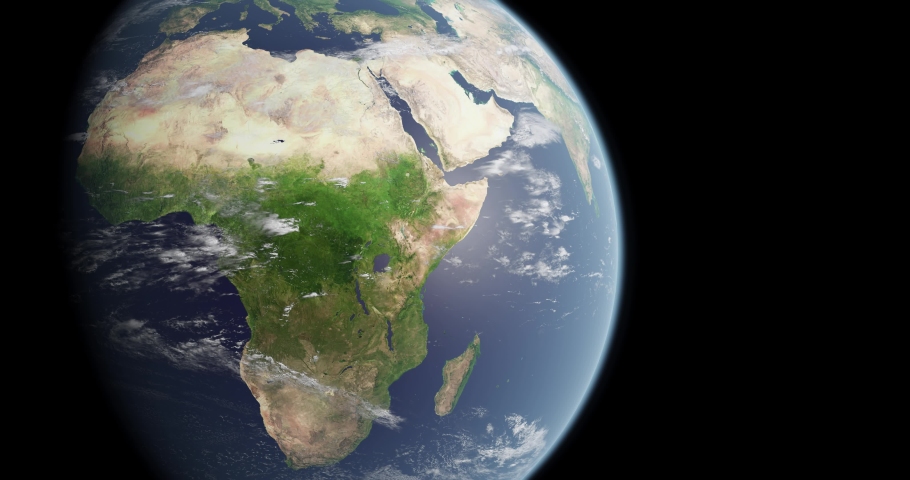
- Located along the Indian Ocean at the intersection of routes linking Africa, the Middle East, Asia and Europe, the country presents itself as both a geoeconomic and political hub. With a population of more than 55mn — “predominantly young, educated and ambitious” — Kenya is pursuing a deliberate path anchored in reform and resilience.
- Over the past three years, Ruto noted, the country has strengthened foreign exchange reserves, stabilised its currency, reduced inflation and restored investor confidence. Social indicators have also improved, with access to public health insurance rising “from fewer than eight million to 30 million” people.
The Silicon Savannah. Technology is a central pillar of this transformation.
- “As Africa’s Silicon Savannah, it is a hub of innovation, where digital solutions are developed and scaled for real-world impact.”
- From mobile finance platforms such as M-Pesa to digital public services, innovation in Kenya is described as practical and inclusive. The government is redesigning administrative systems to make them “more accessible, more transparent and responsive through digital transformation”.
Infrastructure, energy and industrialisation. Ruto then turned to policy priorities, outlining three pillars: infrastructure, agriculture and energy.
- “We are undertaking a rapid expansion of transport and connectivity infrastructure,” he said, pointing to plans to double the paved road network and modernise ports and airports. Connectivity, he stressed, “is the backbone of economic transformation”.
- On agriculture, the focus is on food security and large-scale irrigation, including the construction of “at least 15 mega-dams”. Energy forms the third pillar, with a plan to “more than triple” installed capacity within seven years to support industrial growth.
- This model is underpinned by partnership-based financing, particularly public-private partnerships, aimed at mobilising both domestic and international capital.
Africa in the global system. From the national level, Ruto expanded his focus to the continent.
- “Africa must stand at the forefront of the global order, shaping its direction and defining its future.”
- The African Continental Free Trade Area represents, in this view, a key instrument for economic integration and industrial expansion. Yet a structural imbalance persists, with exports still heavily concentrated in raw materials.
- “For partners such as Italy and the European Union, this represents a strategic opportunity. The EU is already Africa’s largest trading partner, yet much of this trade remains concentrated in raw materials — an imbalance we must urgently address together.”
From extraction to co-production. At the core of Ruto’s message is a redefinition of Africa’s relationship with external partners.
- “We seek partnership that invests in production within Africa, creating jobs in our continent and delivering sustainable returns for investors.”
- Industrialisation, he argued, is essential to absorb a rapidly expanding workforce — up to 12mn young people entering the labour market each year — and to transform demographic pressure into economic opportunity.
A necessary reform. Ruto closed with a critique of the global financial system.
- “Today, African countries face disproportionately high costs of capital … as a result of structural biases in global risk assessment.”
- In his view, the international financial architecture reflects outdated balances and must be reformed to ensure fairer access to capital. On climate, he outlined a dual dynamic: immediate economic costs, but also long-term opportunities linked to the energy transition.
A continent at the centre. Taken together, the lecture outlined a coherent vision linking domestic reform, regional integration and global rebalancing.
- “The question is not whether Africa will shape the future, but whether we will build that future together.”
- In Rome, the message was unambiguous. Africa no longer sees itself as a peripheral actor in the international system, but as one of its central pillars — and is calling for partnerships that reflect that shift.