A market too large to ignore. Italian policymakers and business leaders are increasingly converging on a single point: India represents an opportunity that cannot be missed. With a population of roughly 1.5bn, the country is seen in Rome as a potential engine capable of significantly expanding — even doubling — Italian exports over time.
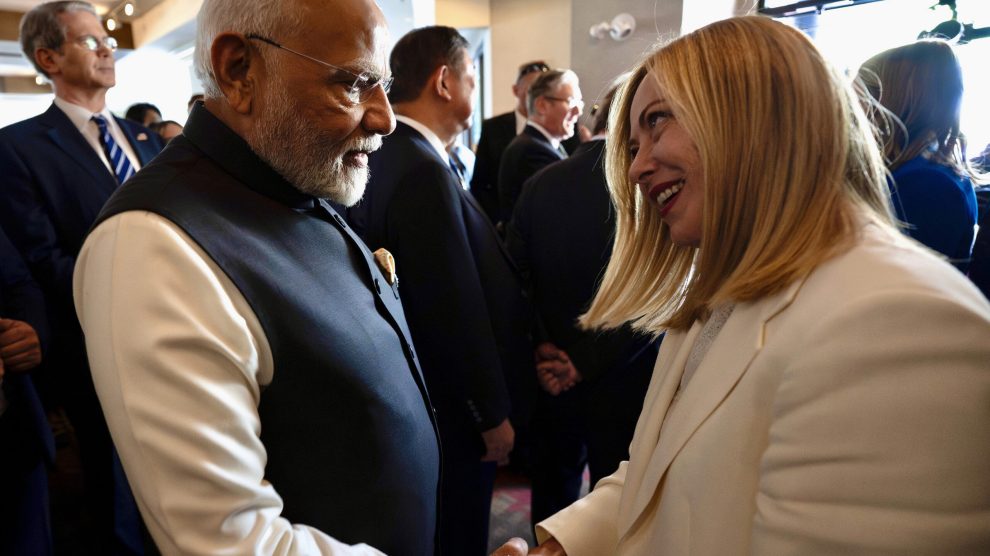
- This strategic outlook is underpinned by the Italy–India Action Plan 2025–2029, signed in November by Prime Minister Giorgia Meloni and her Indian counterpart Narendra Modi.
- The framework aims to deepen cooperation across a range of sectors, from investment and industrial partnerships to space and connectivity.
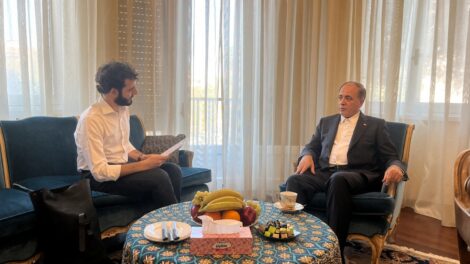
- Speaking at the “India–Italy: Business Partner, Brighter Future” forum held in Milan on Wednesday — which also featured India’s ambassador to Italy, Vani Rao — Emanuele Orsini, president of Confindustria, framed the push for stronger economic ties as both an opportunity and a necessity.
- A trade agreement with India, he argued, has become increasingly important in light of broader geopolitical tensions, offering European economies a pathway to diversify markets and reduce exposure to instability elsewhere.
From political alignment to industrial partnerships. The strengthening of Italy–India relations reflects a broader alignment at the political level, particularly through sustained engagement between Meloni and Modi. That political groundwork is now translating into more tangible industrial and commercial initiatives.
- A case in point is the agreement between Iveco Group and Tata Motors, announced last year, under which the Indian company is set to acquire Iveco’s commercial vehicle business, excluding its defence division.
- The deal is expected to create a global player in the sector and is widely seen as a model for future bilateral industrial cooperation.
- For Italian industry, such partnerships are not only about market access but also about building long-term industrial bridges between the two economies.
- The emphasis, business leaders argue, is on reciprocity and on creating conditions that allow Italian companies to remain competitive while expanding abroad.
The role of “Sistema Italia.” Public financial institutions are playing a central role in supporting this outward push. Sace, Italy’s export credit agency, and Simest, which specialises in internationalisation support, are both expanding their footprint in India.
- Sace has mobilised significant resources to back Italian companies abroad, including sovereign guarantees and risk-mitigation tools.
- Guglielmo Picchi, the agency’s chair, pointed to the government’s willingness to deploy public balance sheet capacity to support companies expanding overseas, arguing that while Italian entrepreneurs are capable of operating abroad independently, coordinated backing from the ‘Sistema Italia’ remains a key enabler.
- Its portfolio of insured transactions linked to India is already substantial, reflecting growing demand from businesses seeking to enter or scale up in the market.
- Guglielmo Picchi, the agency’s chair, pointed to the government’s willingness to deploy public balance sheet capacity to support companies expanding overseas, arguing that while Italian entrepreneurs are capable of operating abroad independently, coordinated backing from the ‘Sistema Italia’ remains a key enabler.
- Simest, for its part, has opened an office in New Delhi as part of a broader strategy to provide on-the-ground support to Italian firms.
- Regina Corradini D’Arienzo, the group’s chief executive, described trust as a prerequisite for internationalisation, emphasising that the institution’s role goes beyond financing to actively guiding companies along a structured and sustainable path into foreign markets.
- The objective, she suggested, is not only to offer financial instruments but also to accompany companies throughout their internationalisation process — from identifying opportunities to navigating regulatory complexities.
- This institutional backing reflects a broader evolution of what is often referred to as the ‘Sistema Italia’: a more coordinated approach in which public and private actors work in tandem to support the country’s economic presence abroad.
Banking and confidence in the system. Italian banks are also increasingly aligned with this strategy. Giuseppe Castagna, chief executive of Banco BPM, pointed to a more favourable environment compared with previous years, highlighting both the strength of the banking system and the improved coordination among institutions supporting international expansion.
- In his view, the combination of financial capacity, institutional backing and political alignment is creating more robust conditions for Italian companies to operate in complex but high-potential markets such as India.
A strategic bet in a shifting global landscape. The renewed focus on India comes at a time when companies are actively seeking to diversify supply chains and commercial exposure, particularly in response to instability in regions such as the Middle East.
- For Italy, India is not only a large market but also a strategic partner within a broader reconfiguration of global economic relations.
- The challenge now will be to translate political intent and institutional support into sustained commercial outcomes — and to ensure that Italian firms can effectively compete in one of the world’s most dynamic and demanding markets.