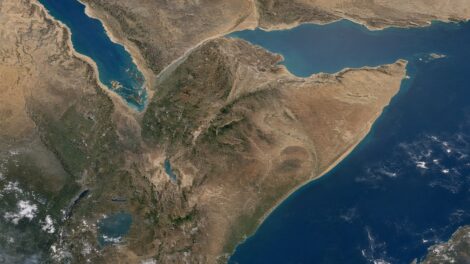
The global crisis is once again being measured through a narrow stretch of sea. The Strait of Hormuz, a vital artery for global energy flows, has returned to the centre of international tensions, as remarks by Italy’s defence minister Guido Crosetto open the door to a possible international initiative.
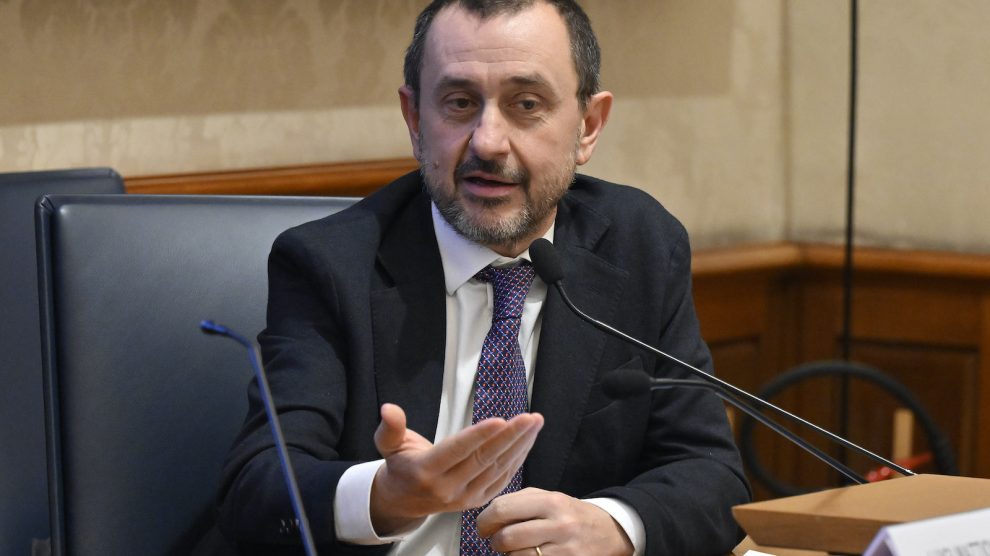
In the background lie American unpredictability, Middle Eastern fragility and an Italian line that seeks to balance caution with responsibility. It is in this context that Ettore Rosato, deputy secretary of Azione and a member of the Foreign Affairs Committee in the Chamber of Deputies, sets out with Decode39 his position.
Q: Rosato, is a mission in Hormuz really a concrete option?
A: It is necessary for it to have international backing.
- The natural venue is the United Nations, but we are well aware of the real risk of a Russian veto. In that case, the alternative is a mission with European backing.
- It is right to prepare, but I am not sure the conditions are in place today to actually launch it.
Q: How much does uncertainty linked to US moves weigh, especially with Trump?
A: It weighs enormously. The point is that Trump is irresponsible. This is evident even when he does not inform those who are supposed to be allies. This makes everything more unstable and unpredictable.
- We cannot rule out that he may decide to resume bombing, and this complicates every scenario. But let me be clear: we do not take part in a war action. We work, if anything, to prevent and to stabilise.
Q: Do you find the Meloni government’s line convincing?
A: The approach taken by Crosetto is reasonable. There is a line of balance that we share: maintaining partnership with European allies, without breaking the axis with the United States.
- But this does not mean automatically following every American decision. We will not go to war because Trump says so.
Q: The core issue remains the security of Hormuz and what its closure would mean for the global balance.
A: The Strait of Hormuz is not “ours”, but it is a crucial point for the global economy. We cannot allow one of the world’s many chokepoints to be disrupted with impunity by whoever has the capability to do so.
- The consequences would be global, and we are already seeing them in terms of tensions and volatility.
Q: How do you interpret US actions?
A: I will never say a positive word about the Iranian regime. But it is clear that some US choices also respond to domestic political needs, just as happens in Israel. This makes the picture even more complex.
Q: In Italy, however, the opposition is up in arms. How do you read this posture?
A: There is an outcry that is often more ideological than substantive. In the so-called broad camp, the prevailing idea is to always say no to the government, regardless.
- But in difficult moments, what is needed is synthesis, a common strategy. One cannot play only on opposition.
Q: So reopening Hormuz is a shared priority?
A: Absolutely. It is in everyone’s interest. As it is essential to maintain a balanced position for Italy. From this point of view, Meloni and Crosetto have said reasonable things.
Q: And the issue of a UN mandate?
A: Those who condition everything on a United Nations mandate must be aware that in doing so they risk being accommodating towards Putin. We give him the ability to decide what we can and cannot do. This is a contradiction that must be addressed with realism.