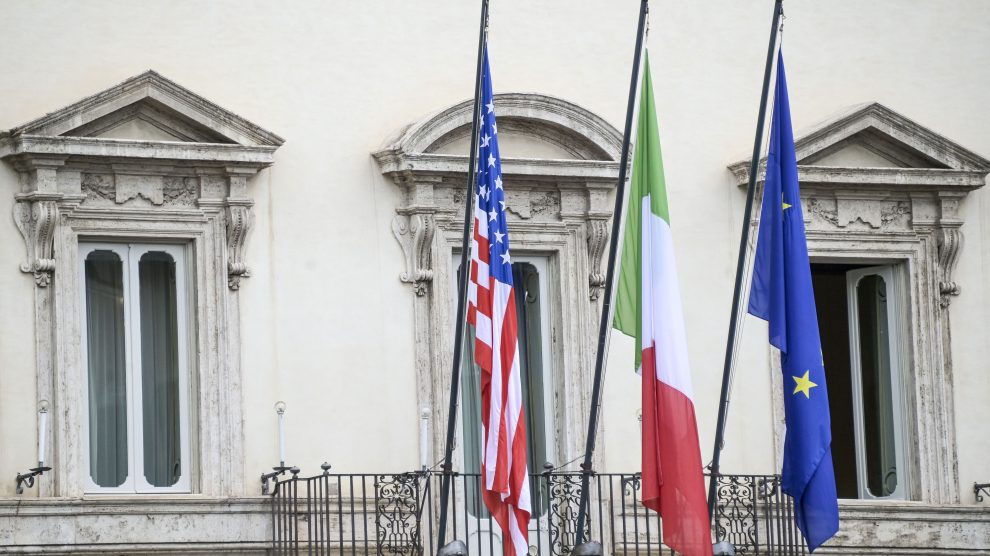
What happened: On April 28, 2026, the Embassy of Italy in Washington, D.C. will host the U.S.–Italy Trusted Tech Dialogue: Accelerating Transatlantic Innovation, a high-level convening of policymakers, industry leaders, and research actors aimed at translating political intent into operational cooperation.
- Building on last year’s joint declaration, the event is expected to mark a clear shift: from coordination to execution. The focus moved beyond principles to the practical construction of shared technological capabilities across the transatlantic space.
- Three operational priorities structured the discussion:
- strengthening trusted technology ecosystems among democratic partners;
- de-risking supply chains to reduce strategic dependencies;
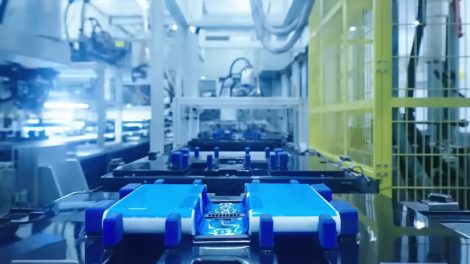
- accelerating the transition from research and development to market deployment
- Through panels, fireside chats, and executive dialogues, the format is designed to bridge the gap between policy and industrial outcomes, under the guidance of Ambassador Marco Peronaci and with the contribution of Roberto Baldoni, who is curating the initiative in his capacity as Senior Advisor on Technology and Cybersecurity Policy to the Italian Ambassador in the United States.
Why it matters: Technology has become the infrastructure of geopolitical power.
- The dialogue took place against a backdrop of intensifying systemic competition, where supply chains function as instruments of influence, artificial intelligence shapes security architectures, and technological dependencies translate into strategic vulnerabilities.
- In this context, “trusted tech” is emerging as a defining concept for Western coordination: not simply innovation, but innovation embedded within shared standards, governance frameworks, and security guarantees.
The significance of the event lies in this transition—from defensive de-risking to the proactive construction of integrated, allied technological ecosystems.
Why they matter: The composition of participants reflects an intentional effort to align the full spectrum of technological power.
- At the political and strategic level:
- Michael Kratsios, Director of the White House Office of Science and Technology Policy
- Darío Gil, Under Secretary for Science at the U.S. Department of Energy
- Joseph S. Jewell, Assistant Secretary of War for Science and Technology
- Keith Krach, Chairman of the Krach Institute for Tech Diplomacy at Purdue and CEO of Freedom 250
- Michelle Giuda, CEO of the Krach Institute for Tech Diplomacy at Purdue
- Armando Varricchio, Special Envoy for Innovation and New Technologies, Italian Ministry of Foreign Affairs
- Marco Peronaci, Ambassador of Italy to the United States, hosting the dialogue and shaping its strategic direction
- At the European level:
- Roberto Viola, Director-General at the European Commission
- Ruth Bajada, Deputy Head of the EU Delegation to the United States
- On cybersecurity and research:
- Tom Lind, Senior Advisor to the U.S. National Cyber Director
- Roberto Baldoni, Senior Advisor on Technology and Cybersecurity Policy to the Italian Ambassador in the United States and curator of the dialogue
- Alessandro Armando, Director of Italy’s Cybersecurity National Laboratory
- Daniel DeLaurentis, Executive Vice President of Research, Purdue University
- This cross-sector presence — spanning government, academia, industry, and the broader ecosystem of think tanks, media, and advanced technology companies — underscores a central point: effective technological competition requires alignment between policy, industrial capacity, and innovation systems.
The bottom line: The real significance of the dialogue lies in the trajectory it outlines.
- Recent U.S.–EU coordination on critical minerals underscores this shift. As Washington and Brussels move to reduce strategic dependencies and counter concentrated control over key resources, supply chains are emerging as a central arena of geopolitical competition. The same logic underpins the Trusted Tech Dialogue.
- For Italy, it represents an effort to position itself within Western technological value chains while reinforcing its role as a bridge between Europe and the United States. It also signals a closer integration between industrial policy and foreign policy.
- For the transatlantic relationship, the message is broader. Technology is no longer a secondary domain but a structural pillar of cooperation, alongside defense and trade. From semiconductors to critical minerals, the focus is shifting toward securing the full stack of industrial capabilities.
- The underlying question is whether democracies can translate political convergence into industrial capacity. The Trusted Tech Dialogue suggests that the answer will define not only the future of transatlantic relations, but the balance of power in the global technological competition.