The two initiatives bring together governments, international organizations, research institutions and private-sector actors around a common goal: strengthening energy security, regional connectivity and strategic cooperation across the Eastern Mediterranean.
Why it matters: The launch of the East Med Energy Center marks the implementation of a key provision of the EastMed Act, passed by the U.S. Congress in 2019. The East Mediterranean Gas Forum (EMGF) has returned to the ministerial level for the first time in nearly three years.
- Both frameworks place energy cooperation within a broader agenda that includes technology, cybersecurity, critical infrastructure and regional stability.
- The meetings highlight the United States’ role in fostering regional partnerships and Greece’s growing influence in the Eastern Mediterranean energy landscape.
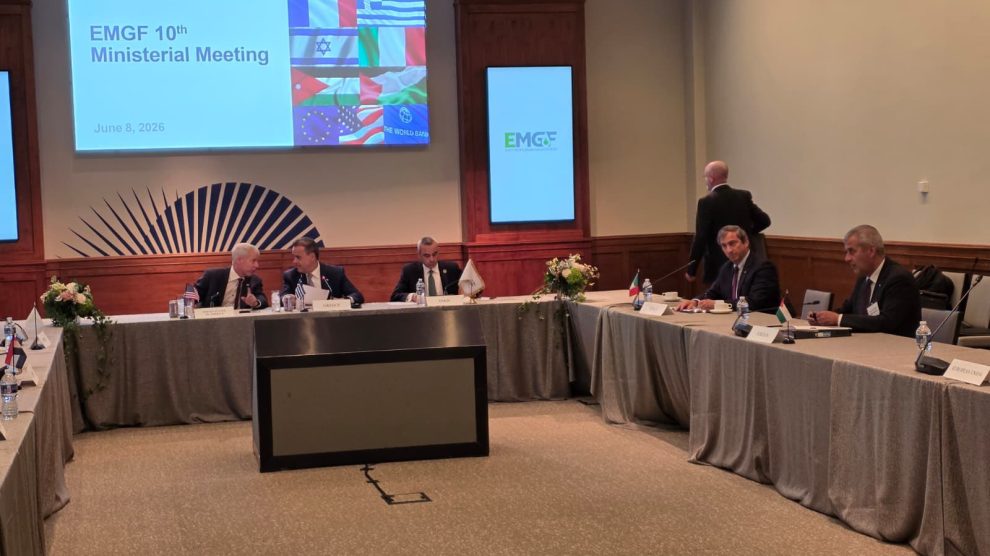
Zoom out: Washington. At the ministerial meeting of the East Mediterranean Gas Forum, held under the Greek presidency, participating members unanimously adopted a joint communiqué emphasizing that the development of natural gas resources in the Eastern Mediterranean should take place within the framework of international law.
- The meeting stressed respect for states’ sovereign rights over their natural resources and promoted a model of regional cooperation based on shared interests, agreed rules and international law.
- The gathering brought together ministers and senior representatives from Greece, Cyprus, Egypt, Jordan, Israel, Palestine and Italy, alongside the United States and the World Bank.
- Greek Environment and Energy Minister Stavros Papastavrou framed the initiative as part of a broader effort to strengthen regional stability. “We are building a framework of cooperation founded on full respect for international law, mutually accepted values, and commercial rules—a framework that strengthens stability and discourages unilateral and aggressive actions. Our common goal is energy security and the prosperity of our peoples,” he said.
The meeting also underscored the expanding role of the EMGF, which became an international organization in 2021 with headquarters in Cairo. Originally focused on coordinating the development of regional energy resources, the forum has evolved into a platform for dialogue among governments, regulators, international organizations and private-sector stakeholders.
Italy signaled continued support for the forum. “As a founding member, Italy is committed to enhancing cooperation in the energy sector in the region,” Italy’s ambassador to the United States Marco Peronaci said, while thanking U.S. Energy Secretary Chris Wright for chairing the meeting and praising the outgoing Greek presidency for its leadership.
Zoom in: Houston. Attention now shifts to Houston, where the East Med Energy Center is scheduled to be formally launched on June 11 at Rice University’s Baker Institute.
- The center is designed to deepen cooperation among the United States, Greece, Cyprus and Israel through the 3+1 framework, linking universities, research laboratories and private-sector companies.
- According to organizers, its activities will focus on energy security, advanced technology, innovation and research. The center is also expected to support cooperation on critical infrastructure protection, cybersecurity and the monitoring of emerging energy-related risks.
- U.S. Energy Secretary is expected to join Greek, Cypriot and Israeli officials for the launch, followed by high-level discussions on regional security and strategic infrastructure.
Between the lines: The Washington and Houston meetings point to the emergence of complementary tracks in Eastern Mediterranean cooperation.
- The EMGF provides the broader multilateral framework, bringing together a diverse group of regional actors around energy integration and dialogue. The 3+1 format, meanwhile, offers a more focused mechanism for cooperation among the United States, Greece, Cyprus and Israel on energy and strategic issues.
- Both initiatives place energy at the center, but increasingly connect it to technology, security and geopolitical resilience.
The bottom line: This week’s meetings suggest that Eastern Mediterranean energy cooperation is moving beyond resource development alone. Regional governments and their U.S. partners are using energy partnerships as a platform for wider cooperation on technology, infrastructure, security and regional stability.
(Photo: X, @MPeronaci)