The mission will fly with four astronauts and use ESA’s third European Service Module, underscoring Europe’s dual contribution to Artemis through both crew and critical spacecraft hardware.
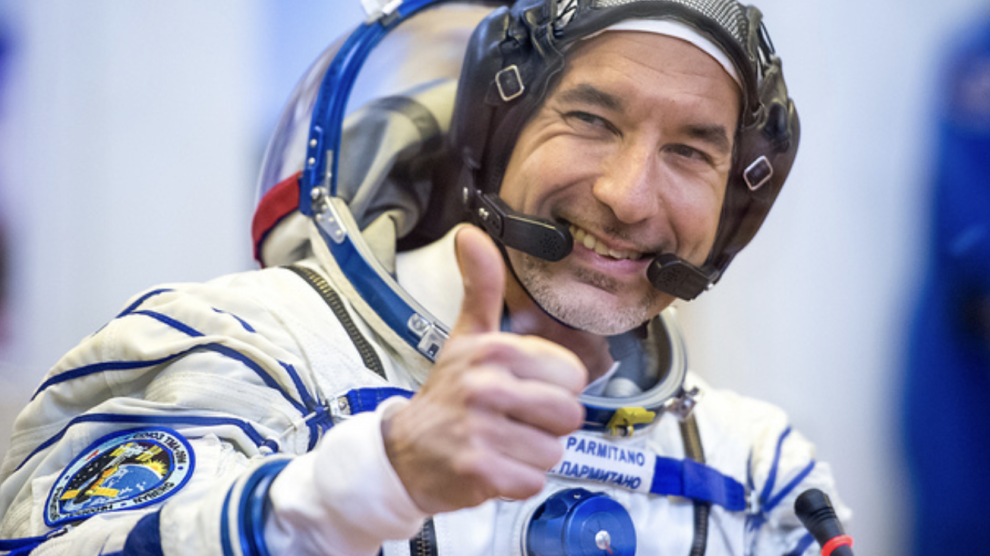
Why it matters: Luca Parmitano becomes the ESA astronaut assigned as pilot on an Artemis mission.
- Artemis III will test rendezvous, proximity operations and docking capabilities required for future Moon landing missions.
- Europe is contributing both a senior astronaut and the European-built service module that powers Orion.
- The mission highlights the growing operational role of ESA within NASA’s flagship lunar exploration programme.
The big picture: NASA has repositioned Artemis III as a crewed test flight in Earth orbit focused on demonstrating systems and procedures needed for lunar missions planned from Artemis IV onward.
- The mission will test complex spacecraft operations, including rendezvous and docking demonstrations with lunar landing system pathfinders. NASA and ESA are presenting the flight as a critical step between the programme’s early demonstration missions and future crewed lunar landings.
- NASA announced that Artemis III will be commanded by Randy Bresnik, with Parmitano serving as pilot. NASA astronauts Frank Rubio and Andre Douglas will fly as lander specialists. Bob Hines has been assigned as a backup crew member.
Zoom in: Parmitano’s role. Parmitano brings extensive operational experience to the assignment.
- The Italian astronaut has spent 366 days in space across two long-duration International Space Station missions, conducted six spacewalks totaling more than 30 hours, and served as ISS commander.
- Since returning to Earth, he has worked as ESA’s liaison at NASA’s Johnson Space Center in Houston, serving as CAPCOM and supporting astronaut training.
- Before joining ESA’s astronaut corps, Parmitano trained as a test pilot with the Italian Air Force. He has logged more than 2,000 flight hours and flown more than 40 aircraft types.
In his words: “As a test pilot, this is truly a dream mission, as we’ll be able to help testing systems and developing procedures so that future crews may go further and ultimately take humanity back to the Moon,” Parmitano said.
Europe’s second seat on board. ESA officials stressed that Europe’s contribution goes beyond the astronaut assigned to the mission.
- The European Service Module (ESM), built by European industry under ESA leadership, provides power, propulsion, thermal control, air and water for Orion crews.
- The module’s structure is produced by Thales Alenia Space in Turin, Italy, before final assembly by Airbus in Bremen, Germany.
- According to ESA, the programme involves contributions from 13 member states, 20 main contractors and more than 100 suppliers.
From ESA: “Europe will play not only one but two decisive roles in this upcoming Artemis mission,” ESA Director of Human and Robotic Exploration Daniel Neuenschwander said, pointing to both Parmitano’s piloting responsibilities and the European-built service module.
- The transatlantic partnership. ESA Director General Josef Aschbacher described Parmitano’s assignment as recognition of Europe’s expertise in human spaceflight.
- “ESA astronaut Luca Parmitano’s assignment as pilot reflects the depth of European expertise in human spaceflight and draws on his extensive operational experience in high-pressure situations,” Aschbacher said.
- He also said the announcement represented “a powerful recognition of ESA’s role” in the Artemis programme and in the agency’s partnership with NASA.
From NASA: NASA Administrator Jared Isaacman framed Artemis III as the next step in humanity’s return to the Moon and highlighted the role of international cooperation in the mission.
- “Artemis III will demonstrate the power of American innovation and international partnership as we test complex rendezvous and docking operations,” Isaacman said.
The Italian angle. The announcement was welcomed in Rome, where Prime Minister Giorgia Meloni described Parmitano’s assignment as a source of national pride.
- “A remarkable achievement that makes Italy proud and confirms the value of our excellence in the space sector,” Meloni said, congratulating the astronaut on his selection.
- The mission also carries industrial significance for Italy. Turin-based Thales Alenia Space builds the primary structure of the European Service Module, one of Europe’s most important contributions to the Artemis architecture.
What we’re watching:
- The third European Service Module is currently undergoing testing at NASA’s Kennedy Space Center in Florida.
- ESA delivered the module to NASA in September 2025 after shipment from Bremen aboard the Canopée transport vessel. Following recent acoustic testing, the module is expected to be integrated with Orion’s crew module before the spacecraft proceeds through its final test and integration campaign ahead of launch next year.
The bottom line: Artemis III will not land astronauts on the Moon, but it is designed to validate the systems and operations needed for future lunar missions.
- With Luca Parmitano in the pilot seat and a European-built service module powering Orion, Europe will be at the center of that effort.