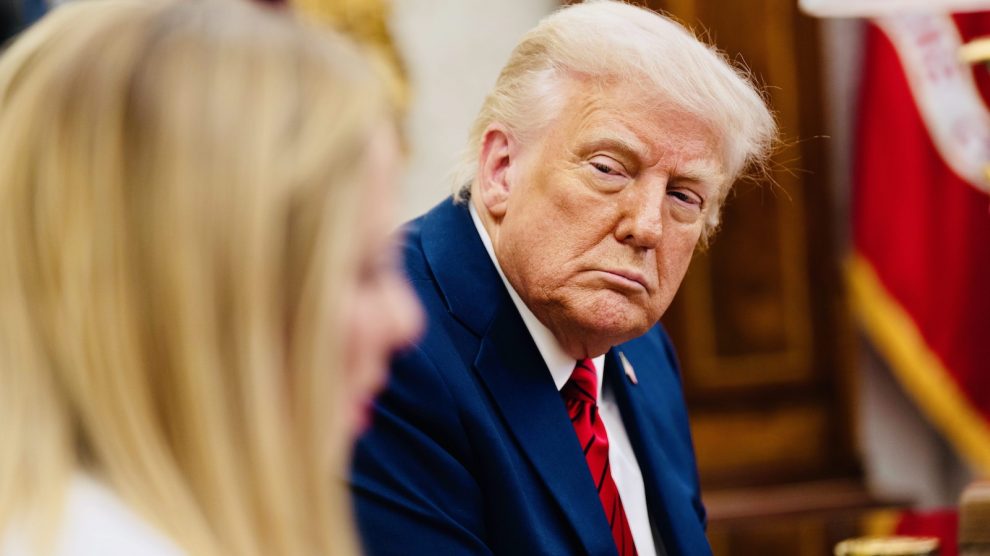
Donald Trump has escalated his criticism of Italy. In a recent post, the U.S. president accused Rome of failing to stand alongside Washington on Iran despite decades of American security commitments toward Europe.
“After spending Trillions of Dollars on NATO, Italy, and its Prime Minister, wouldn’t even think of becoming involved with the Islamic Republic of Iran and their very serious Nuclear Threat,” Trump wrote. “For decades, we defend them but, when tested, they are not there to defend us, and the rest of the World.”
Why it matters: The remarks came only days after an earlier public exchange with Italian Prime Minister Giorgia Meloni and have reignited debate about the state of U.S.-Italy relations. Yet some American foreign policy experts argue that the episode should be understood less as a bilateral dispute and more as part of broader political and geopolitical dynamics.
A Familiar Political Pattern. For Elisa Catalano Ewers, senior fellow at the Council on Foreign Relations, the controversy reflects a pattern that has become familiar throughout Trump’s political career.
- Ewers brings a unique perspective to the discussion. She served in both Democratic and Republican administrations, including positions at the National Security Council, the Departments of State and Defense, U.S. embassies abroad, and the U.S. Mission to the United Nations. She also led the Senate Foreign Relations Committee’s policy and legislative work on the Middle East, North Africa, arms control, nonproliferation, and international economics.
According to Ewers, Trump’s comments fit within a recognizable political and diplomatic playbook.
- “Trump’s brand of coercive diplomacy is on display,” she says. “Especially when being criticized — as he has been for the handling of the war with Iran — he resorts to attacking allies via tweet.”
- Her assessment places the controversy within the broader context of domestic political pressures and foreign policy messaging. Rather than focusing exclusively on Italy, Ewers sees the episode as part of a recurring pattern in which political criticism at home is accompanied by public pressure on allies abroad.
The Strategic Consequences. The implications, however, extend beyond domestic politics. “Our adversaries watch this kind of attack with glee,” she adds.
We told you so: In an interview with Decode39, Brian Katulis, Senior Fellow at the Middle East Institute, warned that public disputes among Western allies ultimately benefit their strategic competitors.
- As he put it, leaders in Moscow and Beijing are likely pleased to see major democracies divided and distracted. His broader point was that disagreements between allies matter less than the signal they send to rivals eager to exploit fractures within the transatlantic community.