Italy has joined the global partnership unveiled by the Trump administration to accelerate the development of secure 6G wireless networks, adding Rome to Washington’s latest effort to build a coalition around the technologies expected to underpin the next phase of digital competition.
Why it matters: For Italy, the move fits into a broader pattern of alignment with the United States on strategic technologies.
- It comes as another US initiative, Pax Silica, aimed at building trusted artificial intelligence value chains, could also receive Italian backing in the coming days – despite a recent case related to Italy’s presence at China’s WAIC.
- The two initiatives address different sectors, yet they reflect the same strategic logic: building an ecosystem based on trusted partners, resilient supply chains and shared technological standards across the entire value chain.
The initiative, known as the Call to Action for 6G Leadership and Security and led by National Telecommunications and Information Administration (NTIA) at the U.S. Department of Commerce, brings together more than twenty governments across Europe, the Indo-Pacific and the Western Hemisphere, including the United Kingdom, France, Germany, Japan, South Korea, Australia, Canada and Sweden.
- Participants have committed to deepen cooperation over the next twelve months through dedicated government contacts, technical coordination, security cooperation and preparations for the eventual commercial deployment of 6G.
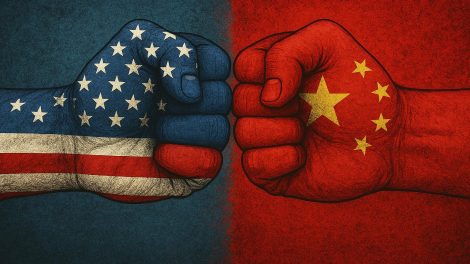
Strategic context. The move also marks a departure from Washington’s approach during the 5G era.
- By the time the United States mobilized against Huawei and ZTE, both companies had already secured significant positions in global telecommunications markets, including across Europe.
- What followed was a years-long diplomatic campaign urging allies to exclude Chinese vendors from critical infrastructure, alongside costly domestic programmes to remove Chinese equipment from US networks. The results were uneven.
With 6G, Washington is attempting to move before the market does. The technology remains in its research phase, commercial deployment is not expected until the 2030s and many of the technical standards have yet to be agreed.
- Instead of responding to the established Chinese presence, the administration is attempting to form a political and industrial coalition early enough to influence the rules governing the next generation of wireless communications.
That objective is reflected in the language of the initiative itself. The emphasis is less on network performance than on security, resilience, interoperability, trusted supply chains and cooperation among like-minded partners.
- Telecommunications are increasingly framed not simply as commercial infrastructure but as strategic assets whose governance carries geopolitical consequences.
Artificial intelligence is embedded within that vision. The Call to Action describes trusted AI as a core component of future 6G networks, recognising that AI will increasingly support both the development and operation of next-generation communications infrastructure.
- That convergence also explains why Italy’s possible participation in Pax Silica would represent more than a separate policy decision. Together, the two initiatives point towards an integrated transatlantic approach to securing the technologies expected to define the next decade.
Timing also matters. Washington wants allied governments to coordinate well before the next round of international negotiations on wireless communications, where key decisions affecting the future of 6G will be discussed.
- The roadmap sets milestones over the coming months, culminating in an in-person meeting next year bringing together governments and industry to assess the evolving strategic landscape and define common priorities.
What they’re saying: “The Call to Action for 6G Leadership and Security reflects an unprecedented level of international coordination on the future of communications technology,” said Arielle Roth, Assistant Secretary of Commerce for Communications and Information and NTIA Administrator.
- “Today’s action recognizes that 6G will be dramatically different from 5G, and that advancing U.S. and allied leadership requires a dramatically different playbook. By working now with trusted partners, we will ensure that next generation networks reflect our shared security interests, strengthen our competitiveness, and drive innovation. I am proud of the role NTIA has played in building this global partnership, and I look forward to seeing our shared commitments translated into meaningful action.”
The bottom line: For Rome, joining the partnership reinforces an emerging pattern of technological alignment with Washington. For the United States, however, the initiative is part of a broader strategic shift.
- Rather than fighting the next telecommunications contest after rivals have established themselves, the administration is seeking to shape the standards, supply chains and alliances that will define the 6G era before the competition fully begins.