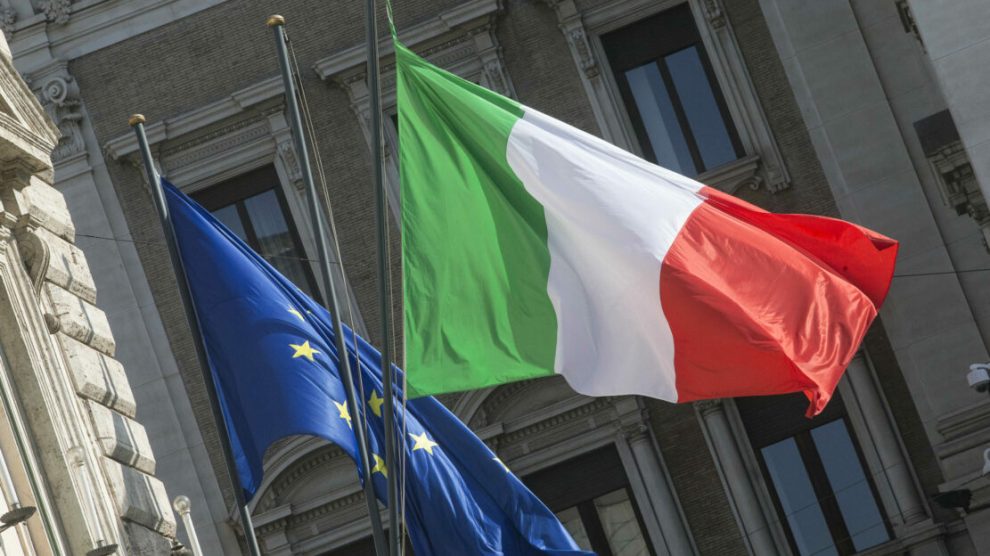
Italy’s debate over the European Union’s Security Action for Europe (SAFE) instrument is often portrayed as another argument over defense spending. It is actually much more than that.
Why it matters: Technically, SAFE makes economic and industrial sense for Italy. Politically, however, it has become one of the country’s most sensitive issues as parties begin positioning themselves for the 2027 general election.
The technical case is relatively straightforward. SAFE would allow Italy to access up to €14.9 billion in long-term European loans for defense investment.
- Because EU borrowing costs are expected to remain below Italy’s sovereign financing costs, the instrument could generate savings estimated between €4 billion and €6.5 billion over its lifetime, according to calculations reported by Corriere della Sera.
The benefits are not limited to public finances. SAFE is also an industrial policy tool. Its requirement that at least 65% of funded projects originate within Europe favors countries with advanced defense industries, placing Italy among the potential winners.
- For companies such as Leonardo and the broader national supply chain, the instrument represents an opportunity to strengthen industrial capacity while Europe accelerates its rearmament.
The broader strategic rationale is equally compelling. The disruption of Red Sea shipping, instability around Bab el-Mandeb and growing Russian activity in the Mediterranean have underscored a reality that Italian policymakers increasingly acknowledge: for an export-driven economy, protecting trade routes and industrial resilience has become an economic imperative as much as a military one.
If the technical logic is relatively clear, the political one is not. Prime Minister Giorgia Meloni’s government has yet to decide whether to activate SAFE, linking the choice to broader budgetary considerations.
- Economy Minister Giancarlo Giorgetti has emphasized fiscal caution, while Foreign Minister Antonio Tajani has argued that the European instrument should be evaluated separately from the debate over increasing defense spending.
Yet beneath the political noise, an unusual consensus is emerging. Despite their deep ideological differences, both Fratelli d’Italia and the Democratic Party increasingly appear to recognize SAFE as a strategic necessity. Forza Italia, Azione and Italia Viva have also adopted broadly favorable positions.
- The strongest opposition comes from parties that remain skeptical of European rearmament, including the Five Star Movement and other sovereigntist forces, which continue to frame SAFE primarily through the lenses of military spending, sovereignty and public debt.
This is where the debate becomes geopolitical. SAFE does not exist in a vacuum.
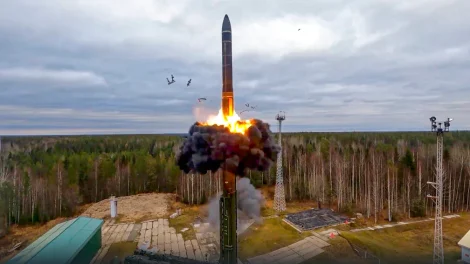
- For years, Russia — and, to a lesser but sharper extent, China — have promoted narratives portraying NATO, European defense integration and higher military spending as economically damaging and politically divisive.
- The objective is not necessarily to block a single EU instrument, but to raise the political cost of strengthening Europe’s defense posture.
- There is no evidence of coordination between foreign powers and Italian political parties. But there is a clear convergence of interests.
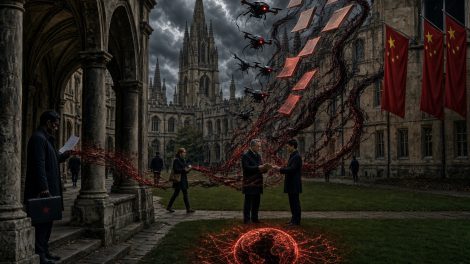
- Arguments already present in parts of Italy’s domestic debate often overlap with narratives that Moscow and Beijing have consistently sought to amplify across Europe through information operations and hybrid influence campaigns.
The timing matters. With elections approaching in spring 2027, even parties that broadly support SAFE cannot ignore increasingly skeptical segments of the electorate or the positions of smaller coalition partners.
- Electoral caution risks slowing decisions that, from a strategic and industrial perspective, appear increasingly urgent. That is the paradox at the heart of Italy’s SAFE debate.
The bottom line: The country’s two largest political forces largely agree on the need to move forward. Yet the closer Italy gets to the ballot box, the harder it becomes to translate that strategic consensus into political action.
- And that hesitation may ultimately benefit not those debating SAFE in Rome, but those watching Europe’s defense ambitions from Moscow and Beijing.