ROME — As the Italian frigate Thaon di Revel — flagship of the EU’s EUNAVFOR MED Irini mission — inspected the Toa Payoh, a tanker under EU sanctions that Italian authorities have described as part of Russia’s “shadow fleet,” Italy’s parliamentary minority was reopening its own debate over support for Ukraine.
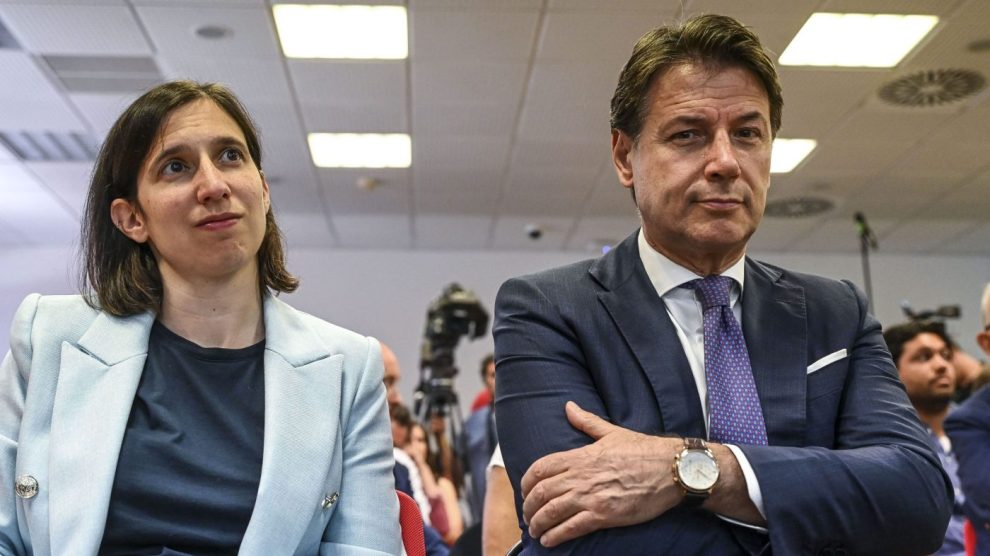
The country’s next vote on military aid to Kyiv is exposing widening divisions between the Five Star Movement (M5S) and the Democratic Party (PD), after Giuseppe Conte confirmed his party will oppose the next aid package and renewed his call for direct talks with Moscow.
The dispute goes beyond the next aid package for Kyiv. It highlights competing visions of Italy’s role within the Euro-Atlantic framework and raises new questions about whether the center-left can build a credible governing platform despite deep differences on foreign policy.
Why it matters: The renewal of military support for Ukraine has become the clearest fault line inside the parliamentary minority.
- M5S leader Giuseppe Conte is calling for a negotiated turn with Russia while confirming his party will not back the next military aid decree.
- The PD argues that any future governing coalition must first agree on a shared foreign policy platform, rather than leaving such issues to coalition primaries.
- The debate comes as center-left forces seek common ground on defense and energy, with Ukraine remaining the most difficult dossier.
The latest: Speaking during the PiazzAsiago event, Conte confirmed that M5S will oppose the next measure extending military assistance to Kyiv.
- He argued that Italy should pursue a diplomatic opening with Moscow and suggested that differences over foreign policy could ultimately be settled through future coalition primaries.
- Conte said that, if he were to lead the government, he would reassure Ukrainian President Volodymyr Zelensky of Italy’s support while also seeking direct talks with Russian President Vladimir Putin to explore the possibility of negotiations.
- He also reaffirmed M5S’s opposition to the European rearmament plan and to the use of the SAFE fund, while maintaining support for what he described as a genuine common European defense.
Zoom in: PD pushes back. The response from the Democratic Party was immediate.
- PD organization chief Igor Taruffi rejected the idea that coalition primaries should determine foreign policy, arguing that the alliance must first agree on a common program because whoever leads it would represent the entire coalition, not a single party.
- Other senior Democrats adopted a sharper tone:
- Senator Filippo Sensi described Conte as “the Vannacci of the Campo Largo,” (Campo Largo is the broader coalition of center-left political forces in Italy), accusing him of advancing a pro-Russian agenda and undermining the alliance.
- Senator Simona Malpezzi argued that anyone seeking to lead the center-left “can only stand” with Kyiv, while MP Lia Quartapelle said Conte appeared willing to break the coalition over a defining issue for European security.
- Former Foreign Affairs Committee chair Piero Fassino challenged Conte’s negotiating approach, asking whether he would be prepared to accept conditions set by Moscow, including the transfer of the Donbas.
- Outside the coalition, Azione leader Carlo Calenda urged the PD either to declare the end of the “Campo Largo” project or to force Conte to reverse course.
Between the lines: The exchange reinforces a broader trend inside Italy’s parliamentary minority.
- While M5S continues to question military support for Ukraine and rejects key European defense initiatives, the Democratic Party has increasingly positioned itself within Italy’s mainstream Euro-Atlantic consensus on security and foreign policy.
- The contrast suggests that foreign policy is becoming not only a dividing line between government and parliamentary minority, but also an internal test of leadership and governing credibility within the center-left itself.
What we’re watching: The parliamentary debate on military aid, defense spending and related European initiatives will provide another test of whether the parliamentary minority can reconcile these competing approaches — or whether Ukraine will continue to define the limits of coalition unity.
The bottom line: What began as a dispute over another military aid package is actually part of a broader confrontation over the future foreign policy identity of Italy’s parliamentary minority, with M5S and the PD increasingly articulating different visions of security, European defense, and relations with Russia, before the next year’s general elections.