
As Italy’s FM Antonio Tajani visits Cairo to strengthen economic ties, discuss migration and co-ordinate positions on regional crises, Egypt sits at the centre of a broader dynamic. Cairo has little interest in choosing between Washington, Beijing and its European partners. Instead, it is seeking to turn great-power competition into greater room for manoeuvre — a role with deep roots in Egyptian foreign policy, not least during the Cold War.
Tajani’s visit comes as Egypt’s importance to China is becoming increasingly apparent. Beijing has grasped the geostrategic value of the Indo-Mediterranean: Egypt controls the Suez Canal, faces both the Mediterranean and the Red Sea, belongs simultaneously to the Arab and African worlds, and remains a longstanding partner of the West, from the US to the EU. It is also a member of the Brics grouping and has in recent years expanded co-operation with Beijing across infrastructure, technology, energy and security.
Why it matters: For Italy, relations with Egypt form part of the Mattei Plan and a much older strategy of economic and political engagement across the wider Mediterranean.
- For China, Cairo is a node connecting the Middle East, Africa, the Mediterranean and global trade routes. Much is said about the opening of Arctic connections, but Suez remains the corridor that makes Europe-Asia connectivity possible today and for the foreseeable future.
- For much the same reason, Egypt remains a military and strategic partner that Washington can ill afford to lose.
- The result is not an Egypt moving from one camp to another. It is an Egypt increasing the value of its position between them.
Tajani’s Cairo mission. Tajani met Egyptian president Abdel Fattah al-Sisi and foreign minister Badr Abdelatty in Cairo, while co-chairing a meeting of the Italian-Egyptian Commission alongside environment and energy security minister Gilberto Pichetto Fratin and labour minister Marina Calderone.
- Sisi invited Italian prime minister Giorgia Meloni to visit Egypt as the two governments seek to deepen co-ordination on issues of common interest. The Egyptian president also highlighted the “remarkable development” of bilateral relations and the importance of implementing the Joint Committee’s conclusions on trade and investment.
The economic agenda is substantial. Tajani said Italian exports to Egypt rose 17 per cent in the first six months of the year and described the country as an important component of both Italy’s export-growth strategy and the Mattei Plan. More than 100 Italian companies attended the business forum held during the visit, taking part in over 1,000 B2B meetings spanning advanced manufacturing, food, fashion, furniture, sustainable transport, logistics, connectivity, energy, infrastructure and sustainable construction.
- Tajani also pointed to the strategic importance of Suez and the Red Sea, through which roughly 40 per cent of Italy’s maritime trade passes. The security of those routes has become an economic issue as much as a military one following attacks on commercial shipping and wider regional instability.
The discussions went well beyond economics. Sisi reiterated the Nile’s centrality to Egyptian national security and Cairo’s opposition to unilateral action along the river. The two sides also discussed tensions surrounding the war with Iran, Egyptian efforts to contain escalation in the Middle East and developments in the Horn of Africa.
- Sisi described the Red Sea as a matter of national security and rejected attempts to destabilise, militarise or internationalise it, arguing that responsibility for its security should rest with the littoral states.
- The breadth of the agenda helps explain why Cairo has become so important to Rome. Egypt is more than a market or a partner on migration. It is a regional power with influence over maritime routes, Middle Eastern conflicts, the Horn of Africa and energy security.
- The same strategic centrality is drawing Beijing closer.
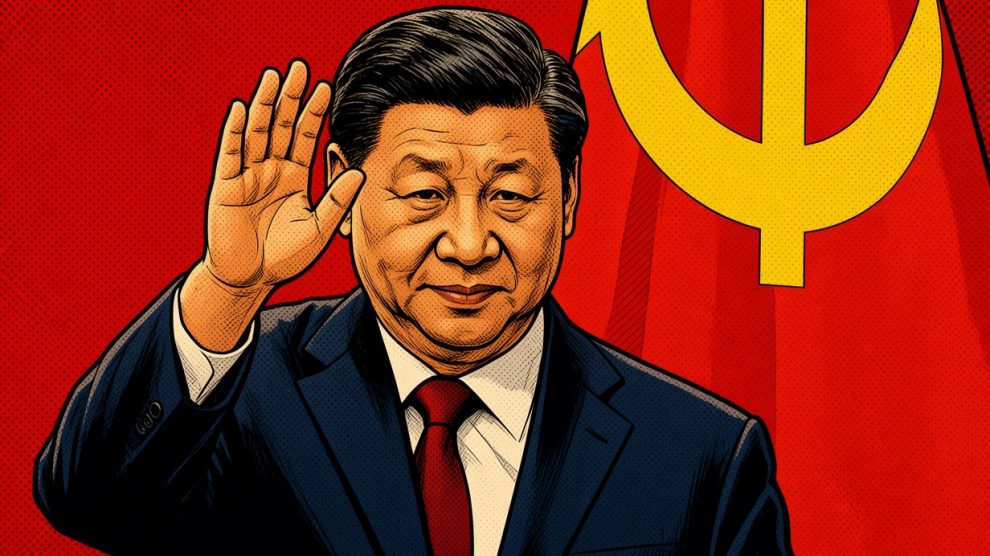
Beijing’s Egyptian gateway. Chinese leader Xi Jinping has arrived in Cairo for his first visit to Egypt since 2016. In official messaging, Xi emphasised the two countries’ status as “ancient civilisations” and Egypt’s position as a bridge between the Arab world and Africa. Behind the diplomatic language lies an unmistakable geography.
- China is involved in building Egypt’s new administrative capital, intended to become the political and administrative centre of the Arab world’s most populous country. Huawei has developed cloud services in Egypt linked to artificial intelligence and Arabic-language large language models. The company has also reportedly proposed supplying AI chips for Egyptian data centres, prompting Washington to consider a possible counter-offer.
These projects do not amount to a political alliance. But they point to a relationship moving beyond physical infrastructure towards the provision of technological and financial capabilities.
- Cairo still has compelling reasons to preserve its relationship with Washington, particularly in defence — even as China has tentatively expanded its own military engagement in recent weeks by sending aircraft to exercises in Egyptian airspace. The US remains essential to Egyptian defence assistance and provides access to systems that China cannot easily replace.
- Deeper ties with Beijing nevertheless bring investment and technology while strengthening Cairo’s negotiating position with both the US and Europe. This is where the Egyptian case becomes relevant beyond the bilateral relationship with China: Cairo is not looking for a new patron. It is trying to ensure that no single partner becomes indispensable.
The diplomacy of options runs through technology. That logic offers a window into China’s wider presence across the Global South. Beijing can provide capital, infrastructure, technology, access to its market and industrial co-operation without possessing the US network of alliances, military capabilities or financial infrastructure. Part of its advantage lies in responding to emerging countries’ demand for more diversified economic and strategic relationships.
- Egypt therefore does not need to distance itself from Washington for China’s presence to have an effect. Beijing need only become important enough to enter Cairo’s calculations — and, by extension, those of Egypt’s western partners.
- Competition over artificial intelligence is adding another layer to the relationship. Leadership in AI is not simply about who develops the most advanced model. It is also about who supplies the chips, data centres, cloud services, standards, applications and training on which other markets will build. Control over parts of that technological stack can translate into influence when it creates infrastructure and dependencies that are costly to replace.
Egypt is particularly attractive in this respect. It combines a large population and strategic logistical position with growing demand for digital services and a government prepared to invest in administrative and infrastructure modernisation.
- For Washington, the prospect of Chinese technology entering Egyptian data centres raises questions about security and control of critical infrastructure. For Cairo, competition between suppliers creates opportunities to secure better terms and diversify access to technology.
The same dynamic is emerging in defence. The “Eagles of Civilization 2026” exercise brought at least six Chinese J-16 fighters to Egypt, accompanied by tankers, special-mission aircraft and helicopters. The formation travelled more than 6,000km across two continents and four countries in almost nine hours.
- The more consequential point is not the number of fighters involved, but the ability to deploy combat aircraft alongside refuelling, support and command platforms and the personnel required to sustain them. The PLA Air Force is practising the ability to operate well beyond its traditional geographical theatre.
The difference between presence and the capacity to remain present. The distinction extends well beyond the military sphere. China is gradually turning its international economic footprint — including in Egypt — into something broader, adding technology, infrastructure and military co-operation. This does not mean Cairo is choosing Beijing. It does mean China is becoming an actor Egyptian policymakers increasingly have to factor into their calculations, including in the Mediterranean.
- From an Italian perspective, this matters because Rome is operating in the same strategic theatre, albeit with a much deeper relationship and direct interests in Suez, the Red Sea, energy, trade and regional stability. Italy and China are not necessarily direct competitors in Egypt. But they increasingly operate in overlapping sectors and spaces, creating competitive dynamics even where outright confrontation is absent.
The bottom line: For Italy, a historic Mediterranean presence is therefore no longer enough in itself.
- The challenge is to turn presence into the capacity to remain present: sustained, tangible and relevant enough that, as Cairo expands its options, Italy remains among the partners that are hardest to replace.