
Italy is working to build closer ties with Taiwan as European lawmakers push for deeper cooperation on security, critical technologies and democratic resilience amid growing Chinese pressure in the Indo-Pacific.
Why it matters: Taiwan is increasingly central to Europe’s economic security, from advanced semiconductors and artificial intelligence to resilient supply chains and critical infrastructure.
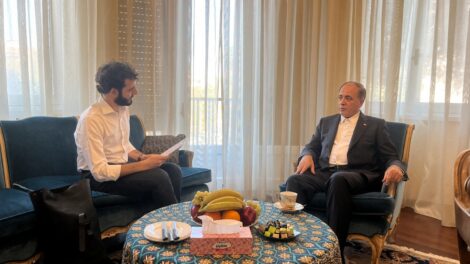
- “Taiwan represents modernity, shared values of democracy and human rights, resistance and resilience, extraordinary global semiconductor manufacturing capabilities, and a commitment to addressing the major challenges of AI,” Italian Senator Roberto Menia told Decode39 from Taipei.
- “Above all, it stands on the frontier of freedom. Italy can only stand by its side,” said the Senator, who is a member of Prime Minister Giorgia Meloni’s party Fratelli d’Italia.
Driving the news: Menia, vice chair of the Italian Senate’s Foreign Affairs and Defense Committee and a member of Prime Minister Giorgia Meloni’s Brothers of Italy party, attended the 2026 Formosa Club annual conference in Taipei.
- The gathering brought together 49 European lawmakers representing 19 national parliaments.
- Its final declaration called for stronger Europe-Taiwan cooperation to counter authoritarian pressure, hybrid threats and interference with democratic institutions.
- Participants also emphasized Taiwan’s role in maintaining a rules-based international order.
The big picture: European engagement with Taiwan is expanding beyond political solidarity toward practical cooperation on economic and technological security.
- Key areas include semiconductor supply chains, AI, drones, unmanned systems and democratic resilience.
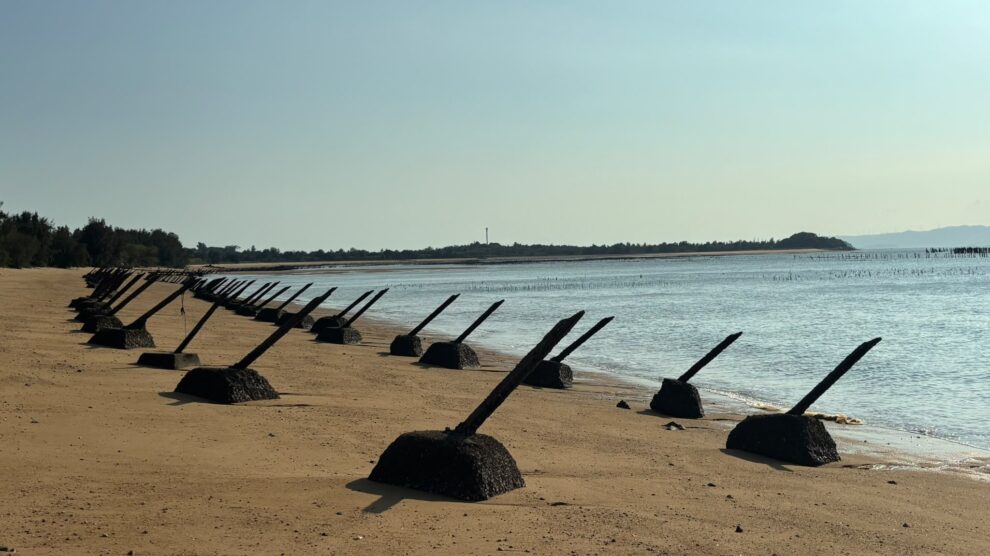
- The discussions reflect growing concerns over the vulnerability of critical infrastructure and the strategic implications of tensions in the Taiwan Strait.
Zoom in: Submarine cables emerged as a major priority. European lawmakers backed an initiative by Taiwan’s Foreign Minister Lin Chia-lung to address threats to international undersea communications infrastructure.
- “These are vital arteries for nations and digital economies,” Menia said.
- He called for expanded cooperation on information sharing, institutional reforms, technical expertise and maritime domain awareness.
- “We have a responsibility to place this partnership on a priority track, particularly as hybrid threats become increasingly complex.”
The China factor: The conference highlighted Beijing’s gray-zone activities targeting Taiwan, including disinformation, political interference and military pressure around the Taiwan Strait.
- Participants also raised concerns about China’s Law on Promoting Ethnic Unity and Progress, citing European Parliament resolutions adopted on April 30 and October 7, 2026, condemning its extraterritorial provisions as transnational repression.
- The Formosa Club reiterated that UN General Assembly Resolution 2758 does not determine Taiwan’s status or prevent its meaningful participation in international organizations.
- Lawmakers called for broader Taiwanese participation in international mechanisms where its expertise could benefit the global community.
What Italy is saying: Sen. Menia linked stronger ties with Taipei to the Meloni government’s broader Indo-Pacific strategy.
- “Italy is well aware of Taiwan’s role in the global economic and geopolitical landscape,” he said.
- “We are facing a period marked by multiple, overlapping crises, as Prime Minister Giorgia Meloni has often emphasized.”
- “Rome is building a relationship with Taipei based on friendship, mutual respect, shared industrial projects and common political objectives, in keeping with the attention the government has devoted to the Indo-Pacific since taking office.”
The bottom line: For European lawmakers, closer ties with Taiwan are becoming as much about protecting economic interests, technological capabilities and critical infrastructure as defending shared democratic values.