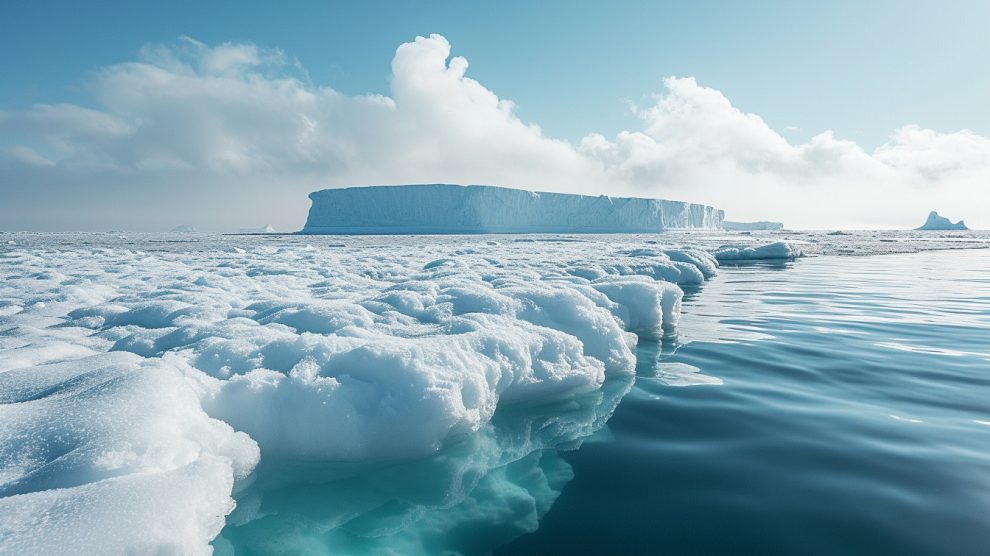
Decoding the news: Global warming is accelerating the physical reconfiguration of the region, the retreat of sea ice is changing maritime accessibility, the search for new resources is pushing governments and companies to look further north, and competition among powers is turning a space long perceived as marginal into a frontier where influence, industrial capacity and geopolitical vision are measured.
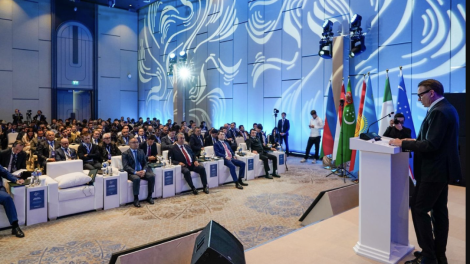
The Arctic’s Growing Relevance. The framework chosen by Italy is itself revealing. The event, promoted by Arctic Circle together with the Ministry of University and Research and the CNR, in coordination with the Italian Ministry of Foreign Affairs and with the involvement of the Ministry of Defence and the Ministry of the Environment and Energy Security, was designed as a platform for dialogue among public decision‑makers, the scientific community, industry, Arctic local communities and civil society.
- This setting clearly reflects the nature of today’s Arctic dossier, where the climate crisis coexists with geopolitical competition and where scientific data can no longer be separated from implications concerning infrastructure, resources and international stability.
From Rome to the North. Seen in this light, the architecture of the forum also reveals Italy’s position. Not that of an Arctic power in geographical terms — which it obviously is not — but that of a country seeking to legitimize its presence through research, multilateral diplomacy, relations with allies and attention to long‑term economic opportunities.
- The composition of the forum also confirms that this was not merely a symbolic gathering.
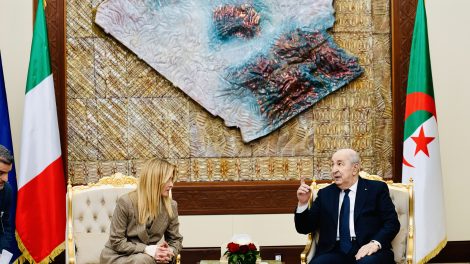
- The presence of the Italian ministers for research and foreign affairs, Anna Maria Bernini and Antonio Tajani, together with CNR president Andrea Lenzi, and international figures such as Prince Albert II of Monaco, Finland’s Elina Valtonen and Norway’s Eivind Vad Petersson, created a platform capable of bringing together diplomacy, international projection and economic interests.
- It is precisely this plurality of voices that makes the Arctic so tangible. For some it is first and foremost a climate variable; for others it is a logistical factor; for others still it represents a question of security or industrial supply chains. In the High North, worlds that elsewhere rarely intersect are forced to speak to one another.
What they’re saying:
- “It is the first time that a Polar Summit has been held in Italy. We are deeply proud of this. It demonstrates that the international scientific community recognizes the value of Italian Arctic research, which has been a protagonist in the region for fifty years,” Bernini said.
- “The Arctic is no longer a periphery; it is a central region, also for our development, for the future of our research and for our own security,” Tajani echoed.
- He added: “For this reason we launched the new Italian Strategic Document for the Arctic. We want to consolidate Italy’s role as a partner increasingly recognized by the family of Arctic peoples, contributing to the balance and well‑being of the region, thus strengthening the north–south axis of the continent, from the Arctic to the Mediterranean. With more research projects and more Italian companies active in the region, we can make the Arctic more prosperous and strengthen the transatlantic relationship.”
- Isabella Rauti, Undersecretary of Defence with responsibility for the Arctic, Sub‑Arctic and Antarctica, explained: “The Arctic is a strategic barycenter and a shared responsibility; a scenario where security, climate change, new trade routes and conflicting global interests intersect. Preserving stability, cooperation and respect for international law is essential.”
The John Cabot’s pre-event. These same themes had already been discussed at the pre‑event “Greenland and Scenarios for Arctic Security” at John Cabot University in Rome, of which Formiche/Decode39 were media partners.
- During the meeting at the American university in Rome, the transformation of the Arctic space from a geographical periphery into an increasingly relevant strategic node clearly emerged. Particular attention was given to the presence of indigenous communities that have governed and inhabited the Arctic for centuries and cannot be excluded from discussions about its future.
- As recalled by Sara Olsvig, president of the Inuit Circumpolar Council, local communities — historically actors of self‑determination in the region — are today increasingly involved in the dynamics of international politics.
- Attention then shifted to the growing militarization of the area, with the presence of nuclear powers that see the Arctic as a strategic space.
- This occurs in a context in which China formally articulated in 2018 its ambition to build a Polar Silk Road along Arctic routes.
- Investing in ports, logistics, connectivity and maritime services does not only mean acquiring commercial opportunities; it also means gaining influence, shaping standards and potentially creating new dependencies. In this environment of increasing strategic competition, research and science are not immune to political tensions and risk becoming fragmented.
The Role Italy Can Play. As also emerged during the John Cabot pre‑event and from the discussions within the Arctic Circle framework, this is the moment to build and implement science and initiatives in the Arctic. In this context, the role that non‑Arctic countries such as Italy can play becomes particularly relevant.
- The Italian Strategic Document for the Arctic, presented at Villa Madama on January 16, 2026, explicitly states that the region represents a growing economic opportunity also for Italian companies active in these sectors.
- This is an important step, because it signals a maturation of Italy’s perspective.
- The Arctic thus enters the language of supply chains and highlights the fact that the technologies underpinning the digital and energy transitions depend on materials concentrated in a few production hubs, exposed to geopolitical tensions and difficult to replace. Including this issue in the strategy means recognizing that European industrial resilience also passes through the Arctic.
What we’re watching: The strength of this approach is supported by a concrete presence. The Arctic research station Dirigibile Italia in Ny‑Ålesund, active since 1997 in Svalbard, represents one of the pillars of Italy’s scientific projection in the High North. In this sense, research is not an ornament of foreign policy but one of its most valuable infrastructures.
- Ultimately, this is the deeper meaning of the Rome forum. Not only to describe an Arctic that is changing, but to transform rhetorical interest into strategic continuity, investments, alliances and the ability to read emerging value chains in time.
- For Italy — which cannot rely on geography — the game is played above all on the quality of its proposal.
- Research, institutional credibility, diplomacy and industrial vision are the decisive resources not merely to observe a historic transformation up close, but to help shape it.