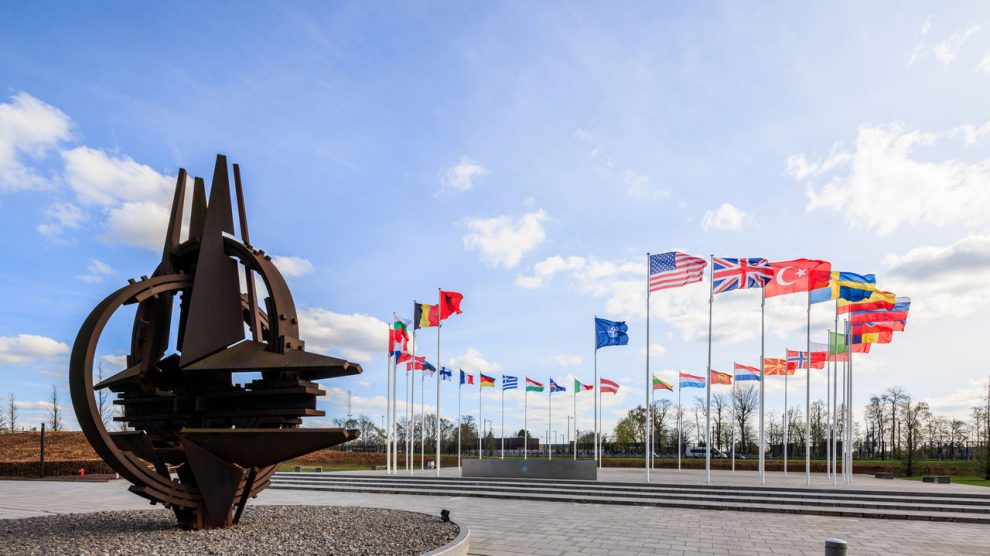
As European governments move to reinforce NATO’s continental pillar and prepare for a scenario of reduced U.S. engagement, the debate is no longer whether Europe should assume greater responsibility, but how fast it can do so without undermining the transatlantic bond.
According to Giangiacomo Calovini, member of NATO’s Parliamentary Assembly and MP for Fratelli d’Italia, a stronger European role inside the Alliance is not a challenge to Washington, but a necessary adjustment to a more demanding strategic environment.
Q: In recent weeks Donald Trump has raised the possibility of the United States leaving NATO. Is that a realistic scenario?
A: We are familiar with Donald Trump’s style. His statements are often later corrected, softened or reframed. Our hope is that there will be no U.S. withdrawal from NATO in any form, because today more than ever the value of the Alliance is clear, especially in such a complex international environment marked by recurring geopolitical tensions.
-
Moreover, in exchanges with American congressmen, this does not emerge as a concrete possibility. And that is also because such a move would benefit neither Europe nor the United States.
Q: There is growing talk of a more “European” NATO. How much is this shift already affecting the Alliance, and what could it mean in practical terms?
A: I think the issue should be read on two levels. The first is awareness. Russia’s invasion of Ukraine and the tensions in the Middle East have made it clear, including to public opinion, that defense can no longer be treated as a secondary matter. It is a priority.Investing in NATO means investing in collective security, not simply in weapons.
-
The second level concerns the economic and industrial effort. All Allied countries are gradually increasing their commitment, despite the obvious difficulties of the current moment. The direction is the right one, even if this process will take time, because it is necessary for the security of citizens across NATO countries, including Italy.
Q: If the U.S. role were to shrink, would Europe be ready – militarily, industrially and politically – to carry greater weight inside the Alliance?
A: Probably not yet, at least not fully. My impression, also based on discussions with military representatives, is that more time is needed to close the gap with the United States.
-
That said, the effort is under way and the direction is the correct one. There are also encouraging signs on the industrial side. Italian companies such as Leonardo and Fincantieri, together with other private-sector actors, are achieving important results and helping consolidate Italy’s position as a credible and recognized player in the defense sector.
Q: Would a more European NATO make the transatlantic relationship more balanced and stronger, or could it instead create new friction with Washington?
A: I believe it would strengthen it. In just a few months, we have moved from Emmanuel Macron’s remarks about NATO being “brain-dead” to a situation in which everyone recognizes the need to invest in the Alliance and make it more robust.
-
External events have accelerated this shift in awareness. For that reason, I believe that strengthening the European component does not weaken the transatlantic bond.
-
On the contrary, it helps make it more solid. And this applies not only to the relationship between Europe and the United States, but also to Canada’s role, since Ottawa continues to believe strongly both in NATO and in cooperation with the European continent.
-
Beyond Trump’s rhetoric, in the medium to long term the two sides of the Atlantic will continue to work increasingly closely together.
Q: In this context, how can NATO’s Parliamentary Assembly be further leveraged, and what contribution can it make to a possible “Europeanization” of the Alliance?
A: The Parliamentary Assembly can make an important contribution, and the Italian experience shows that clearly. In recent years I have seen the work of the Italian delegation grow significantly. It stands out for its maturity and for its ability to act in the national interest, beyond party affiliations.
-
My unanimous election as chair of the Mediterranean Special Group is also a sign of recognition for the work Italy is doing. In particular, we are insisting that, alongside the Eastern flank, sustained attention must also be paid to the Mediterranean, North Africa and the Middle East, because the Alliance’s security also runs through that region.
-
This is a concrete line of action that strengthens Italy’s contribution within NATO, and it will be further confirmed by the upcoming event in Rome marking the thirtieth anniversary of the Mediterranean Special Group, with more than one hundred parliamentarians from member countries expected to attend.