Why it matters: Italy is positioning itself early to capture the economic upside of the EU–Mercosur trade agreement, leveraging political ties and industrial strengths to deepen its footprint across Latin America.
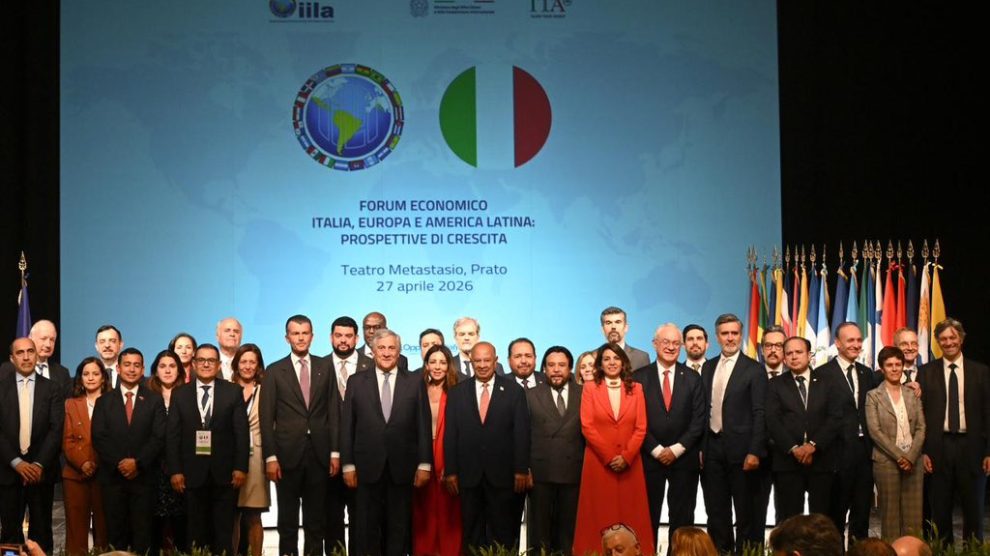
The context: Foreign Minister Antonio Tajani closed the Italy–Latin America Economic Forum in Prato, co-organized by the Italian foreign ministry, IILA (International Italo-Latin American Association), and ICE Agenzia (Italian trade agency). The event brought together more than 160 business leaders and institutional representatives from both sides of the Atlantic.
Driving the news: The forum focused on high-potential sectors for internationalization, including mechanical engineering, pharmaceuticals, fashion, and agribusiness.
- Discussions centered on the upcoming entry into force of the EU–Mercosur Free Trade Agreement on May 1, seen as a catalyst for expanding trade flows and industrial partnerships.
By the numbers:
- Italy–Latin America trade reached €34 billion in 2025.
- Italy recorded a €6.5 billion trade surplus with the region.
Between the lines: Rome is framing Latin America as a priority geopolitical and economic partner, building on historical ties and a widespread Italian diaspora. The Mercosur agreement offers a structured pathway to scale this engagement, particularly for export-oriented Italian supply chains.
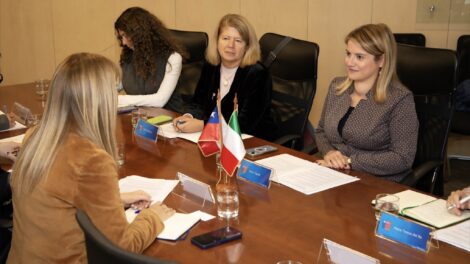
Zoom in: bilateral diplomacy. On the sidelines of the forum, Tajani held meetings with key regional counterparts:
- Félix Ulloa, Vice President of El Salvador
- Mario Lubetkin, Minister of Foreign Affairs of Uruguay
- Johann Álvarez Márquez, Minister of Foreign Trade of Venezuela
What emerged (based on Italian government readouts of the meetings):
- El Salvador: Positive momentum in bilateral relations, with Italian firms involved in infrastructure modernization and cooperation programs spanning environment, agriculture, education, and urban development.
- Uruguay: Strong ties and ongoing efforts to deepen the strategic partnership, including negotiations in sectors such as air transport.
- Venezuela: A dual-track approach — Italy reiterated calls for the release of political prisoners while signaling openness to expand trade and investment, particularly in infrastructure and energy.
Security angle: Italy also offered to share expertise in tackling organized crime, including through the Guardia di Finanza — a signal that economic engagement is increasingly tied to governance and security cooperation.
The bottom line: As the EU–Mercosur agreement moves toward implementation, Italy is aligning diplomacy, industry, and trade policy to secure a first-mover advantage in Latin America — blending economic outreach with political engagement and institutional cooperation.
(Photo: X, @antonio_tajani)