Decoding the news. Italy is tightening the chain of command for national security crises, from cyberattacks and energy blackouts to foreign interference and military spillovers from nearby conflicts.
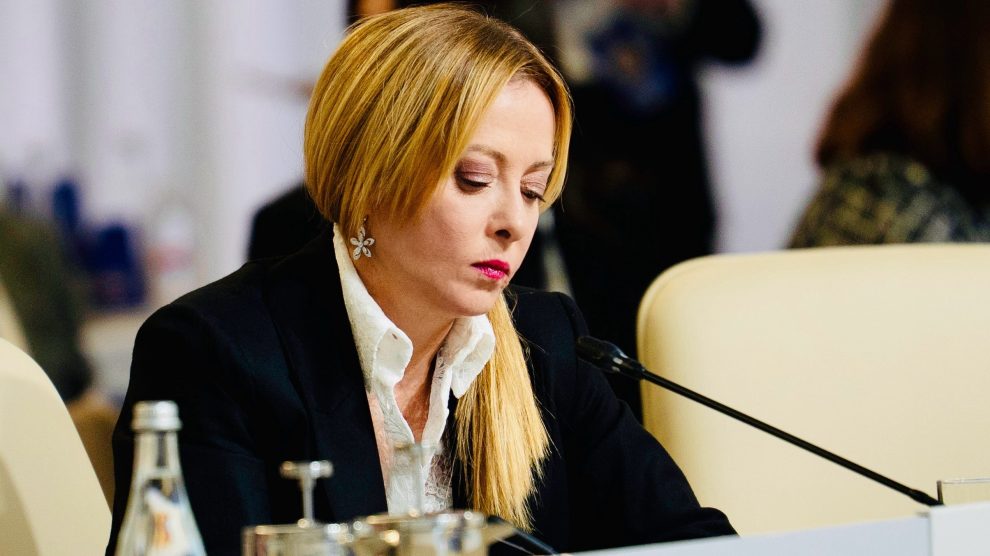
- Italian Prime Minister Giorgia Meloni has signed off on a new national security coordination mechanism designed to speed up the state’s response to major crises.
- The move strengthens the role of Italy’s security architecture at a time when governments across Europe are preparing for a wider spectrum of hybrid threats: Russian cyber operations, instability in the Middle East, energy disruption, attacks on critical infrastructure and the cascading effects of regional wars.
So what. The new setup revolves around Italy’s national security decision-making system, bringing together the prime minister, key ministers sitting in the Cisr – the Interministerial Committee for the Security of the Republic – and the heads of Italy’s intelligence agencies, Dis, Aise and Aisi.
- Its purpose is to make sure the public apparatus can react quickly and coherently when threats hit political, military, economic, industrial, scientific, environmental or institutional interests.
- In the language of the decree, the goal is to avoid uncertainty, overlaps and duplication among state bodies in moments when timing matters most.
What’s new. Alongside the crisis-response mechanism, Italy is also moving toward its first formal National Security Strategy.
- That is a significant shift. Rome has long had intelligence, defence and cyber strategies, but not a single document comparable to the National Security Strategy used in Washington and other allied capitals to define priorities, threats and instruments of state power.
- The strategy is expected to map Italy’s core interests, identify the main risks to national security and guide the government’s response over a multi-year horizon.
Between the lines. This reflects a broader change in how Italy sees national security.
- The relevant battlefield is no longer only military. It now includes electricity grids, telecom networks, ports, satellites, hospitals, financial platforms, undersea cables and digital infrastructure.
- The Iberian blackout of April 2025, which disrupted Spain and Portugal, has reportedly been used in Rome as a reference scenario for simulations.
- The question for policymakers is simple: what happens if communications, transport and energy systems fail at the same time?
How it works. In a major crisis, the task force would allow the prime minister and the relevant ministers to receive intelligence, assess the threat, coordinate with the security agencies and define a political response.
- The Copasir, Italy’s parliamentary intelligence oversight committee, is part of the institutional framework: the National Security Strategy is to be adopted after consultation with the committee, which will also be kept informed on implementation.
Yes, but. The reform does not yet create a full, permanent National Security Council on the model of the United States or other systems.
- That remains the open question. Italy is improving coordination, but the country still lacks a standing strategic body that permanently integrates diplomacy, defence, intelligence, cyber, industry, energy and economic security.
The bottom line. Meloni is giving Italy a faster crisis-management circuit for an age of hybrid threats.
- Hybrid threats force the state to move faster, coordinate better and know exactly who does what. That is what the new crisis-management hub is designed to do.