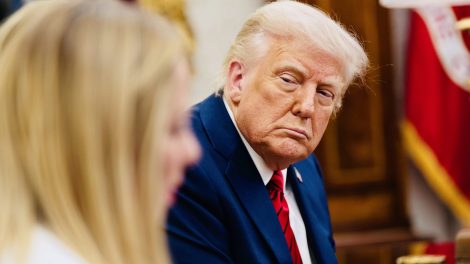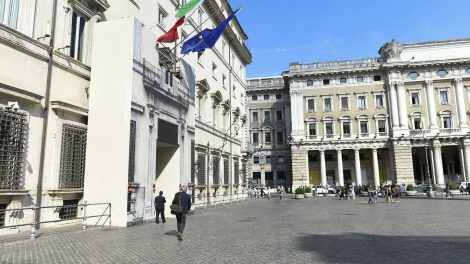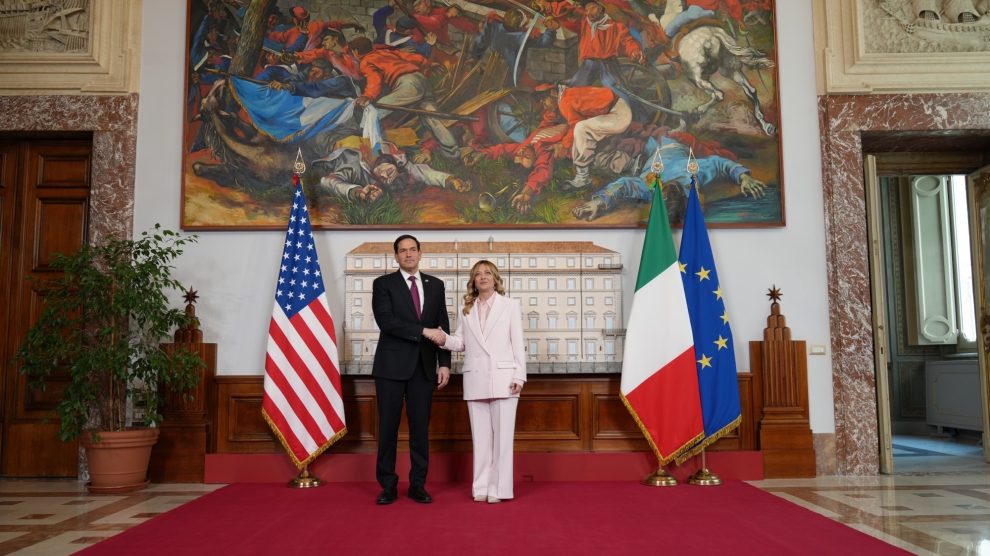
As tensions over Iran, defense posture, and burden-sharing continue to test transatlantic cohesion, the visit to Rome by U.S. Secretary of State Marco Rubio was widely interpreted in diplomatic circles as more than a routine stop. Coming after weeks of friction involving both the government of Giorgia Meloni and the Holy See, the trip raised questions about whether Washington was attempting to recalibrate ties with two strategic interlocutors unsettled by the unpredictability of President Donald Trump.
According to James Jay Carafano, one of the leading voices in the American conservative foreign policy establishment, the visit should not be read as damage control but rather as confirmation of the enduring strategic weight Washington attributes to Italy. Carafano discusses with Decode39 Rubio’s role inside the Trump administration, the current state of U.S.-Italy relations, and why the American military presence in Italy remains “irreplaceable” for NATO’s southern flank.
Q: The visit was widely interpreted as an emergency mission to repair relations with two key interlocutors — the Vatican and the Meloni government — both caught in the crossfire of Trump’s unpredictability. In your view, was this routine diplomacy or a recognition by Washington that it had gone too far?
A: The visit is obviously a consequence of the latest frictions between the two countries. Few figures are deployed more intentionally by the President of the United States than the Secretary of State, and Marco Rubio is an extremely busy man.
- Not to mention the fact that the president wants the cabinet to remain in the United States mobilizing support ahead of the midterm elections.
- That said, the fact that Trump sent Rubio shows how seriously and how highly Washington values the U.S.-Italy partnership.
- I would not describe this as “crisis resolution,” because our alliance is too deep and important to be endangered by disagreements. Trump can be tough and severe.
- He is not “a young man” with all the time in the world: he faces enormous and serious challenges before the end of his term. I do not see this as a problem; on the contrary, people should respect the major challenges he is dealing with in order to leave a better world for all of us.
Q: Rubio is often regarded as the “moderate face” of the Trump administration. How significant is it that he was chosen for this mission? Was it a symbolic or strategic decision?
A: Rubio is the president’s most valuable strategic asset, after military and energy dominance: when he shows up, he does so for serious business, and it means something serious is at stake.
Q: Is Meloni still seen by the American conservative establishment as Europe’s most reliable leader? Has her position on Iran damaged that perception?
A: To be honest, American conservatives are obviously disappointed. We look at Meloni and Trump as the two driving leaders of the transatlantic community. We hope that remains the case.
Q: Meloni has called for maintaining — if not expanding — the American military presence in Italy, while Trump has hinted at possible reductions. Do U.S. bases in Italy still retain strategic priority for Washington in the Mediterranean and Middle Eastern context?
A: Our presence in Italy is too valuable for the United States to abandon. I would prefer to see it expanded. In synergy with our presence in Greece and Romania, the United States enjoys a dominant presence and force projection capability on NATO’s southern flank. That advantage is irreplaceable.
Q: So far, the meeting between Rubio and Meloni does not appear to have produced concrete outcomes. How do you interpret that?
A: Rather than concrete outcomes, I believe the important step was reaffirming the direction of the partnership between Washington and Rome.
- Starting from the clear priorities: investments in energy, digital infrastructure, and critical infrastructure sectors, as well as cooperation in technology and defense.
- My assumption is that they focused on this, alongside discussions about all regional developments from the Middle East to Southern Europe and Central Asia.
Q: After this visit, what do you see as the greater risk: that Italy and the United States drift structurally apart, or that they settle into a new transactional balance that empties the alliance of its substance?
A: We should focus on opportunities, not risks. The United States and Italy have much to offer one another. This is not an optional alliance.
(Photo: X, @SecRubio)