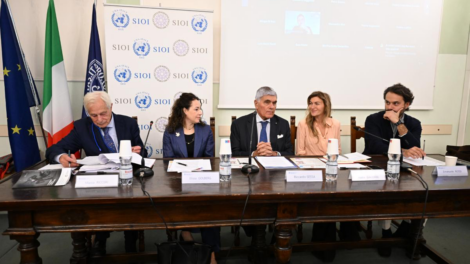
ROME — More than 1,600 investors, policymakers and business leaders are gathering in Rome this week for FII Priority Europe 2026, a summit focused on a question that increasingly dominates the European agenda: how to finance competitiveness, security and technological sovereignty in a more fragmented world.
The big picture: Hosted at the Rome Cavalieri from June 17-19, the European edition of Saudi Arabia’s Future Investment Initiative (FII) Institute arrives at a moment when Europe is reassessing its economic model amid geopolitical tensions, industrial competition and the race for artificial intelligence.
- The theme of this year’s gathering — “Europe Reimagined: Capital, Sovereignty & Strategic Autonomy” — reflects the broader debate underway across the continent, from industrial policy and defense spending to energy security and capital markets integration.
- For organizers, the goal is also political. In comments ahead of the summit, FII Institute Executive Committee Chairman Richard Attias argued that Europe remains a major center of innovation, industry and talent despite growing narratives of decline. “Many tell us Europe is finished. I cannot accept that,” Attias said, describing the event as “not just another conference” but “a gift to Europe.”
Why it matters: The summit brings together sovereign wealth funds, global investors, governments and corporate leaders at a time when Europe is seeking new sources of capital.
- Defense, AI, energy and industrial competitiveness are emerging as key investment themes.
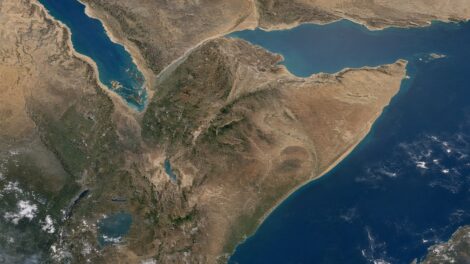
- The event positions Italy as a potential bridge between Europe, the Gulf, Africa and the broader Mediterranean region.
- Organizers say the objective is to move beyond discussion toward concrete investment opportunities and partnerships.
Italy’s gateway pitch: A recurring theme throughout the summit is Italy’s effort to present itself as a strategic gateway between Europe and fast-growing regions to its south and east.
- In an interview with Italian news agency Adnkronos, Attias has argued that Italy’s geography and political positioning make it a natural entry point for capital coming from the Gulf, Asia, the United States and emerging markets.
From Palazzo Chigi: That message was echoed by Prime Minister Giorgia Meloni in a statement sent to participants.
- Meloni said Europe can no longer rely solely on its role as a commercial or regulatory power and must strengthen its strategic autonomy, industrial capacity, technological sovereignty and financial strength.
- She also highlighted the potential of closer cooperation between Europe and Gulf countries, describing it as a partnership capable of connecting “West and East, Africa and Asia.”
- Italy, she said, intends to play a leading role as “a gateway to Europe and a natural energy, logistics and commercial hub in the Mediterranean.”
- Meloni went further, expressing hope that Rome could become the FII’s permanent European venue — “the place where we measure results, calibrate progress and set new priorities.”
Who’s in the room: The summit’s guest list reflects its ambition to bring together political leaders, sovereign investors, financial institutions, technology companies and industrial champions.
- Among the headline participants are:
- Yasir O. Al-Rumayyan, governor of Saudi Arabia’s Public Investment Fund, chairman of Saudi Aramco and chairman of the FII Institute;
- International speakers include Saudi Ambassador to the United States Princess Reema bint Bandar Al Saud, Saudi Economy Minister Faisal Alibrahim, Saudi Tourism Minister Ahmed Al-Khateeb, Albanian Prime Minister Edi Rama, former Austrian Chancellor Sebastian Kurz, Jacques Attali, Travis Kalanick, Cohere co-founder Aidan Gomez, BYD executive Stella Li, Goldman Sachs’ Anthony Gutman, Barclays’ Stephen Dainton and former HSBC CEO Noel Quinn.
Zoom in: Italy Inc. Italian institutional and business participation mirrors many of the strategic sectors at the center of Europe’s competitiveness debate. Among the executives expected in Rome are:
- Governament and Institutions:
- Italian Economy Minister Giancarlo Giorgetti;
- Defense Minister Guido Crosetto;
- Enterprise and Made in Italy Minister Adolfo Urso;
- Tourism Minister Gianmarco Mazzi;
- Rome Mayor Roberto Gualtieri;
- Former Italian Prime Minister Matteo Renzi, who serves on the FII board.
- Finance and investment:
- Andrea Orcel, UniCredit
- Andrea Pignataro, ION Group
- Maurizio Tamagnini, FSI
- Fabio Massoli, Cassa Depositi e Prestiti
- Defense and strategic industry:
- Pierroberto Folgiero, Fincantieri
- Lorenzo Mariani, Leonardo
- Domitilla Benigni, ELT Group
- Technology and innovation:
- Uljan Sharka, Domyn
- Stefano Buono, newcleo
- Infrastructure and mobility:
- Stefano Donnarumma, Ferrovie dello Stato
- And others from life sciences, consumer and wellness, tourism and hospitality. Also attending are Milan Mayor Giuseppe Sala and other representatives from local institutions.
Follow the money. The FII Institute stresses that its ambition is not to operate solely as a discussion forum.
- According to Attias, agreements worth nearly $250 billion have been signed during the initiative’s nine years of activity in Riyadh.
- The Rome summit is intended to bring a similar model to Europe, where policymakers are increasingly focused on mobilizing long-term investment for innovation, industrial capacity and infrastructure.
Between the lines: The summit links three debates that increasingly overlap in European policymaking:
- competitiveness;
- security;
- technological sovereignty.
The underlying premise is that Europe’s ambitions in all three areas will require far greater mobilization of both public and private capital. That argument closely aligns with broader discussions around the competitiveness agenda associated with former European Central Bank President Mario Draghi’s recommendations on industrial policy, innovation and capital markets.
What we’re watching:
- Whether the summit produces investment announcements or concrete partnerships.
- Signals from Giorgetti and Crosetto on Italy’s economic and industrial priorities.
- The role Gulf sovereign capital may play in European strategic sectors.
- Whether Rome can strengthen its positioning as a platform linking Europe, the Mediterranean, Africa and the Gulf.
- How participants frame Europe’s response to competition from the United States, China and other emerging economic powers.
The bottom line: FII Priority Europe is more than an investment conference. It is a forum for a broader debate over how Europe finances its next phase of growth, security and technological development — and how Italy hopes to position itself at the center of that conversation.