Italy’s organized crime groups are changing their structures, skills and alliances, increasingly intersecting with cyber networks, terrorism, opaque financial circuits and geopolitical dynamics.
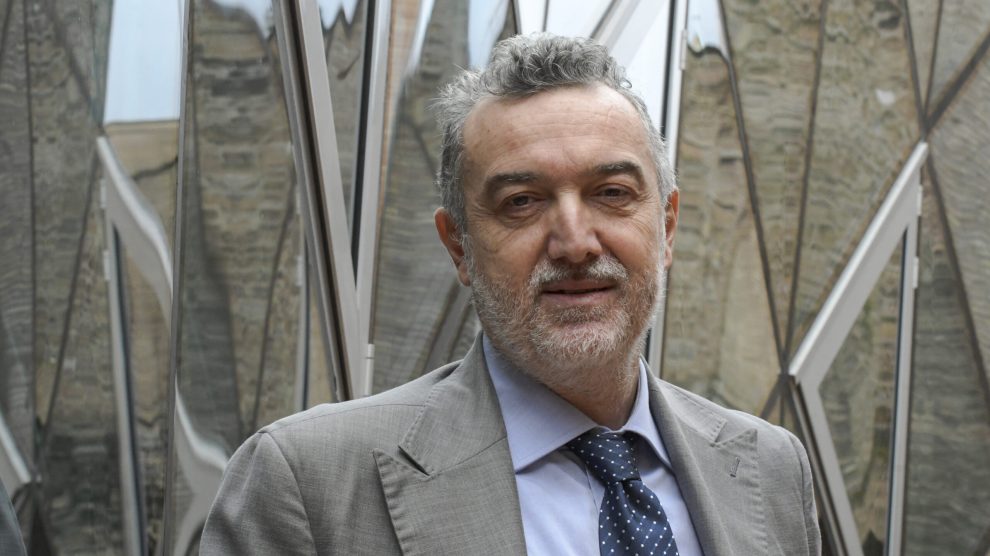
That was the picture drawn by Antonio Ardituro, deputy national anti-mafia and counterterrorism prosecutor, speaking at the Security Festival in Cagliari, organized by the Vittorio Occorsio Foundation.
Why it matters: The transformation described by Ardituro goes beyond the tools used by organized crime. Digital expertise is reshaping power inside criminal groups, while the growing overlap between crime, national security and foreign threats is challenging traditional investigative and legal boundaries.
- Tech skills have become a source of power. “Today, if you have a skilled hacker, a technology expert, that person can climb the leadership ranks of a mafia organization,” Ardituro said.
- Mafias, cyber groups, terrorist networks, paramilitary formations and financial circuits can increasingly overlap, creating what Ardituro calls a “fusion”.
- Italy’s response, however, is constrained by what he described as the technological “backwardness” of judicial police and shortcomings in specialist training.
The big picture: One measure of the shift is the evolution of Italy’s National Anti-Mafia and Counterterrorism Directorate, or DNAA.
- Created to coordinate the fight against organized crime and later expanded to counterterrorism, the DNAA now also coordinates investigations involving national cybersecurity and, since 2026, violations of European Union restrictive measures.
- Ardituro attributed that evolution to “a bipartisan legislature” that recognized that phenomena once treated separately are increasingly interconnected.
Zoom in: The “fusion”. Italian investigations provide examples of this convergence.
- Ardituro cited neo-Nazi networks whose members allegedly trained with the Azov Battalion during the early stages of the war in Ukraine. He also pointed to the presence in Italy of “Iranian proxies” available as mercenaries for specific criminal objectives.
- The result is a landscape in which traditional categories — mafia, terrorism, cybercrime and financial crime — can overlap within the same networks.
Follow the money. Another front is what Ardituro describes as underground banking toward China.
- Large amounts of cash, difficult to quantify, move through networks of companies issuing invoices for nonexistent transactions, according to the prosecutor.
- Ardituro said the phenomenon has moved beyond the realm of economic crime and become “a national security issue”.
The cyber gap. The digital domain also creates a legal problem. Ardituro described cyberspace as “aspatial”: it lacks a conventional territorial dimension, challenging the very concept of jurisdiction and exposing the limits of international law.
- Italy’s response increasingly relies on closer cooperation between prosecutors, intelligence services and the military. That collaboration, Ardituro said, “has perhaps never been as productive as it has been in recent years”.
- But investigative capabilities have not kept pace with the threat. Ardituro pointed to technological shortcomings within the judicial police and insufficient specialist training.
Between the lines: Technology is not simply giving mafias new tools. It is changing their internal hierarchies.
- Control over digital expertise can now become a source of authority comparable to — and potentially greater than — traditional military power within criminal organizations.
- Ardituro also warned of an Italian “market for illicit and clandestine information” used to blackmail politicians and business leaders, allegedly involving current or former members of state institutions.
What we’re watching: Ardituro called for a national cybersecurity strategy that clearly defines objectives, tools and methods for confronting these threats.
- The challenge is also about human capital. If technological expertise is becoming central to the new criminal landscape, investigators need capabilities to match it.
- “We need a new kind of professional expertise,” Ardituro said.