
Why it matters: The summit underscored Africa’s attempt to combine economic integration, strategic autonomy and governance reform at a time of mounting instability — from Sudan to the Sahel — and growing rivalry among external powers.
- Security, industrialization, infrastructure and reform of global governance dominated discussions, overshadowing the official theme on water sustainability and environmental health under Agenda 2063.
The leadership transition: Burundi’s President Évariste Ndayishimiye took over the rotating AU chair from Angola’s João Lourenço, while Commission Chair Mahmoud Ali Youssouf emphasized peace, integration and financial autonomy as priorities.
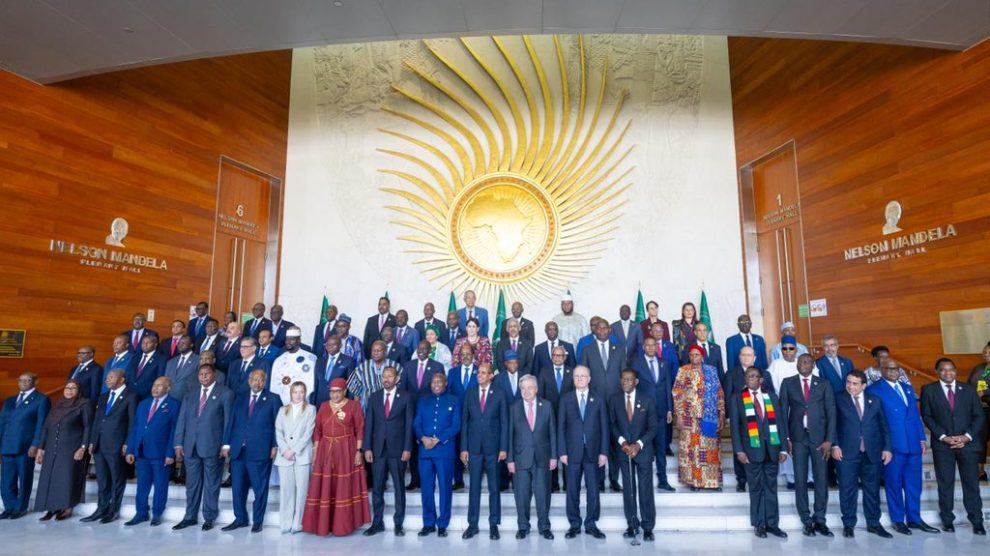
- Addis Ababa once again served as a diplomatic hub, with UN Secretary-General António Guterres and external partners — including Italy — attending.
Zoom in: Italy’s role. Italian Prime Minister Giorgia Meloni, invited as a special guest after hosting the second Italy-Africa Summit the previous day, framed Africa as central to global realignment and positioned Italy as a bridge between Europe and the continent.
- Her message — “our future depends on yours” — linked security, development and demographics, highlighting Africa’s human capital as a strategic asset.
- Rome presented the Mattei Plan as an open platform for investment, technology and training aligned with Agenda 2063 and the African Continental Free Trade Area (AfCFTA), with a focus on infrastructure corridors and youth skills, including AI.
Between the lines: Internal pressures. Beyond security and debt issues, the summit exposed a growing gap between AU institutions and Africa’s young population.
- Critics describe the AU as cautious on disputed elections and slow to translate declarations into action, reinforcing perceptions that it prioritizes government stability over accountability.
- Civil society forums and parallel events — from the ECOSOCC pre-summit to official side events — highlighted demands for inclusion, economic opportunities and governance reform.
Security front and regional crises. Conflicts in Sudan, the Sahel and eastern Democratic Republic of Congo dominated the agenda.
- UN’s Guterres called for ceasefires and African-led political solutions, while coups and geopolitical realignments in the Sahel continue to complicate peace operations and expand space for external actors.
- Funding for AU-led peace missions remains a critical constraint.
Debt, finance and global governance. African leaders pressed for fairer access to financing and greater representation in global institutions. Guterres called the absence of permanent African seats on the UN Security Council “indefensible.”
- The EU and member states, including Germany, signaled support through targeted funding, but questions remain about transforming aid into sustainable industrial capacity.
Integration and strategic autonomy. The AfCFTA was framed as the backbone of Africa’s industrialization strategy — aimed at boosting intra-African trade, reducing import dependence and strengthening resilience.
- At the same time, Africa seeks to navigate intensifying competition among external powers — China, Russia, the EU and Gulf states — while asserting agency through platforms such as the G20.
Implications for Europe – and Italy. For initiatives like the EU’s Global Gateway and Italy’s Mattei Plan, the summit serves as a test of whether Western partners can deliver concrete projects aligned with African priorities rather than fragmented initiatives.
The bottom line: Africa is trying to reposition itself from a geopolitical arena to a geopolitical actor. Whether that ambition translates into tangible integration, security and development outcomes will shape both the continent’s trajectory and its partnerships with Europe in the coming decade.
(Photo: X, @_AfricanUnion)