Speaking on Omnibus on La7, Italian Defense Minister Guido Crosetto warned that hitting energy production facilities represents a “dramatic mistake,” with effects that could last for years and extend well beyond the countries directly involved.
Decoding the News: Strikes on energy infrastructure are emerging as one of the most consequential dimensions of the conflict, transforming a regional military escalation into a broader geoeconomic shock.
- Beyond immediate battlefield effects, targeting energy assets risks long-term global economic disruption, while reopening strategic questions around maritime security and the role of multilateral frameworks in stabilizing critical supply chains.
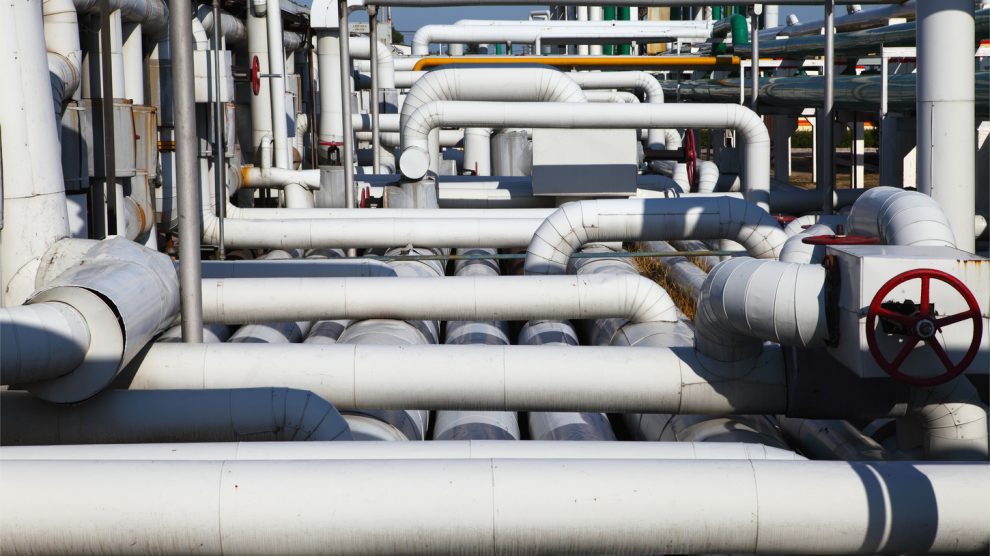
The big picture: The damage is not contained to the battlefield. Liquefied natural gas (LNG) production in Qatar — a key supplier for global markets, including Italy — has already been affected.
- According to Qatari authorities, one of the impacted plants could take between three and five years to be fully restored.
- This creates ripple effects across global energy markets, affecting countries far removed from the conflict itself.
- Crosetto framed the issue in systemic terms: damaging energy infrastructure today translates into prolonged economic disruption for multiple countries tomorrow.
Between the lines: The conflict is increasingly targeting the connective tissue of globalization — energy, logistics and critical infrastructure — rather than just military assets.
- Italian PM Giorgia Meloni has warned that Iranian attacks on two major gas fields in Qatar are “serious” for gas-dependent Italy, underscoring Rome’s exposure to external energy shocks.
- That shift raises the stakes from a regional confrontation to a broader geoeconomic shock.
Zoom in: Italy’s energy exposure. The implications for Italy are immediate and structural.
- Qatar has declared force majeure on long-term LNG contracts affecting multiple countries, including Italy.
- Around 12.8 million tonnes per year of LNG — roughly 17% of Qatar’s export capacity — could be offline for 3 to 5 years following damage to key facilities at Ras Laffan.
- Two LNG trains and part of a gas-to-liquids (GTL) system have been hit, with total damages estimated in the tens of billions of dollars.
- Why it matters: Italy — like Belgium, South Korea and China — now faces the prospect of replacing contracted volumes on the global spot market.
- That means:
- Higher prices
- Increased competition among buyers
- Greater exposure to supply volatility
- That means:
Zoom in: Rome’s immediate response. The Italian government has already moved to cushion the domestic impact of the crisis.
- On March 18, Prime Minister Giorgia Meloni’s cabinet approved a decree law aimed at countering rising fuel prices linked to the Middle East crisis.
- “It is a package of measures with a clear immediate objective: to curb a potential spike in prices driven by the crisis,” Meloni said.
- What’s in the package:
- A temporary reduction in excise duties for 20 days, cutting fuel prices by an estimated 25 cents per liter for gasoline and diesel, and 12 cents per liter for LPG.
- A tax credit on diesel for road hauliers, and a 20% tax credit for fishing vessels covering March to May.
- Strengthened anti-speculation controls, involving the national price watchdog, the Guardia di Finanza, and the antitrust authority.
What’s next: Rome is also looking beyond the immediate crisis, focusing on post-conflict stabilization — particularly at sea.
- “We and other countries are studying a way so that, once there is a truce and hostilities are over, ships from navies around the world can be deployed,” said Crosetto.
- He added that an initial group of six countries has expressed interest, but he hopes others will join — “including India, China, and the rest of Asia” — under a United Nations framework, which he suggested could “regain some vitality” after years of marginalization.
- In parallel, Italy is moving to secure alternative supplies, with talks underway with Algeria to increase pipeline gas imports as LNG flows from Qatar face disruption. Rome is in talk with U.S. and Azerbaijan too.