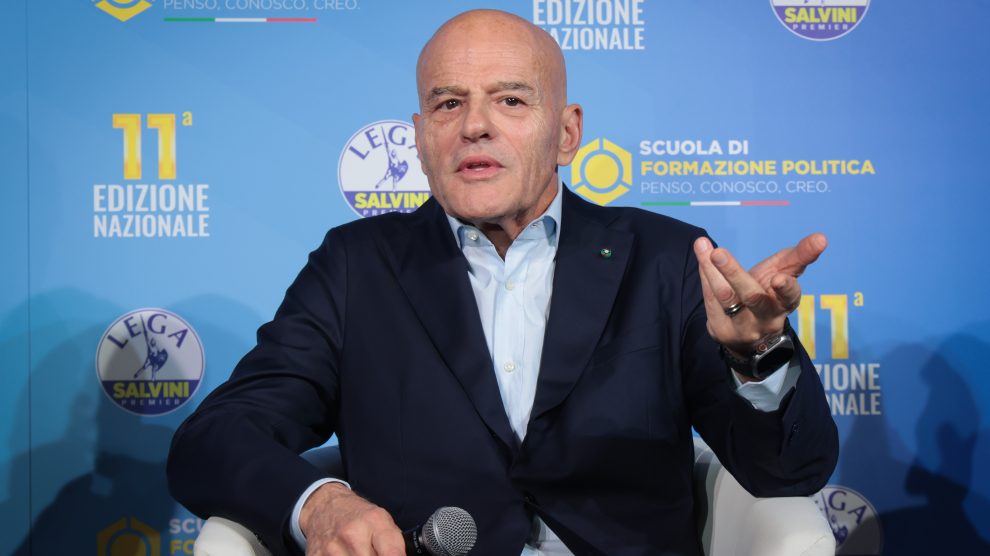
What happened: Claudio Descalzi, CEO of Eni, called on the European Union to reconsider key pillars of its energy and climate framework while speaking at a political training event in Rome organized by Italy’s Lega.
- His remarks come at a sensitive moment for EU energy policy, as the bloc balances decoupling from Russian supplies with rising industrial costs.
What he said: “I believe it is necessary to suspend the ban set to take effect on January 1, 2027, covering around €20 billion worth of LNG imports from Russia,” Descalzi said.
- He also suggested revisiting the EU’s Emissions Trading System (ETS), the bloc’s carbon pricing mechanism applied to heavy industry.
- “I am not saying it should be abolished, but it should be suspended or restructured, so as not to further penalize an industrial sector that is already bearing very high energy costs,” he added.
Why it matters: The intervention highlights a growing tension between maintaining industrial competitiveness and sustaining the EU’s geopolitical and climate commitments. European industry continues to face structurally higher energy costs compared to global competitors, amplifying concerns about long-term competitiveness and potential deindustrialization.
The bigger picture: Descalzi’s remarks appear to run counter to the line currently adopted by European Union governments, including Italy, on Russia.
- The phased elimination of Russian gas supplies is part of a broader strategy aimed at isolating Moscow as it continues its large-scale invasion of Ukraine.
- Recent political developments in Europe also suggest that positions perceived as more open toward Russia may face limits in broader electoral appeal.
- Some analysts point to recent electoral outcomes, including in Hungary, as a potential indication that such approaches do not necessarily command widespread public support across the EU.
- The debate ultimately reflects a deeper fault line within Europe: the balance between economic pragmatism and geopolitical alignment — especially at a time when the EU is already bearing costs, in terms of energy security and economic strain, linked to heightened tensions and conflict involving the United States and Iran.