Decoding the news. Understanding Donald Trump means understanding America. But it also means trying to anticipate how the political balance of the West may shift in the years ahead.
- That was the premise behind the seminar held last Wednesday at the Nazareno, the headquarters of Italy’s Democratic Party, devoted entirely to the United States — an initiative first reported by Formiche.net. It was not conceived as a political rally, but as an exercise in strategic and cultural analysis at a time when the transatlantic relationship is going through one of its most difficult phases in decades.
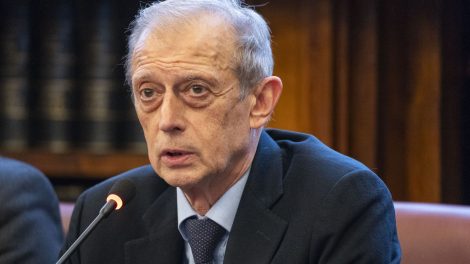
- Among the speakers was Mario Del Pero, professor at Sciences Po and one of Italy’s most authoritative scholars of American politics. In this conversation with Formiche.net, he reflects on the social transformations that fueled Trumpism, the PD’s renewed international activism, and the growing frictions between Europe and the United States.
Professor Del Pero, let us begin with your remarks at the Nazareno. What was the core of your intervention?
My presentation focused primarily on the deeper reasons behind Trump’s political and electoral success. I tried to look at some medium- and long-term transformations in American society: changes in the labour market, the impact of globalisation, deindustrialisation, and the way certain social groups were affected by these processes.
Which groups in particular?
I am thinking above all of a segment of the white male electorate, especially voters with low or medium-low levels of education. Today, this constituency votes overwhelmingly Republican and Trumpian, far more than it did in the past. That shift is also tied to the transformation of the American labor market.
In what sense?
For decades, the U.S. economy has increasingly rewarded those with college access, high-end skills, and the ability to enter the advanced service economy. By contrast, industrial and manufacturing jobs — which once guaranteed decent wages, stability, and prospects even without a university degree — gradually lost centrality. That is where a very deep social and political fracture opened.
The PD seminar also seemed to signal a desire to strengthen dialogue with the United States beyond Trump. Was that your impression?
It was a very analytical and intellectually serious seminar, even before being a political one. I do not usually spend much time in party environments, but I appreciated the fact that Elly Schlein, Gianni Cuperlo, Peppe Provenzano, and other senior figures were genuinely attentive to what was being said. There was listening, exchange, and real discussion.
A useful method?
Very much so. I think it is important for political parties to recover spaces for training and deeper reflection outside the immediacy of day-to-day political confrontation. That was part of the tradition of Italy’s major parties, and in recent years it had somewhat faded.
But there is also a political necessity behind it, correct?
Of course. If a political force aspires to govern a major European and Western country, it needs to understand the United States better. That is essential. If the PD were to take governing responsibility tomorrow, it would have to deal with Washington and with the American administration, whoever is in charge. That makes it necessary to understand the United States more deeply, decode its internal dynamics, and analyse its behaviour with greater awareness.
In recent months, Schlein has intensified contacts with figures from the international progressive camp, from Barack Obama to Mark Carney. How do you read this activism?
As something entirely normal. Politics does not exist under a glass dome. Like-minded political forces, especially across the Western and transatlantic space, have always talked to one another, compared experiences, and exchanged ideas and models.
So this is not new?
Not at all. It is a historical dynamic. European socialism, Western reformism, and even European communism have always looked at foreign experiences. That was true decades ago, and it remains true today.
Did the United States do the same?
Certainly. There is a beautiful book by historian Kiran Patel, The Global New Deal, which shows how Roosevelt’s New Deal was indebted to foreign experiences — from Scandinavia to Mexico, and even, in some respects, fascist Italy. Ideas always circulate. It is perfectly normal that Western progressive forces continue to observe one another today.
In recent U.S. elections, Democrats have posted encouraging results. Is that politically significant?
Yes. From gubernatorial races to local elections and several special contests, Democrats have been outperforming expectations compared with previous years. That tells us there is mobilisation, participation, and activism.
A signal that could matter for European left-wing parties as well?
I would say so. It shows that a progressive force can still reactivate enthusiasm and political participation. Of course, in the United States, this activism is also driven by opposition to Trump. But it demonstrates that the desire for politics is not dead at all.
And the lesson?
That every political force, on the right as well as on the left, must be capable of intercepting that demand for participation, giving it a voice, and turning it into representation.
Many see stronger transatlantic engagement as a way for the PD to build governing credibility in Italy. Is that the right reading?
Yes and no. Transatlantic dialogue does not run only through governments or through Palazzo Chigi. It also passes through research centres, foundations, universities, and think tanks. It is a much broader and more layered network.
Yet today, Italy’s relationship with Washington appears highly centralised around the prime minister’s office.
That is my impression as well. Under this government, foreign policy seems to be controlled to a large extent by the presidency of the Council of Ministers, more than by the foreign ministry.
Especially in the relationship with Trump?
Especially there. At the beginning, there was probably an ambition — rather unrealistic, I would say — to build a special relationship with Trump, perhaps even to present Italy as a bridge between the two sides of the Atlantic. But I would not say that the objective has truly materialised.
So where do Italy-U.S. relations stand today?
I believe they are complicated. And they are complicated because of the kind of foreign policy Washington is pursuing.
For what reasons?
If the United States launches international initiatives without consulting European allies, if it threatens territorial annexations involving the European Union, or if it adopts aggressive trade policies toward Europe, tensions are inevitable. Beyond party affiliations, there is a national interest that every government has a duty to defend.
How much does Trump’s unpopularity in Europe matter in this picture?
A great deal. Trump and his administration are deeply unpopular across the European continent. Anyone engaged in politics must take that into account, because they ultimately have to ask citizens for their vote. If disapproval of Trump in Europe reaches 80 or 85 percent, it is obvious that this becomes politically significant.