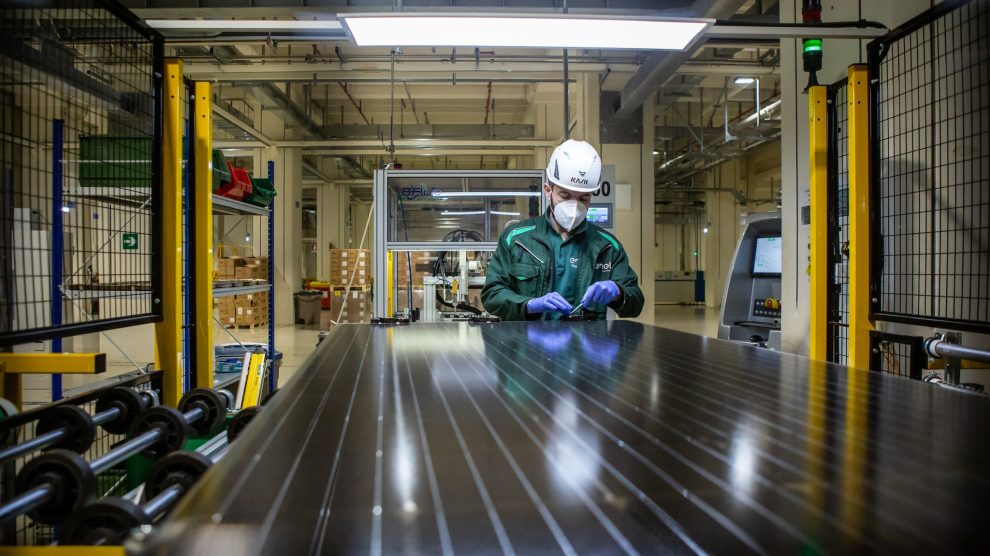
Decoding the news. Enel is moving deeper into the U.S. renewables market. The Italian utility, through its wholly owned subsidiary Enel Green Power North America, has signed an agreement with a U.S. utility to acquire a portfolio of seven operational solar plants with a combined installed capacity of approximately 270 MWdc.
- The deal, announced on May 18, carries a consideration and enterprise value of around $140 million, equivalent to roughly €120 million at the May 15 exchange rate. Enel said the transaction will be financed through cash flows from current operations and is expected to have an impact of approximately $180 million on the group’s net financial debt, including lease-related debt.
Why it matters. The acquisition fits squarely into Enel’s current strategy: accelerating renewable generation growth not only through new developments, but also through the purchase of brownfield assets already in operation in advanced, low-risk markets.
- That approach gives the group immediate production capacity, quicker earnings visibility and lower execution risk compared with greenfield projects still awaiting construction, permitting or grid connection.
- Once the transaction closes, Enel expects the portfolio to contribute around $20 million per year to consolidated ordinary EBITDA.
The U.S. expansion. The portfolio will also broaden Enel’s geographical reach in the United States. Through the transaction, the group will enter Virginia, North Carolina and South Carolina for the first time.
- Two plants are located in Virginia, with a combined capacity of more than 120 MWdc. North Carolina hosts one plant of over 90 MWdc, while four additional facilities in South Carolina account for around 50 MWdc in total.
- Taken together, the assets are expected to generate an average annual output of approximately 0.4 TWh.
What comes next? Closing is expected by the end of 2026, subject to customary conditions precedent, including the regulatory clearances required under U.S. law. Enel specified that these include authorisation from antitrust authorities and the Federal Energy Regulatory Commission.
- For the Rome-based group, the transaction is less about a one-off asset purchase than about reinforcing a broader positioning: scaling up in renewables through operating infrastructure, in markets where demand for clean power, grid capacity and corporate energy security continues to rise.