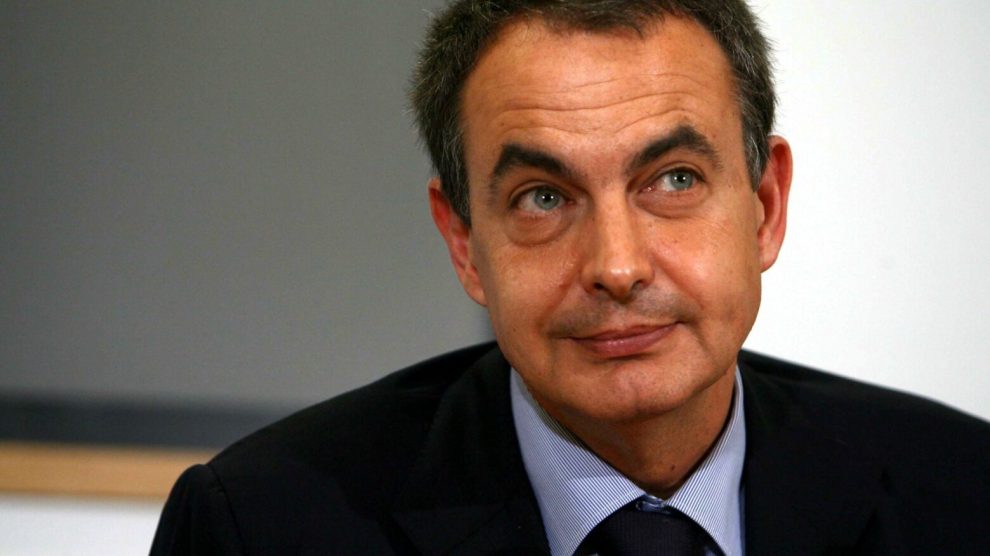
What’s happening: The controversy surrounding former Spanish Prime Minister José Luis Rodríguez Zapatero is still developing, but it is already reigniting a broader debate across Europe: how vulnerable are Western democracies to foreign influence operations?
- “The Zapatero story is still in its early stages, so we need to be cautious in how we assess it,” said Beniamino Irdi, senior fellow at the German Marshall Fund and board member of Decode39, in an conversation with our-sister-website Formiche.net “Additional information is likely to emerge, and this is a judicial matter that will generate many downstream developments.”
- Why it matters: For Irdi, the significance of the case extends beyond the specific allegations and points toward a wider challenge facing Europe.
Why it matters: Irdi argues that both China and Russia have openly identified influence-building among Western elites as a key component of their broader hybrid warfare strategies.
- “Elite capture” does not necessarily mean corruption, he noted. In China’s case, the process is often gradual and long-term, targeting politicians, academics and business leaders through relationship-building and influence networks. Russia’s approach, he suggested, has traditionally relied more heavily on direct forms of corruption.
- The objective is similar: cultivate relationships with individuals occupying politically, economically or technologically sensitive positions and increase leverage within democratic systems.
- “Such figures can be found across the political spectrum,” Irdi said, particularly among movements that are less Atlanticist and less committed to the European project.
Between the lines: The discussion inevitably recalls earlier European cases.
- Asked about former German Chancellor Gerhard Schröder, Irdi described him as a representative example of the dynamics associated with elite-capture concerns. While ideology may not have been the primary driver, Schröder’s close relationship with Moscow, his role in the Nord Stream project and his subsequent positions within Russia’s energy sector all contributed to perceptions of unusual proximity to the Kremlin.
- His reaction following Russia’s invasion of Ukraine further reinforced those perceptions, making it unsurprising that Russian President Vladimir Putin later floated Schröder as a possible European mediator, Irdi argued.
The bigger picture: For Irdi, the real concern is systemic rather than personal.
- “The political and systemic risk is evident,” he said. Russia and China seek to acquire influence and strategic leverage inside Europe through gradual, long-term efforts designed to shape political decision-making, weaken institutions and expand their influence.
- The challenge extends well beyond prominent politicians. Many of the individuals capable of shaping outcomes operate outside public scrutiny while still occupying influential positions within society, business, academia or public administration.
- That, according to Irdi, is why Europe needs a more serious conversation about democratic resilience and institutional integrity.
What they’re saying: Despite Europe’s internal divisions, Irdi sees reasons for cautious optimism.
- He pointed to Hungary as an example of how political systems can sometimes self-correct. Although Budapest has often been viewed as closer to Moscow than many of its European partners, recent developments suggest a partial movement back toward the European mainstream.
- More broadly, Irdi believes debates over how to defend democratic systems may become one of the defining political questions facing Europe in the coming years.
- “Europe’s future should be shaped around countries that do not fundamentally disagree on these questions,” he said. Countries need a shared understanding of the threat, agreement on how to respond and a willingness to act accordingly.
What’s next: The legal and political dimensions of the Zapatero case remain unresolved. But regardless of where the investigation ultimately leads, the episode is likely to intensify a debate that is already growing across Europe: whether democratic institutions are adequately prepared to confront sophisticated foreign influence campaigns operating below the threshold of traditional espionage or coercion.