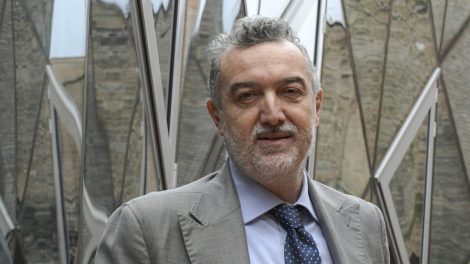
Mario Nobile, director-general of Italy’s Agency for Digital Italy (AgID), attended the World Artificial Intelligence Conference (WAIC) in Shanghai, the flagship event through which Xi Jinping’s government builds international support for a China-centric model of AI governance. Nobile documented his own presence there, posting on LinkedIn from the conference opening — where Xi Jinping himself delivered the keynote address, his first in-person appearance at the event since the event was inaugurated in 2018, and used it to set out China’s AI vision, ”with Chinese Characteristics,” in unusually direct terms.
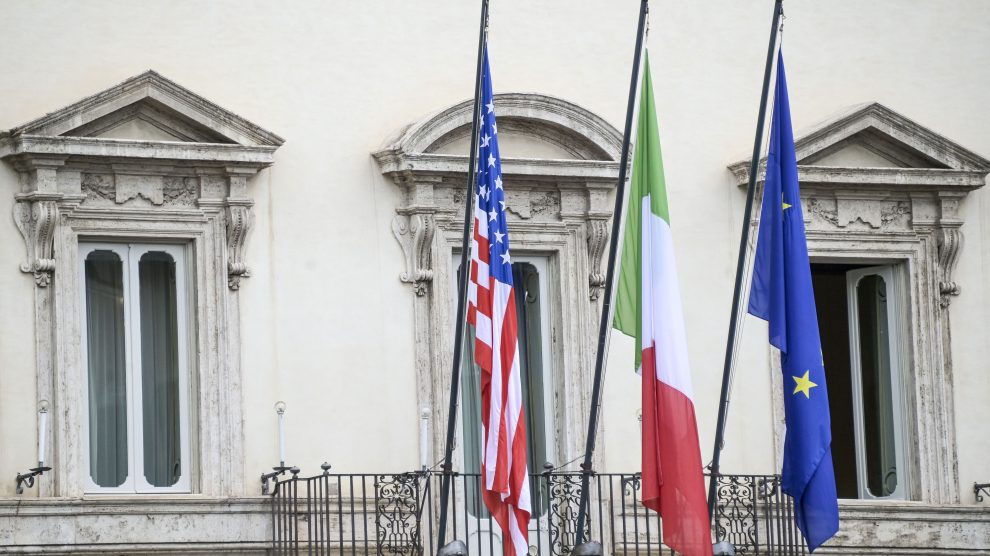
Taken in isolation, this would be an institutional visit. It is not. Only two weeks earlier, Italy had signed the Joint Statement on AI Opportunity, the political declaration underpinning “Pax Silica,” the U.S.-led initiative to build a shared AI ecosystem among Washington and its allies.
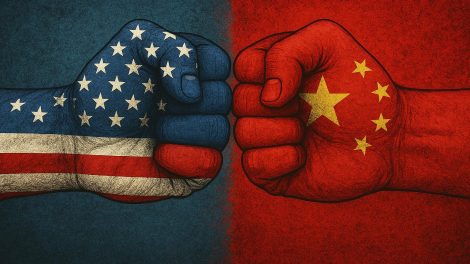
Why it matters: The United States and China are engaged in a contentious competition over artificial intelligence, and there is no third way left in the Washington-Beijing contest over AI.
What WAIC is, and why Xi’s presence changed its weight. The 2026 World AI Conference and High-Level Meeting on Global AI Governance ran in Shanghai from July 17 to 20.
- Xi had previously left the event to his premier; this year he broke that pattern, using the opening ceremony to position Beijing as the leader of an alternative global AI order and to directly contest Washington’s influence over the rules governing the sector, urging countries to seize what he called the historic opportunity of open-source AI and pledging support for developing nations building their own AI capabilities.
- The speech, delivered a day after 29 countries signed the agreement establishing the new Shanghai-headquartered World AI Cooperation Organization (WAICO), was widely read as pitching a China-led coalition as a direct rival to Pax Silica.
- Chinese state media has increasingly portrayed Beijing’s AI strategy as a response to what it calls a U.S.-led attempt to erect an “AI Iron Curtain.”
Why AgID’s role matters. Nobile’s presence at that particular stage is not a trivial detail. AgID is not a peripheral technical body: it sits at the center of Italy’s digital governance architecture, tasked with steering the country’s digital transformation agenda, supporting the rollout of the EU AI Act within the public administration, drafting the technical guidelines public bodies will use to deploy AI systems, and shaping the institutional framework through which artificial intelligence will be adopted across the Italian state.
- Because of that role, the public positioning of its leadership carries political weight that a lower-profile agency’s would not — particularly at a moment when AI governance has become one of the most strategically contested domains between Washington and Beijing.
What he said: According to Chinese state media outlet CGTN, Nobile said on the sidelines of WAIC:
- “This conference is a high-level international event of great significance.”
- ”I fully share the position expressed by President Xi Jinping: the development of artificial intelligence should serve the common good. AI offers enormous opportunities for development, but it is essential that all countries work together to build an effective governance system.”
The contradiction with Rome’s own stated line. Two weeks before Nobile’s trip to Shanghai, Ambassador Armando Varricchio — the special envoy for innovation and new technologies appointed by Foreign Minister Antonio Tajani — signed the Joint Statement on AI Opportunity on Italy’s behalf at the Pax Silica summit in Washington.
- Rome is reportedly weighing formal accession to the initiative in the coming weeks, when Under Secretary of State Jacob Helberg, “the architect of Pax Silica,” is expected in Italy for what could be the occasion on which Rome signs on in full.
- Does Nobile’s appearance in Shanghai complicate that timeline and put the credibility of Italy’s commitment into question?
- Pax Silica and WAIC are not neutral, parallel venues — they are competing platforms for writing the rules that will govern AI standards, certification, data flows and supply chains. A country cannot help build one ecosystem while lending legitimacy to its rival, and doing both within the same fortnight is not a diplomatic nuance — it is a strategic contradiction.
A test of Meloni’s own China policy. The episode is also difficult to square with the broader trajectory Prime Minister Giorgia Meloni’s government has followed since taking office.
- Rome formally ended its participation in China’s Belt and Road Initiative, withdrawing the only G7 country’s membership in Xi Jinping’s signature geopolitical, infrastructure project.
- The government has also made increasing use of its so-called “Golden Power” authority to contain Chinese influence over strategic assets.
- Rome has separately pushed back on the presence of alleged unauthorized Chinese “police stations” operating on Italian soil, and it has launched initiatives such as Buy Transatlantic to steer technology procurement toward trusted partners.
- None of this suggests the government’s strategic orientation toward China has shifted.
What Formiche is asking for. In an editorial, Formiche.net, Decode39’s sister publication, has argued that the government should not settle for a routine diplomatic clarification.
- Rome, the editorial argues, needs to formally distance itself from Nobile’s participation in WAIC and assess whether he can continue to lead AgID — warning that the resulting friction with Washington risks cutting deeper than the Sigonella-Iran episode (in which Italy had technical reasons to support its choices).
- The underlying argument is that Italy’s credibility is on the line precisely as the rules of AI governance are being written, in what is likely to be the defining technological competition of the next three decades — and that on this terrain, a country cannot stand with Washington and with Xi at the same time.