
The quote: “In Russia, the word ‘peace’ has become a synonym for betrayal. Anyone who dares pronounce it in the street is arrested; anyone who exports it to Europe is applauded as a wise statesman.”
- Memorial, Russian human rights organisation and Nobel Peace Prize laureate
The scene. Vagli Sotto is a town of just over 900 residents in the Apuan Alps, near Lucca. In a matter of days, it has become – against its will – a national security case.
- Russian Ambassador Alexey Paramonov and Consul General Kirill Ignatov inaugurated a plaque there dedicated to Darya Dugina, the journalist and daughter of Russian ideologue Alexander Dugin, killed in a car bombing in 2022. The plaque stands inside a “Park of Honour” that already hosts a statue to a Russian special forces soldier killed in Syria and a street named “Russian Heart.”
- Days later, in Formello, just outside Rome, a conference built around the Franciscan tradition is set to bring together the same Paramonov with Iranian, Cuban and Venezuelan representatives. Its title asks what should come after the end of the “Occidens Pacis Ordo” to make way for a “Novus Pacis Ordo.”
- In the same window of time, the Russian embassy harshly attacked the EU’s Operation Irini after an Italian inspection of a shadow-fleet tanker. Meanwhile, narratives about an industrial explosion in Colleferro were pulled into the Russian propaganda circuit, despite Italy’s Defence Ministry ruling out sabotage.
Why it matters. Taken separately, each episode could be dismissed as local folklore, a diplomatic incident or a news item. That is precisely the error cognitive warfare is designed to induce.
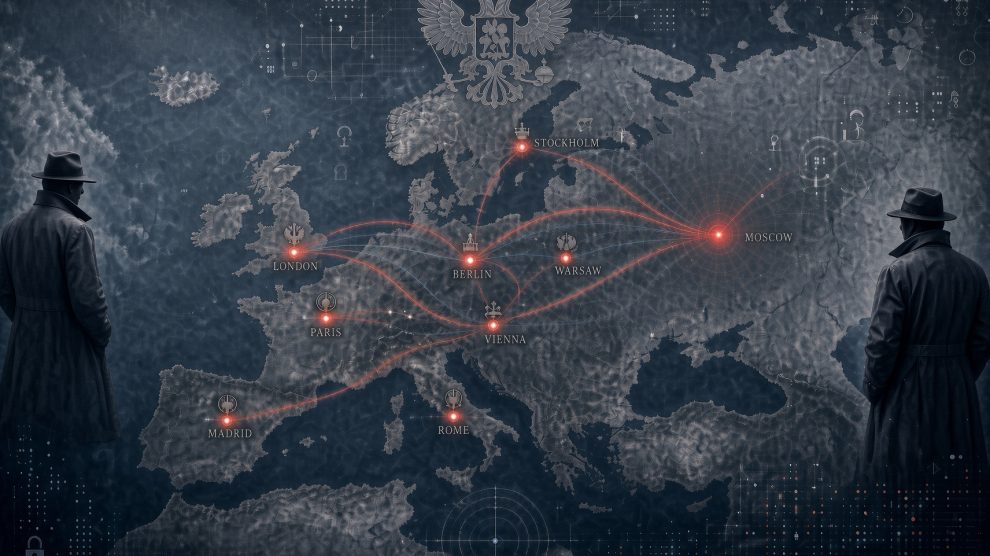
- Viewed in sequence, Vagli, Formello, Irini and Colleferro are not four disconnected events. They are four notes in the same score — played by different instruments, but written according to a script Soviet intelligence tested for decades and that Moscow is now recalibrating for Italy’s local communities, media channels and political sensitivities.
The playbook. From its earliest decades, Soviet power understood that the word “peace” should not be treated only as a shared value or as an objective of international law. It could also be used as an instrument of psychological pressure against liberal democracies.
- This was the core of what Moscow’s intelligence world called aktivnye meropriyatiya – active measures – of which psychological operations were an essential component.
- During the Cold War, through front organisations such as the World Peace Council, the KGB institutionalised a “struggle for peace” built on a precise asymmetry. Western public opinion, moved by genuine pacifist and democratic sentiment, was pushed toward unilateral NATO disarmament. The Soviet Union, meanwhile, offered no reciprocity, presenting itself as the sole bulwark of détente while maintaining massive militarisation at home and repressing dissent across the Warsaw Pact.
The bottom line. The point was never semantic. It was functional. In this scheme, peace was not invoked as an end to hostilities or as respect for international law. It was used as a lever to paralyse the adversary’s defensive capacity, weakening its strategic cohesion from within before any direct military confrontation occurred.
- Updated through contemporary Russian hybrid-warfare doctrine, the same approach has simply changed channels: from Cold War front organisations to local networks, peripheral administrations, cultural events and religious symbolism.
- The objective remains twofold: to empty legal concepts of their meaning, turning “peace” into a synonym for strategic surrender and acceptance of autocratic spheres of influence; and to polarise domestic debate inside European countries at the most delicate moments of their electoral calendars, making support for collective security appear socially divisive and geopolitically exhausting.
The case study. The Formello initiative offers an unusually clear illustration of this mechanism.
- The reference to a “Novus Pacis Ordo” that would overcome the Western order of peace is not a lexical detail. It is an almost literal application of the principle by which the word “peace” is reversed into acceptance of an autocratic-led multipolar order.
- The Franciscan frame – strengthened by the patronage of the national committee for the eighth centenary of Saint Francis’ death – provides Italian, religious and humanitarian legitimacy to an event where Russia, Iran, Cuba and Venezuela have direct institutional representation, and where criticism of the West is central.
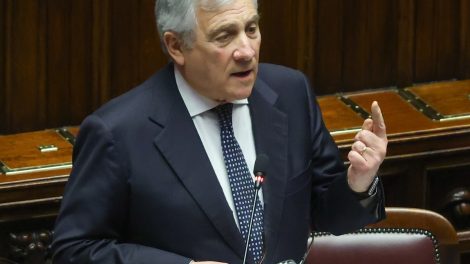
Between the lines. The announced presence of Italian institutional figures, from Justice Minister Carlo Nordio to Senator Maurizio Gasparri, along with representatives of the armed forces, places the initiative exactly where such operations are most effective.
- Even formal or courtesy participation by legitimate public figures can make it harder for the public to distinguish an influence operation from a genuinely interfaith or humanitarian event.
- That is why the question raised publicly by Democratic Party lawmaker Lia Quartapelle – what a minister, a senator and senior officers are doing at an event with the Russian ambassador and such ambiguous intentions – is not merely partisan criticism. It is the natural reaction of someone recognising the pattern while it is still unfolding.
The contradiction. The most coherent, and cynical, feature of this pattern lies in the gap between Russia’s external projection and its internal reality.
- Abroad, Moscow exports instrumental pacifism through diplomats, envoys and influence networks that sponsor conferences and appeals calling for an end to support for attacked nations. At home, the very word mir – peace – is forbidden in practice. Anyone who publicly invokes it, rejects the war or criticises the military apparatus risks prosecution for “discrediting the armed forces” and harsh prison sentences in penal colonies.
- There is no more eloquent contradiction for those willing to read these episodes with the right tools.
The religious front. Another contradiction runs almost in parallel with the Formello event.
- While Franciscan peace and a “Novus Pacis Ordo” are invoked, the head of the Russian Orthodox Church, Patriarch Kirill – born Vladimir Gundyaev, and described in the Mitrokhin archives and later Western intelligence and journalistic reconstructions as a former KGB-linked figure active for Soviet services in the 1970s – has repeatedly and publicly blessed Russia’s war effort in Ukraine, at times framing it as a just, almost sacred war in defense of Russian Orthodox civilization.
- At the same time, Moscow has launched its new State Armament Program for 2027-2036, the most ambitious ten-year rearmament plan in three decades. It envisages the modernisation of the entire nuclear triad, the development of a “universal” air-defence system and the integration of artificial intelligence into military command-and-control systems.
- A religious leader tied to the Soviet security apparatus blessing the weapons, while the Kremlin plans the largest rearmament drive in a generation, is not a marginal detail for a conference held under the banner of Saint Francis. It is the clearest proof that the peace evoked in Formello has little to do with peace as practised – and everything to do with peace as used.
The pattern. What makes the recent sequence important for anyone studying cognitive warfare is not only the repetition of an old script. It is the collective nature of the performance. None of these episodes depends on a single visible director. That is not a weakness. It is the structure of the operation.
- Official diplomacy inaugurates plaques and joins conferences. The embassy amplifies hostile narratives against a European security mission. Parts of Italian politics – not necessarily consciously or organically – lend institutional legitimacy to ambiguous initiatives. Pro-Russian commentators, influencers and social-media pages turn each episode into viral content, often without any declared coordination.
The effect. Each actor plays its own instrument, with its own apparent score and immediate interest: visibility, local consensus, political positioning, ideological conviction. But the combined effect is that of an orchestra performing a coherent symphony.
- The aim is to normalise Russia’s presence in Italy’s public debate, reframe peace in line with Kremlin narratives and gradually erode the political system’s ability to recognise where legitimate opinion ends and influence operations begin.
- This is what distinguishes modern cognitive operations from cruder propaganda: the lack of a visible command, the redundancy of actors and the ability to survive the debunking or failure of any single episode.
The Colleferro test. Colleferro is the clearest example. Italy’s Defence Ministry ruled out sabotage, but the official denial did not prevent images of the explosion from quickly entering pro-Russian disinformation circuits.
- In a well-run cognitive campaign, an event does not necessarily need to be true. It only needs to be useful – and available long enough to feed the next cycle of shares before the correction reaches the same audience.
What to watch. The timing is the key reason this sequence deserves immediate attention rather than academic archiving.
- Italy is approaching the 2027 general election in a phase in which relations with Russia, sanctions and support for Ukraine are already embedded in domestic political competition. Some forces treat them less as national security issues requiring strategic caution than as tools for consensus and electoral positioning.
- That is exactly the condition in which active measures are most effective: a political system already polarised around an issue, where existing fractures need only be amplified, not invented.
The risk. The real risk is not that Italian public opinion suddenly becomes uniformly pro-Russian. It is subtler, and therefore more effective. Every single episode – a plaque, a conference, a diplomatic attack, an unverified narrative – can be absorbed by the day’s political controversy, filtered through partisan convenience and detached from the broader design taking shape.
- That is precisely what active measures were built to produce, from the era of the World Peace Council onward: not direct persuasion, but the fragmentation of the collective capacity to see the whole picture.
The takeaway. Recognising this recurring pattern – built on the promotion of other people’s disarmament and “peace,” while repressing any authentic peace at home – is not a historical exercise.
- With Italy’s 2027 elections approaching, it is the minimum condition for defending the country’s democratic debate from interference that does not need to be hidden to be effective. So far, it has only needed to avoid being recognised as a single orchestra.