Italy has moved to suspend its defence cooperation framework with Israel, in a decision that reflects a broader recalibration rather than a rupture.
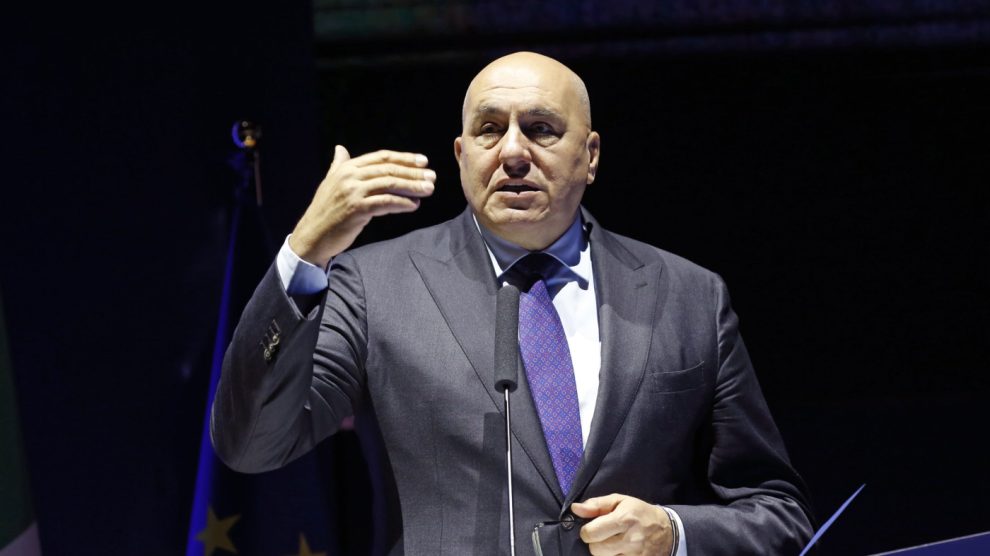
The latest: Defence Minister Guido Crosetto has formally notified his Israeli counterpart, Israel Katz, of Italy’s decision to suspend the bilateral MoU on defence cooperation.
- The move was communicated through an official letter, initiating the suspension process.
- “In view of the current situation, the government has decided to suspend the automatic renewal of the defence agreement with Israel,” Italy’s PM Giorgia Meloni said on the sidelines of an event in Verona.
Immediate reaction from Israel. Israel’s Foreign Ministry downplayed the move, stating that there is “no security agreement with Italy.” “We have a memorandum of understanding from many years ago that has never contained any substantive content,” he tells The Times of Israel. “This will not affect Israel’s security.”
- The response indicates that the operational impact of the suspension is limited, and it reinforces the interpretation of the Italian move as primarily political rather than military — effectively stripping the move of immediate operational relevance.
The agreement. The current framework entered into force on 13 April 2016 for a five-year term and was automatically extended for another five years under Article 9, unless terminated by either party.
- It builds on an earlier memorandum signed in Paris on 16 June 2003 by then defence ministers Antonio Martino and Shaul Mofaz.
- It established a structured framework for:
- Exchange of military materials;
- Joint technological research;
- Cooperation between the respective armed forces.
Scope of cooperation. Over nearly a decade, the memorandum has underpinned collaboration across:
- Defence procurement and industrial policy;
- Research, development and production in the military domain;
- Training, exercises and exchanges between armed forces.
- The scope also covered:
- Import, export and transit of defence materials;
- Joint exercises and operational exchanges;
- Industrial cooperation, licensing and technical information sharing;
- It functioned primarily as a facilitating framework, rather than a binding operational treaty.
What changes. The suspension interrupts an automatically renewing framework (every five years) rather than terminating a fixed-term agreement.
- It introduces uncertainty into:
- Ongoing cooperation projects;
- Future joint initiatives, particularly in industrial and technological collaboration
- The move alters the baseline of bilateral defence relations, even if without immediate operational consequences.
Context: a shifting environment. The decision comes amid a broader international and domestic context marked by rising tensions linked to the U.S.–Israel confrontation with Iran.
- In recent days, Italy has:
- Denied landing access at Sigonella to U.S. aircraft linked to strike missions, citing the lack of prior authorization for combat-related operations — a decision framed as technical but carrying clear political sensitivity.
- Emphasized the need to reopen the Strait of Hormuz, with Prime Minister Giorgia Meloni warning today that disruptions affect not only energy flows but also critical inputs such as fertilizers, highlighting direct risks to economic security.
- Seen political tensions with Washington escalate after Meloni condemned as “unacceptable” remarks by Donald Trump against the Pope, triggering a direct and unusually sharp personal response from Trump, who called Meloni “unacceptable” and questioned her domestic support (“People like her? I can’t imagine it”).
- The public’s increasing sensitivity to domestic issues is evident in recent public debates, opposition strategies, and political signals, such as the government’s defeat in the judicial reform referendum. Some observers interpret this defeat as being influenced by a “Trump effect.”
- Public sentiment has also been shaped by sustained pro-Palestinian demonstrations across Italian cities over the past two years. These protests — often driven by youth participation and at times amplified by external influence operations, including elements linked to hybrid threats — have found political resonance, particularly among left-leaning parties, reinforcing a more cautious domestic environment toward Israel-related policies.
Reading between the lines: Taken together, these developments define the political and strategic environment in which the MoU decision was made.
- They point to a government navigating between alliance commitments and internal constraints.
Decoding the move: The suspension should be read less as a break with Israel and more as a calibrated pause.
- It allows Rome to signal caution without dismantling the broader relationship.
- It preserves room for future re-engagement while responding to current political and strategic pressures.
- At the same time, the limited operational impact — as highlighted by Israel — suggests the move is primarily about positioning.
- Instead, Italy is adjusting its posture in response to a more complex environment, where:
- Geoeconomic risks are rising;
- Domestic consensus is more fragile;
- International alignment requires greater flexibility.
The bottom line: The suspension of the defence MoU is less a break than a signal — with limited immediate operational impact, but clear political meaning. It reflects a broader shift: Italy is becoming more cautious in how it translates strategic alignment into concrete political cooperation.