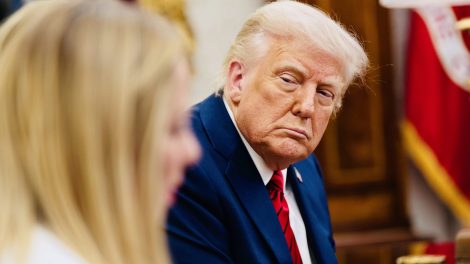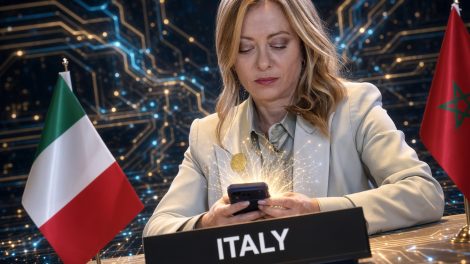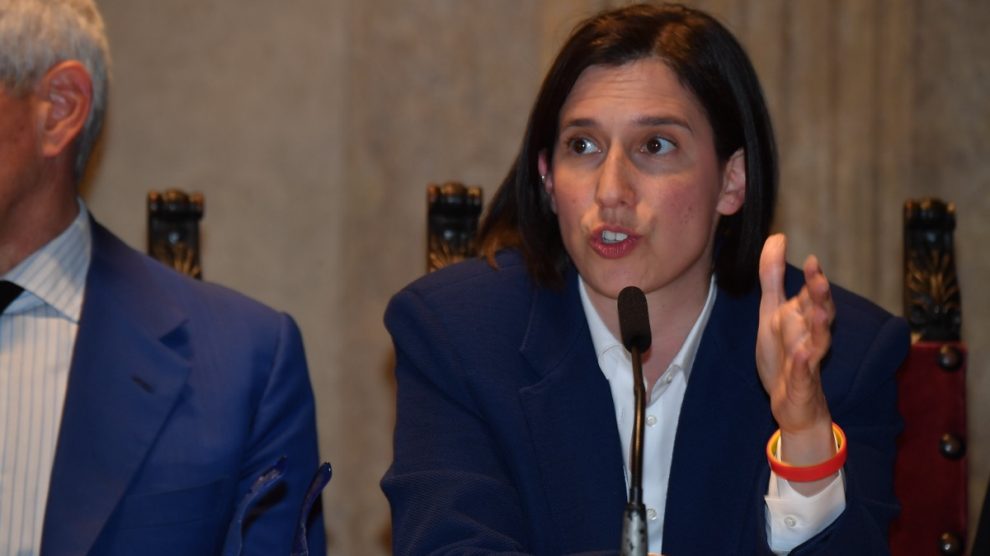
The parallel meetings highlighted something deeper than Italy’s domestic polarization: across party lines, Rome’s political class still sees Washington as its essential external reference point.
Why it matters: Italy’s governing right and center-left minority are cultivating different political networks in the U.S. — but both are investing heavily in the transatlantic relationship.
- Prime Minister Giorgia Meloni is consolidating ties with the Republican and institutional U.S. establishment.
- Elly Schlein, the leader of the main minority party, is attempting to position the Democratic Party within a larger international progressive alliance.
The big picture: For Meloni, the U.S. relationship runs through government-to-government diplomacy, security ties and strategic coordination with the Trump administration. For Schlein, the channel is more political and ideological: progressive parties, multilateral cooperation and opposition to nationalist movements.
- But both tracks point to the same reality: Italian politics continues to treat the U.S. connection as central to its international positioning.
Zoom in: Schlein’s North America push. Schlein is set to attend the Global Progress Action Initiative summit in Toronto, where she is expected to meet Obama and Carney.
- In an interview with Il Messaggero, Schlein described the gathering as an effort to build “a global network to stop the right.” She framed the initiative as a response to forces “dismantling the international order” and said progressives wanted to “rebuild it together.”
- The PD leader also linked the initiative to defending multilateralism and countering nationalist politics across Europe and North America.
- She criticized Trump-era tariffs and warned against what she described as growing commercial aggression toward Europe.
- On foreign policy, Schlein called for stronger pressure on Israel, including suspending the EU-Israel cooperation agreement, and reiterated support for recognition of a Palestinian state.
Zoom out: Meloni’s Washington channel. At the same time, Meloni’s meeting with Rubio underscores the government’s direct line to Washington’s current Republican leadership.
- The Prime Minister has positioned herself as one of Trump’s closest European interlocutors, despite periodic personal attacks from the U.S. president against European leaders including Meloni, while maintaining Italy’s role inside NATO and the broader Transatlantic alliance.
Between the lines: Schlein’s North America trip comes as the Pd leader is also signaling a broader political opening at home.
- At a recent event in Rome dedicated to former Prime Minister Aldo Moro’s political legacy — alongside centrist figures such as Pier Ferdinando Casini and senior Democratic Party leader Dario Franceschini — Schlein framed the future Italian center-left as a coalition built not only around the left, but also around dialogue with moderate and centrist forces.
- The symbolism mattered. Moro’s legacy of political inclusion, compromise, and coalition-building was repeatedly invoked as Democrats look for a wider governing formula ahead of the next general election – and for foreign policy paradigm.
- For Schlein, the message increasingly appears twofold: building international progressive ties abroad and presenting herself domestically as a leader open to broader alliances and longer-term coalition politics.
The bottom line: Even as Italy’s political camps diverge sharply on ideology, they remain aligned on one strategic assumption: staying connected to the United States is still crucial — politically, diplomatically and symbolically. The transatlantic relation matters.