The term defense tech does more than describe the application of new and disruptive technologies to the military sector; it also refers to a genuine paradigm shift in the way the defense industry manages its internal processes, sets priorities, and structures its relationships with the armed forces.
While in the U.S. this approach is embodied by companies such as Anduril and Palantir, in Europe the model—built around speed and scalability—is being brought to the continent by Helsing, a German startup founded in 2021. Airpress discussed this transformation and Europe’s prospects with Frank Dirksen, Helsing’s chief commercial officer.
Q: Helsing was founded as a “software-defined” company and later expanded into hardware as well. How has the company’s strategy changed over these five years?
A: Helsing is still a very young company, founded five years ago, in 2021. Today, we have around 1,300 employees and are primarily based in Europe, with offices also in Munich, Berlin, London and Paris, as well as several other smaller presences across the continent and elsewhere in the world. Our DNA is that of a software-defined company, and our key strength is our artificial intelligence capabilities, which both land and air forces recognize as our distinctive element.
- Then, around two years ago, we decided to move into hardware, too, because we perceived growing demand from several markets and because we felt we could move faster than some of the traditional players in the industry, meaning that we bring our AI and software capabilities on hardware. To date, we believe we are doing well, particularly when looking at developments on the battlefield, starting with Ukraine. In this respect, the feedback we receive from land forces and governments is very positive. I am thinking in particular of our HX-2 Strike Drone, which is constantly used in the extremely demanding environment of Ukraine’s battlefield where – due to its software and AI capabilities – it has one of the highest Mission Success Rates of all mid-range Loitering Munition Systems.
Q: Based also on your direct experience in Ukraine and with the Bundeswehr, which capabilities are you investing in the most?
A: There are several, starting with everything related to the entire reconnaissance and strike cycle. With our own platforms or with third-party sensors — Helsing is completely agnostic in this respect — we build an almost real-time situational awareness picture, which is then presented to an operator who is always “in the loop” or “on the loop”, with specific targets and effectors proposed. The operator can then accept or request changes to the proposal depending on the operational need.
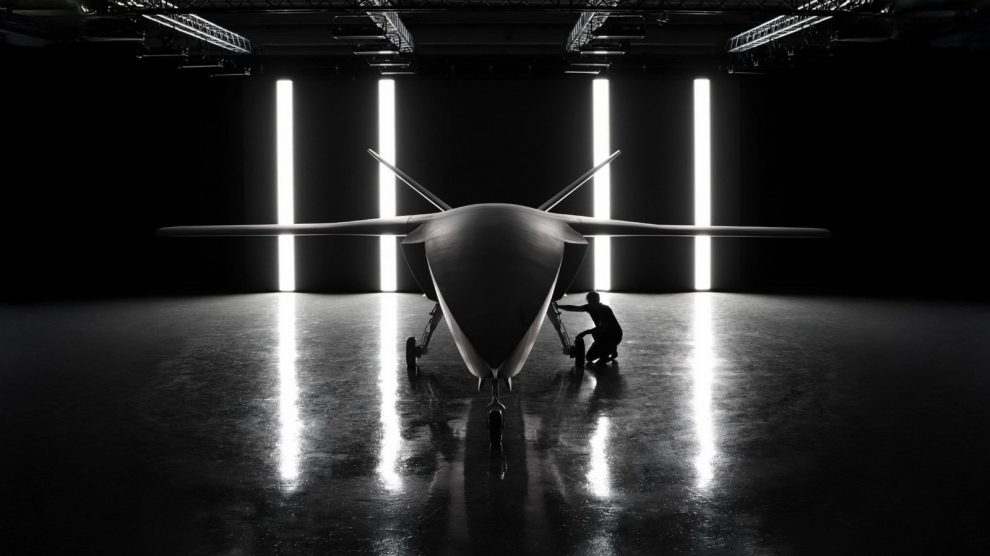
- For the air domain, on the other hand, we have a platform called CA-1 Europa [“Europa” even in English/Italian], an autonomous combat aircraft, currently at the prototype stage. It will be an autonomous, unmanned system, with an operational range of 1,500 kilometers, which doubles in the case of one-way operations. The first test flight is scheduled for the first quarter of 2027, and we aim to introduce it into service together with the German Armed Forces by 2029. We are confident that we will meet this timeline, which is indeed very tight compared with conventional timelines in the aviation sector.
- In the maritime domain, we have both software and hardware capabilities to detect suspicious signals underwater, developed together with some European partners to train the artificial intelligence to flag the specific anomaly instead of handing the operator terabytes of data to process manually.Finally, our most recent area is space, where we have launched a partnership with German companies and founded a joint venture called KIRK, in order to respond to the Bundeswehr’s needs in certain space programs. We are doing this for other countries that have expressed interest as well, but here we are still at an early stage.
Q: In terms of industrial approach, what distinguishes a defense-tech company from a traditional prime contractor?
A: I come from a traditional defense company, and what immediately became clear to me when I moved to a new-technology-oriented organization was speed — namely, the ability to respond to market demand much, much more quickly than others are able to. Sometimes, what causes timelines to expand is the very size of certain organisations, due to internal processes that might have been consolidated over years or decades. Being part of a “young” organization, on the other hand, brings clear benefits in terms of speed, internal progress, alignment with the customer and decision-making speed, which is appreciated by procurement agencies and armed forces across Europe.
- In our case, one day we receive operational feedback and the next day we have already implemented most of it in the system – together with our partners of the armed forces. This speed is what distinguishes the new players. In my view, this is a principle that applies not only to hardware but to the entire approach. It is the same “software-defined” logic already seen in other industrial sectors and, when it comes to European defense, we cannot afford to fall behind on this transition as has happened elsewhere. Today, the most innovative part of the industry thinks first and foremost in terms of software and military artificial intelligence, and only then comes hardware.
- Prime Minister Meloni also recently stated in Parliament that the point is not only how much we spend on defence, but what we spend it on — pointing to tanks worth millions destroyed by cost-efficient drones. Mass and tonnage no longer determine the outcome on the battlefield; software, autonomy and speed of adaptation do.. This shows that Italy has read the military reality correctly and, from what we can see, the Italian Armed Forces are also moving in this direction.
Q: In this ongoing industrial transformation, another key element alongside speed is scalability. What is your approach to mass production?
A: This is a very important point, and to address it I will return to the HX-2 drone, which is currently being extensively used in Ukraine. In southern Germany, we have what we call a “resilience factory”, where over the past twelve months we have massively increased its monthly production.
- I will not provide specific figures, but we have increased production — including that of the entire supply chain for warheads, batteries and other critical subsystems — significantly. In addition, we are further increasing production capacity because we have signed a large contract with the German government which orders loitering munition systems from us for at least around 300 million Euros and for up to 1bn Euros.
- And we are confident that even more orders will come. After all, the capabilities are there and the feedback from the armed forces is excellent. We are also open to establishing local presences in other countries if it makes sense and if market demand justifies it.
Q: How important has the German government’s commitment to defense in recent years been to your expansion? And how do you see the Italian case?
A: Germany is clearly one of our key markets, and we are very grateful for the support we have received from the German government. Berlin is moving quickly and, in my view, is investing the right amount of resources in those new defense technologies. We are happy to give concrete follow-through to this commitment together with the German government.
- In Italy as well, defense spending is growing, and it is remarkable that Italy now sees the battlefield as an environment increasingly defined by drones, where software makes the difference. Italy also has a strong industrial base, with which we would like to work to build another success story, both for the country and for Helsing.
Q: Looking at the broader picture, Europe has technology, expertise, startups, universities and established companies, but struggles to turn them into concrete capabilities. What is needed today to catch up?
A: In my view, everything starts with the willingness of governments. We need to start at the top, with a willingness to invest in these new technologies, making adequate budgets and clear timelines available. This is the foundation on which all industrial players, large and small, then operate. This is what Germany has done and is doing, and I believe it is also what Italy is planning to do.
- On the industrial side, for example, we work with small and large partners depending on the capabilities required, and we are generally open to industrial cooperation. In Germany, we already have a good network of suppliers supporting us, and something similar can also be built in Italy. Personally, I would like to see this happen within the next six to twelve months. If the fundamentals — budgets, timelines and programs — are in place, industry can be just as fast, with the right partners.
Q: Helsing is also active in the United States, giving you a perspective from both sides of the Atlantic. What can Europe learn from the American model?
A: What our American partners do very well, in my view, is test and then make decisions based on the results of those tests. For example, a few months ago, a U.S. Army exercise took place in Lithuania, to which several industrial players were invited. There, our products were tested in an extremely demanding environment, partly even tougher than the operational reality, and I’m happy to say that our strike drone achieved excellent results, over 88% Mission Success Rate, once again.
- This is an important lesson that teaches us to look at what is tested under real conditions and not only at what is written on paper or in a PowerPoint presentation. And it is precisely on the basis of examples like this that an important cooperation between the U.S. government and Helsing is taking shape. We are in fact building a resilience factory in West Virginia that will allow us to bring technologies and products that have already been tested in the field to our American partners as well.
Q. Helsing is often described as Europe’s first neo-prime. How do you see the evolution of the Old Continent’s defense industry over the next few years?
First of all, I believe that every industrial player has its own relevance. In the short term, I think new defense companies will continue to emerge and grow, offering their capabilities to the armed forces and taking part in field demonstrations. That is how it should be, because in the end the best ideas, the best technology and, ultimately, the best products will win. In the medium to long term, I believe that a phase of consolidation is inevitable.
- There cannot be hundreds of companies, each with dozens of products, all of which succeed in the market. I think that at some point there will be around five to ten, European players that will have genuinely developed to become neo-primes on a significant scale. And I believe that Helsing is well positioned to play a very relevant role, now and then.