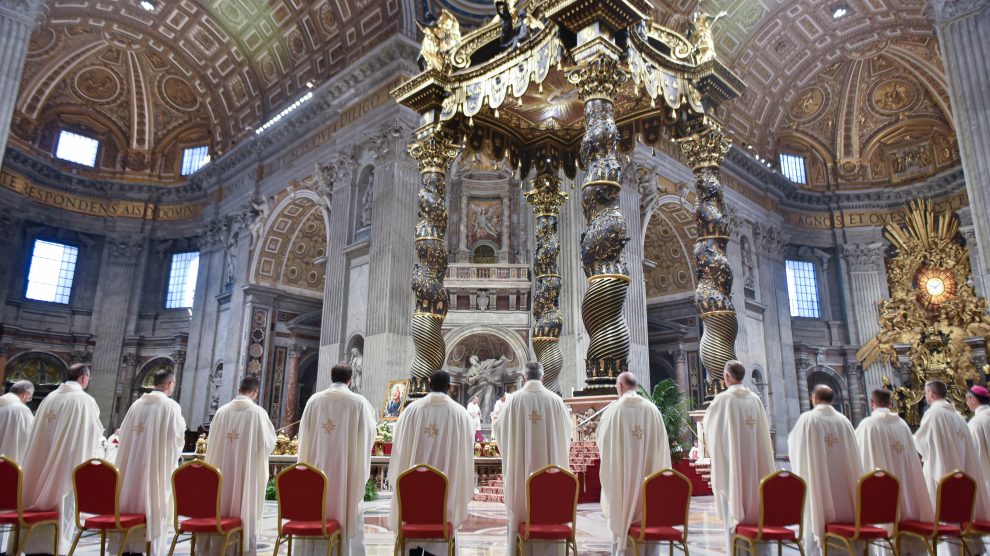
The new “spiral of violence” in the Middle East, evoked by Pope Leo XIV at the Angelus, highlights the absence of a diplomatic voice capable of speaking simultaneously with Washington, Tehran and regional actors. Without a direct channel to the White House, every Vatican appeal risks remaining moral rather than political.
The core issue: “Diplomacy may regain its role and promote the good of the peoples who yearn for a peaceful coexistence founded on justice,” the Pope said on Sunday. But acting on that would require active diplomacy, not just statements. The problem is that the first ground on which the Vatican needs to rebuild credibility is precisely its relationship with the United States.
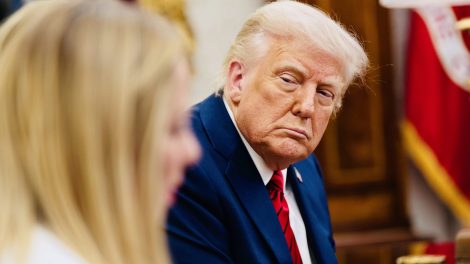
Between the lines: Leo XIV has indirectly criticised several of Donald Trump’s policies — from the use of force in international crises to immigration management — while Washington has ignored or downplayed Vatican appeals. The result is an almost nonexistent dialogue between the two sides. Leo’s predecessor, Pope Francis, criticised Trump’s immigration policies, such as mass deportations, more forcefully.
Why it matters: Without engagement with the leading Western power, the Holy See cannot build any alternative architecture for global mediation, even if supported by other actors.
Zoom in — five examples:
- The Venezuela case: The Pope’s criticism of U.S. operations in the Caribbean and of the handling of the Venezuelan crisis reflects an approach grounded in international law and the sovereignty of peoples.
- But without coordination with Washington, these positions produce no concrete effects — and risk overlooking the suffering inflicted on the population by Nicolás Maduro’s regime.
- The Cuba gap: The Vatican’s recent meeting with Cuba’s foreign minister, while the United States seeks to increase pressure on the Havana regime, risks being read in Washington as further strategic misalignment.
- The immigration clash and the U.S. Church: The confrontation between the Trump administration and the U.S. Catholic Church over immigration and citizenship — culminating in the bishops’ appeal to the Supreme Court against ending birthright citizenship and the Pope’s support for more humane treatment of migrants — signals a tension that goes beyond diplomacy and affects the entire American Catholic space.
- For Washington, it is a matter of internal security and campaign promises; for the Vatican, of human dignity and legality. The absence of common ground further hardens relations with the White House and makes any mediating role impossible.
- The dispute over the U.S.–Europe alliance: In his January address to the diplomatic corps accredited to the Vatican, Leo XIV warned against what he sees as an attempt to “break apart” the transatlantic bond, implicitly criticising Trump’s approach to the war in Ukraine and to European security.
- The Pope insists on Europe’s involvement in peace negotiations, a position that places him at odds with a White House increasingly sceptical of traditional allies.
The structural issue: A new international context has emerged in which traditional multilateral institutions struggle to function. The Vatican could seek a different mediation space, potentially under the Pope’s moral aegis and based on the operational capacity of Vatican diplomats, even distinct from traditional Vatican diplomacy.
The problem: Without at least a minimal understanding of the United States, no new platform can be created or be credible.
What this means for the Middle East now: The absence of an influential Vatican voice in the Iran–U.S.–Israel conflict reflects precisely this structural weakness. The Holy See speaks, but is not perceived as an actor capable of facilitating real compromises.
Bottom line: If the Vatican wants to regain a global mediating role in the new international disorder, it must first rebuild a channel of dialogue with Washington — even with a politically distant administration.
- Without that bridge, pontifical diplomacy risks remaining a respected moral voice but geopolitically irrelevant.