Hybrid warfare is no longer confined to battlefields. It increasingly unfolds across social media platforms, public debate and the structural weaknesses of democratic societies.
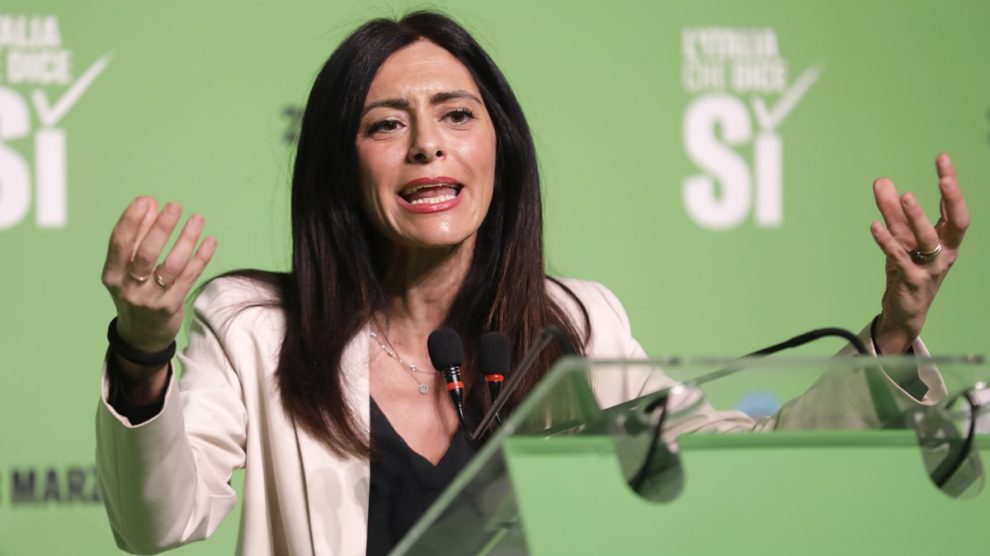
According to Pina Picierno, Vice-President of the European Parliament, Italy has become one of Europe’s most vulnerable countries to foreign influence operations. From Russian propaganda and election interference to the broader challenge of strengthening Europe’s strategic autonomy, Picierno argues that safeguarding democracy today means defending the integrity of the information space while building a more capable and resilient European Union.
Q: According to the latest European report, 88% of detected foreign information manipulation and interference (FIMI) activities are carried out through X. In Italy, events and public screenings have also featured productions linked to Russian state media sanctioned by the European Union. Why does Italy appear particularly vulnerable, and how real is the risk that these operations could influence future elections?
A: Italy is one of Europe’s soft underbellies. According to the latest data, 88% of detected FIMI activity is carried out through X, while a report by Europa Radicale documented 192 episodes linked to the dissemination of Russian propaganda in Italy, many involving films and documentaries produced by media outlets already subject to EU restrictive measures. Last April, for example, a festival in the province of Bologna screened content produced by Russia Today, a broadcaster suspended across the European Union since 2022.
- But it would be too easy to blame everything on external actors. Disinformation thrives where trust has already eroded, where societies are polarized, public debate has deteriorated and citizens feel increasingly disconnected from institutions. Those are vulnerabilities for which we also bear responsibility.
- The political problem is that a significant part of Italy’s political class still refuses to treat hybrid warfare as a national security issue. Some deny it, others downplay it, while others reproduce narratives that are virtually indistinguishable from those promoted by the Kremlin. Hostile actors do not need to invent our divisions—they simply amplify them. Pretending that this cannot also affect electoral outcomes would be deeply irresponsible.
Q: Your legislative proposal is built around the concept of a “democratic shield,” while granting regulatory authorities powers to intervene against certain content and events. How can democracies counter foreign propaganda without sliding into censorship?
A: We must draw a clear distinction between expressing an opinion and participating in an influence operation orchestrated by a foreign state. No one should decide which political opinions are legitimate. I will always defend the right of people to express views that are completely different from my own. But freedom of expression cannot become the Trojan horse through which authoritarian regimes exploit our democratic space to conduct coordinated propaganda campaigns.
- Russia Today and Sputnik have been subject to EU restrictions since 2022 precisely because of their role within the Kremlin’s disinformation apparatus. If material produced by these organisations continues to circulate in Italy through events specifically designed to circumvent those restrictions, we are no longer talking about pluralism. We are dealing with the enforcement of existing rules and the defence of our democratic space.
- Protecting freedom also means preventing authoritarian regimes from weaponising that freedom against democratic societies.
Q: Russian propaganda operates within a much broader ecosystem in which disinformation spreads through social media, increasingly powered by artificial intelligence and political polarisation. Is Russia the core problem, or are we facing a structural vulnerability affecting Western democracies themselves?
A: The vulnerability is structural, and denying that would be a mistake. Russia is currently the principal hostile state actor operating within Europe’s information environment, but it succeeds because it finds societies that are already deeply polarized, weakened media ecosystems, declining public trust and institutions that too often appear distant or ineffective.
- We also have responsibilities of our own. Europe’s slow pace of integration, its inability to move towards a genuine United States of Europe, the persistence of national vetoes and the failure to build a truly common foreign and defense policy all contribute to a perception of weakness. That perception creates fertile ground for influence operations.
- Recognising this does not diminish the Kremlin’s responsibility. Rather, it helps us understand how these strategies work. They rarely create divisions from scratch. They exploit existing fractures, deepen distrust and seek to convince citizens that liberal democracy and the European Union are incapable of protecting them or making decisions.
- Countering hybrid warfare therefore means not only defending our information space but also making our democracies stronger, more effective and more credible.
Q: Italian Senator Carlo Calenda recently warned that future elections could be “distorted.” Looking ahead to Italy’s next electoral cycle, what poses the greatest risk: information manipulation, illicit funding, digital interference, or the infiltration of political debate through divisive narratives?
A: All of them — and increasingly in combination. Modern influence campaigns rely on coordinated networks of online accounts, artificial amplification, seemingly independent websites, manipulated content, local intermediaries and, whenever possible, relationships with political or media actors willing to amplify specific narratives. We have already seen these tactics deployed in several European elections, and it would be naïve to assume that Italy is somehow immune.
- But we should also avoid absolving ourselves of responsibility. A society marked by distrust in institutions, economic insecurity, social frustration and permanent political polarisation inevitably becomes more vulnerable to manipulation.
- Disinformation is effective precisely because it exploits real weaknesses. Its objective is not always to convince people that a particular narrative is true. Often, it is enough to persuade them that no truth can be verified anymore. Once every fact becomes just another opinion, democracy loses the shared ground on which democratic debate depends.
Q: The European Union has developed a growing toolbox to counter foreign interference and hybrid threats. Is the main problem still the lack of instruments, or is it above all a lack of political will to use them?
A: The existing instruments should certainly be strengthened, but above all we need the political determination to use them.
- The European Union now officially recognises foreign information manipulation and interference as a threat to democratic security. It has introduced sanctions, regulatory mechanisms and new instruments to respond. Yet the weakest link often remains at national level, where too many political leaders continue to dismiss hybrid warfare as a secondary issue—or even as an invented one.
- At the same time, Europe must also acknowledge its own shortcomings. Every time we postpone the construction of a genuine United States of Europe, every time we remain paralysed by national vetoes, every time we fail to speak with one voice on foreign policy and security, we hand our adversaries a powerful propaganda tool.
- They can point to a divided and ineffective Europe and tell citizens: “Look, this system simply doesn’t work.” That is exactly the environment in which populism, nationalism and foreign influence operations flourish.
- Defending democracy therefore also means making democracy work better. The fight against disinformation and the project of deeper European integration are not separate challenges — they are two sides of the same strategic task.
Q: Russia is not the only power capable of shaping public debate in Western democracies. Should Italy also prepare itself to counter influence operations from China and, more broadly, the political and economic leverage exercised by major powers?
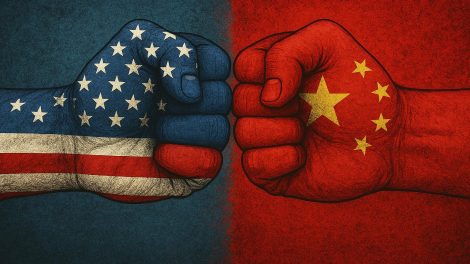
A: Certainly — but without creating false equivalences. Russia, China and the United States are not the same, nor do they employ the same methods.
- Russia is waging a war of aggression against Ukraine, and European institutions have systematically documented its information manipulation campaigns. China pursues different forms of political, economic and informational influence, but it too seeks to expand its strategic leverage abroad.
- The United States, by contrast, remains one of Europe’s closest strategic allies. Yet even within that alliance we must recognise that Washington—now increasingly shaped by the ideology of MAGA—will continue to pursue its own national interests.
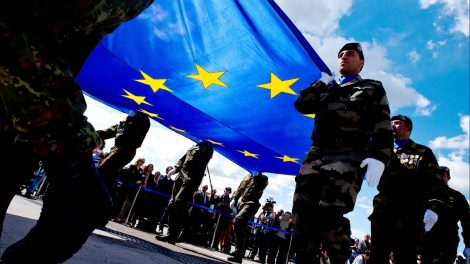
- That is precisely why a stronger Europe is not an alternative to the transatlantic relationship; it is a necessary complement to it. Only a stronger Europe can guarantee greater autonomy and strategic independence. And this is ultimately the central point: Italy on its own can achieve very little. Within a stronger European Union, however, it can achieve a great deal.
- Confronting global technology platforms, major geopolitical powers and increasingly sophisticated hybrid warfare requires common capabilities in technology, intelligence, foreign policy and defence. For any European country, the only meaningful form of sovereignty in the emerging international order is one exercised collectively at the continental level.
- That applies when confronting the Kremlin’s hybrid warfare, when managing relations with Beijing and also when strengthening a transatlantic partnership in which a more capable Europe is able to assume greater responsibilities. The greatest strategic asset Italy can bring to this new geopolitical landscape is Europe itself.
Q: Russia is not the only power seeking to shape public debate in Western democracies. Should Italy also prepare to defend itself against China’s influence operations and, more broadly, against the political and economic leverage exercised by major powers?
A: Russia, China and the United States are not the same, nor do they pursue influence in the same ways.
- Russia is waging a war of aggression against Ukraine, and European institutions have extensively documented its systematic information manipulation campaigns. China operates through different methods, but it likewise pursues a long-term strategy of political, economic and informational influence.
- The United States, by contrast, remains one of Europe’s closest strategic allies. At the same time, we must recognise that Washington — particularly under the influence of the MAGA political movement—will continue to pursue its own national interests. That is precisely why a stronger Europe is not an alternative to the transatlantic partnership; it is a prerequisite for making that partnership more balanced, resilient and sustainable. This is ultimately the key point. Italy, acting alone, has limited leverage. As part of a stronger European Union, however, it can exercise real strategic influence.
- Confronting global technology platforms, major powers and increasingly sophisticated hybrid threats requires common capabilities in technology, intelligence, foreign policy and defence. For European countries, the only meaningful sovereignty in today’s geopolitical environment is one exercised collectively at the continental level.
- That is true when responding to the Kremlin’s hybrid warfare. It is true in managing relations with Beijing. And it is equally true in strengthening the transatlantic alliance by enabling Europe to assume greater responsibility for its own security. Europe is the strongest strategic asset Italy can bring to the emerging international order.