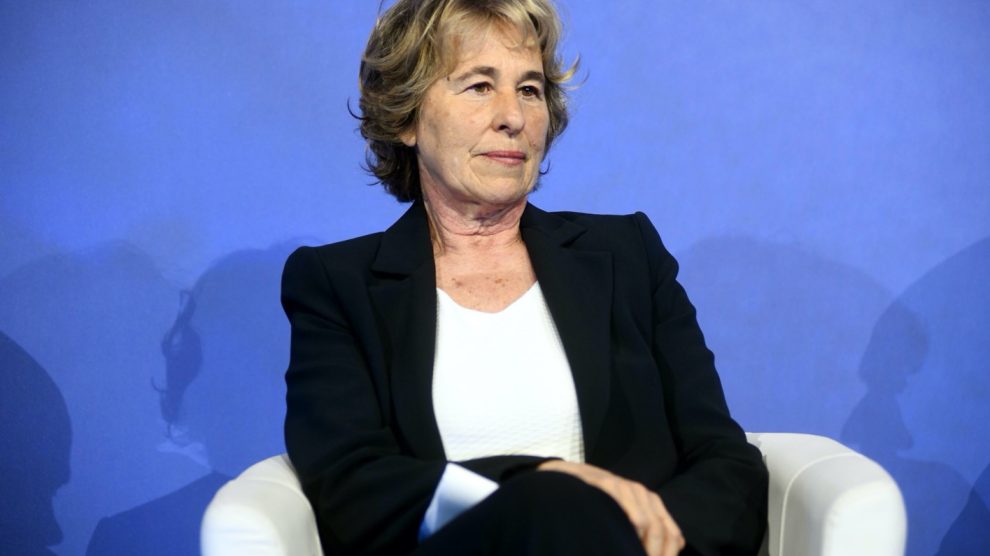
ROME — Writing in the Italian daily Libero on Thursday, Sen. Craxi argued that hostile activity is becoming increasingly systematic and transnational — and that protecting critical infrastructure alone will not be enough.
Why it matters: The warning comes as Italy faces what Craxi describes as a growing mix of cyberattacks, influence operations and attempts to interfere with democratic processes.
- Italy recorded a 47% increase in attacks in the first half of 2026 compared with the same period a year earlier.
- Craxi points to alleged Russian involvement in episodes ranging from the Financial Times’ revelations on the Panama Papers to the Swedish government’s accusations over responsibility for cyberattacks against sports broadcaster SVT.
- The challenge, she argues, extends beyond infrastructure: hostile actors can seek to manipulate public opinion, influence elections and erode citizens’ trust in institutions.
- Her prescription is both national and European: stronger defenses, intelligence cooperation and technological capabilities, coupled with greater public resilience against information manipulation.
The big picture. Craxi’s central argument is that cyber operations should not be viewed as isolated technical incidents.
- She describes a broader hostile strategy stretching from Scandinavia to Germany, France, the Baltic states and other European countries, with Italy also exposed to similar risks.
- The common thread is the potential use of cyberattacks and information operations to put pressure on democratic societies.
- “No one can imagine that Italy is exempt from risks,” Craxi writes, arguing that an open democratic system is inherently vulnerable to disinformation, interference and cyberattacks.
Zoom in: Italy’s exposure. The numbers are moving in the wrong direction. Craxi says Italy registered a 47% year-on-year increase in attacks during the first six months of 2026.
- But her concern goes beyond the volume of cyber incidents. She argues that attacks can target not only networks and infrastructure but also the functioning of democracy itself — through manipulation of public debate, electoral interference and efforts to weaken trust in institutions.
- Italy, she notes, has so far maintained a clear position internationally and within NATO in supporting Kyiv, despite divisions within the governing coalition.
- In Craxi’s framing, that stance also means the country needs to be prepared for hostile pressure.
- Decode39 is continuing to decode the hybrid threats in Italy as well as the cyber and tech global challenge.
Between the lines: Cybersecurity meets democracy. The most consequential part of Craxi’s argument is the widening of the cybersecurity debate from systems to society.
- Protecting networks and critical infrastructure remains essential. But democratic resilience, she argues, also depends on citizens’ ability to recognize manipulation, interference and hostile content.
- That makes media literacy and critical thinking part of the security equation.
Craxi calls for particular attention to young people and the very young, giving them the tools to understand the challenges around them and strengthen their ability to distinguish information from manipulation.
- The vulnerability of the information environment, she argues, does not come only from foreign actors. It is amplified by cognitive biases, polarization, algorithms that reward conflict and business models that incentivize virality over accuracy.
The European angle. For Craxi, national responses are insufficient. She calls for an integrated European strategy against foreign interference, including stronger intelligence cooperation, shared technological capabilities and reinforced resilience of democratic processes.
- That also means protecting elections from digital manipulation and hostile operations while investing in cybersecurity and building common standards and capabilities.
- The underlying message is that fragmented responses to cross-border threats leave European democracies more exposed.
What we’re watching. Craxi’s intervention puts two tracks of the security debate together: governments need to harden infrastructure and improve their ability to detect and counter cyber operations, while societies need stronger defenses against attempts to manipulate the information environment.
The bottom line: For Craxi, Europe’s cyber challenge is no longer simply about protecting computers and networks. It is about protecting democratic systems — and Italy should not assume it sits outside the threat landscape.