Iran’s threat to shipping through the Bab el-Mandeb — following tensions around the Strait of Hormuz — signals how the war is expanding into a wider maritime contest in the Red Sea. With roughly a tenth of global seaborne trade passing through the chokepoint, and Iran-linked actors such as the Houthis able to target vessels, the risk is no longer confined to the Gulf.
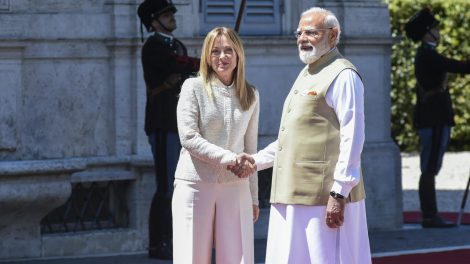
Against this backdrop, Giorgia Meloni’s visit to Algeria, aimed at securing energy supplies and reinforcing bilateral ties, offers a secondary but telling indicator of how the conflict is already reshaping North Africa’s strategic and economic landscape, with implications that extend to Europe.
A conflict with expanding ripple effects. What is emerging is not a simple spillover of instability, but a layered process in which economic shocks, security realignments and geopolitical opportunism intersect, reshaping regional dynamics over the medium term.
- “I think that the regime in Iran is actually daring to believe in a future where it not only survives the current campaign, but emerges with a degree of strategic swagger,” said Alia Brahimi, non-resident senior fellow at the Atlantic Council, in a conversation with Decode39.
- “Some version of the Islamic Republic might survive, wrapped up in a narrative of victimhood, possibly vindicated in its quest for a nuclear weapon and strengthened by the display of its own power.”
- Such an outcome, she argued, would not remain confined to the Middle East. “Iran could make itself known and felt in North Africa,” she added, pointing in particular to the Sahel as a key area to watch.
Immediate economic pressure, delayed security effects. The first effects of the conflict are already visible — and they are primarily economic. According to Emadeddine Badi, also a non-resident senior fellow at the Atlantic Council, the initial impact is less about security and more about energy vulnerability.
- “What you’re already seeing right now is that the more fuel import-dependent states are directly affected economically,” he explained. Countries such as Egypt and Libya are particularly exposed, as rising energy costs quickly translate into broader socioeconomic pressure in already fragile contexts.
- This distinction between immediate economic stress and delayed security consequences is central to understanding the evolving landscape. Security repercussions are not immediately felt in the most exposed North African countries, where the impact remains largely economic for now. Instead, the dynamics are shifting geographically — and intensifying.
- “It will be more felt in the Sahel, and particularly in Sudan, where some of the groups already have links with the IRGC,” Badi said, referring to Iran’s Islamic Revolutionary Guard Corps. Among these is the al‑Baraa ibn Malik group, active primarily in Khartoum and central Sudan, with projections along corridors linking the country to Darfur and the Sahel.
Sudan as a strategic hinge. In this reading, Sudan emerges as a critical node in a broader arc of instability stretching from the Red Sea to the Sahel. Badi pointed to recent political decisions, including the designation of Islamist groups as terrorist organisations, as potential accelerants.
- “If you listen to what some of those groups are saying now, the message is essentially: we were not terrorists, but now that you put us in that box, we will intensify cooperation with Iran and with the IRGC,” he noted, highlighting how such dynamics could drive further radicalisation.
- The implications extend beyond Sudan itself. A strengthening of ties between local armed actors and Iranian-linked networks could reshape arms flows and influence multiple theatres across the Sahel.
- “It might have an impact on the types of weapons that you see flowing from Sudan into the broader Sahel,” Badi added, pointing to a gradual but significant transformation of the regional security ecosystem, also through existing trafficking corridors.
Russia and converging external interests. Karim Mezran, director of the North Africa Initiative at the Atlantic Council, introduced an additional layer of complexity: the potential role of Russia.
- “If the war continues, is Russian involvement possible? Could Moscow use the assets and relationships it has in the region to put pressure on US allies?” he asked, pointing to Russia’s established presence in Sahelian countries such as Mali and Niger, as well as its logistical footprint in eastern Libya.
- In this context, a convergence between Russian and Iranian interests appears plausible. “It would make sense for Iran to look to those states to deepen cooperation,” Brahimi said, identifying Niger as a possible hub.
- She also pointed to the existence of Hezbollah-linked networks in West Africa as potential channels of projection.
The Red Sea and the maritime dimension. At the maritime level, the Red Sea corridor is emerging as another axis of concern. Iran’s longstanding interest in establishing a naval presence in Sudan takes on renewed significance in the current context.
- “Iran is searching for a naval base on the Red Sea, in Sudan,” Brahimi noted. Such a foothold “would enable it to exert control over maritime traffic from both sides,” particularly in combination with Tehran’s ties to the Houthi movement in Yemen.
- The Houthis’ role appears both immediate and latent. Their current posture may reflect strategic timing rather than reduced capability.
- “There already exists a smuggling corridor between the two sides,” Brahimi said, referring to links between Yemen and the Horn of Africa. “One tactic they are waiting to use is to create a second front in the Red Sea to divert US and Israeli capabilities.”
- “I don’t think the Houthis are out of this conflict — I think they are being kept for later,” she added.
- Badi emphasised the group’s autonomy: “They have a relationship with Iran, but they also have their own agency.” This could translate into a dual strategy combining pressure on Bab el-Mandeb — particularly on energy flows — with an expansion of arms transfers and influence into Sudan.
- Such a development would directly affect one of the world’s most critical chokepoints, linking the Red Sea to the Suez Canal and, by extension, global trade routes between Asia and Europe.
Regional realignments and the Turkish variable. Overlaying these dynamics is a broader process of regional realignment, as middle powers reposition themselves.
- Turkey stands out as a key variable. According to Brahimi, Ankara would not necessarily oppose a strategic weakening of Israel, while still balancing this stance with its Nato commitments. For Badi, Turkey’s trajectory will depend heavily on evolving regional alignments.
- “You’re increasingly seeing Israel’s foreign policy apparatus saying that after Iran, Turkey is next,” he noted, suggesting that this perception could shape Ankara’s alliance-building efforts.
- A decisive factor will be the level of division within the Gulf — in other words, the widening gap between regional players. In recent days, the United Arab Emirates have been more explicit in supporting the idea that the US and Israel should “finish the job,” while Saudi Arabia has adopted a more cautious stance.
A widening strategic geography. Taken together, these dynamics suggest that the war with Iran is not a contained conflict, but a catalyst for a broader reconfiguration stretching from the eastern Mediterranean to North and West Africa.
- What is at stake is not only the balance of power in the Middle East, but the stability of interconnected regions where economic fragility, armed networks and external interventions overlap.
- In this sense, North Africa and the Sahel are no longer peripheral to the conflict: they are becoming integral to an increasingly expansive and interconnected strategic geography.
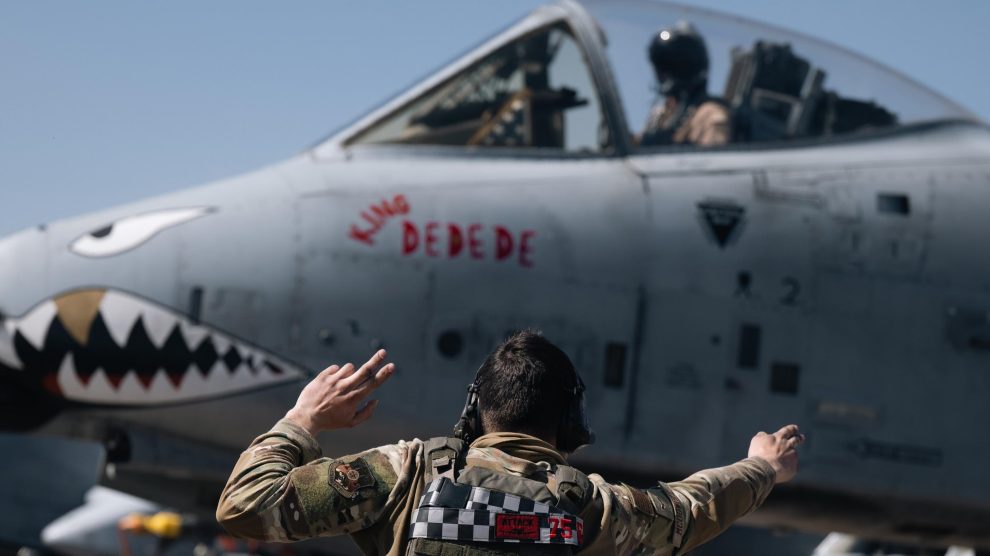
(Photo: X, @CENTCOM)