
TOKYO — Economic security is increasingly becoming one of the organising principles of international politics. The signing of the San Francisco Declaration on the Secure Foundations of Enduring Prosperity, promoted by the United States, provides further evidence of this shift. Protecting supply chains, securing access to strategic technologies and reducing industrial dependencies have become matters of national security. Washington is seeking to translate this awareness into a framework for international cooperation that could potentially outlast the current Trump administration.
Japan offers a particularly revealing perspective on the implications of this transformation. Tokyo began examining the vulnerabilities created by its economic interdependencies long before supply chain security became a shared priority across European and other Western capitals in the aftermath of the Covid-19 pandemic and Russia’s full-scale invasion of Ukraine. Over time, it has developed a comprehensive set of public policies that now offers valuable insights for the European Union, where discussions about a more coordinated framework for economic security among major democratic economies have gained momentum.
- “I would argue that Japan has been the leading state for economic security for several reasons,” says Akira Igata, Project Specially Appointed Lecturer at the Research Center for Advanced Science and Technology at the University of Tokyo, during a conversation in the Japanese capital. “Japan is not just looking at the critical mineral supply chain diversification. This is only a part of something bigger.”
- The main reason for Tokyo’s pioneering role, he argues, is the Economic Security Promotion Act (ESPA), adopted in 2022. The legislation provides a comprehensive framework covering several dimensions of economic security, from the resilience of critical infrastructure and the protection of strategic technologies to supply chain diversification. Under its supply chain provisions, the government can subsidise up to 50 per cent of private-sector investments aimed at reducing vulnerabilities in the procurement of designated strategic goods.
- For Igata, the essential point is the breadth of Japan’s approach. ESPA represents the legislative culmination of a strategic outlook that has influenced Tokyo’s national priorities for nearly two decades, shaped in part by the vision of the late prime minister Shinzo Abe. That approach is also increasingly relevant to the growing bilateral economic security dialogue between Italy and Japan.
China’s lesson and the pursuit of resilience. The origins of this approach go back more than a decade, when tensions with Beijing over the Senkaku Islands demonstrated how access to raw materials could become an instrument of political pressure. More recent Chinese restrictions on rare earth exports have further reinforced Japan’s understanding of the relationship between trade and national security.
- Tokyo has consequently developed a multifaceted strategy in which geographical diversification, research and development, materials recycling and strategic stockpiling serve complementary purposes.
- Igata points to the role of JOGMEC, the Japanese government-affiliated organisation responsible, among other activities, for maintaining strategic reserves of critical minerals. Such stockpiles can help cushion the impact of supply disruptions, although they inevitably provide only temporary relief. The practice of stockpiling, now increasingly discussed in Europe, is therefore one component of a broader resilience strategy. Italy, for its part, is seeking to develop a national role in European stockpiling, recycling and critical raw materials processing.
Another priority is reducing technological dependence on particular materials. The Japanese government, primarily through the Ministry of Economy, Trade and Industry (METI), supports research programmes aimed at developing components and production processes that require fewer difficult-to-source minerals or allow manufacturers to substitute alternative materials.
- Diversification nevertheless presents considerable challenges. Countries such as Pakistan — which recently hosted an Italian delegation exploring potential cooperation on critical minerals — Zambia and South Africa possess important resources, but security conditions, electricity availability and infrastructure reliability can undermine investment viability. Australia and Canada offer different operating environments, although higher labour costs and stricter environmental regulations affect the economics of production.
- “Japan and other countries that need these critical minerals are saying we have to look at every single option available even if it doesn’t make perfect economic sense because they need it for security issues,” Igata explains.
- His assessment captures one of the defining dilemmas of contemporary economic security: how much should governments and businesses be prepared to spend to reduce strategic dependencies, and what degree of economic inefficiency is acceptable in exchange for greater resilience?
Where economic security meets protectionism. Igata identifies four objectives that are increasingly difficult to pursue simultaneously: economic efficiency, security and resilience, environmental protection, and the safeguarding of human rights. He describes this as a “quadrilemma”, since advancing one objective may require compromises on another.
- Japan’s semiconductor industry offers a particularly revealing illustration. Tokyo is investing substantial public resources to rebuild domestic manufacturing capabilities, raising questions about the relationship between strategic autonomy, industrial competitiveness and government intervention.
- Rapidus, the Hokkaido-based company developing advanced two-nanometre semiconductors, is a case in point. The project could strengthen Japan’s technological capabilities, but it also raises questions about the economic sustainability of pursuing extremely expensive domestic production.
“How much security is enough?” Igata asks. The presence of Taiwan’s TSMC, which is expanding its manufacturing operations on the southern island of Kyushu, adds another layer of complexity. Tokyo must balance support for national industrial champions with the benefits of attracting foreign technology and investment, including the possibility of achieving the highest levels of manufacturing sophistication.
- For Igata, the risk arises when economic security becomes an overarching justification for industrial policies that increasingly resemble protectionism. Complete technological self-sufficiency, he argues, is effectively impossible.
- The significance of the Japanese approach therefore also lies in its recognition of these limitations. Strengthening economic security requires selective intervention, careful assessment of costs and a realistic understanding of national vulnerabilities.
Pax Silica, Washington and Europe’s strategic potential. This is where Japan’s experience intersects with the emerging American approach, reflected in initiatives such as Pax Silica — which Italy formally joined in July, alongside Japan and other partners — and the broader strategic direction expressed in the San Francisco Declaration.
- Igata considers Pax Silica’s underlying strategic direction sound, although he remains cautious about its practical implementation. “The question is, can they deliver?” he says. “I think the question is still an open one.”
- He draws a parallel with the Free and Open Indo-Pacific (FOIP) concept, originally promoted by Japan and subsequently embraced by the first Trump administration. At the outset, the American approach lacked a clearly defined operational framework, but its strategic objectives gradually evolved into concrete policies.
Igata suggests Pax Silica could follow a similar trajectory. Washington increasingly regards the initiative as a framework for restructuring global technology supply chains, with Italy identified as an important partner in this effort. The involvement of European countries, alongside the European Union as a political entity, is a positive development, particularly given the indispensable role of Dutch technology in advanced semiconductor supply chains.
- Yet the conversation also reveals a more fundamental question concerning relations between Japan, Europe and the United States.
- Tokyo continues to regard Washington as an indispensable partner despite growing uncertainty about American priorities. In Europe, by contrast, the United States is increasingly perceived as a potential source of economic vulnerability and, to some extent, insecurity, alongside China.
- This divergence could complicate cooperation between two partners whose strategic and economic interests otherwise offer considerable scope for closer coordination.
- Igata believes Europe’s potential remains underestimated within Japan’s own strategic debate. Its combined market, investment capacity, technological expertise and skilled workforce could make it a much more influential partner in managing global interdependencies.
- The principal difficulty, however, may lie in the different perceptions of the United States in Tokyo and Brussels, particularly as the Trump administration’s policies become increasingly difficult for European governments to interpret.
What Italy can learn from Japan. Perhaps the most relevant lesson for Italy concerns Japan’s ability to translate strategic awareness into operational capabilities. Igata acknowledges that discussions of economic security have reached an advanced level within European institutions, but he also identifies significant disparities in implementation among member states. France and Germany, he notes, have developed greater awareness and more sophisticated approaches, while Italy appears to have remained comparatively behind.
- Italy’s participation in Pax Silica and international critical minerals initiatives provides a starting point. The Japanese experience nevertheless suggests that joining new partnerships must be accompanied by a coherent national strategy capable of identifying industrial vulnerabilities, mobilising investment and supporting long-term research programmes. These priorities also resonate with concerns raised by Italy’s industrial sector about the structural risks created by critical raw material dependencies.
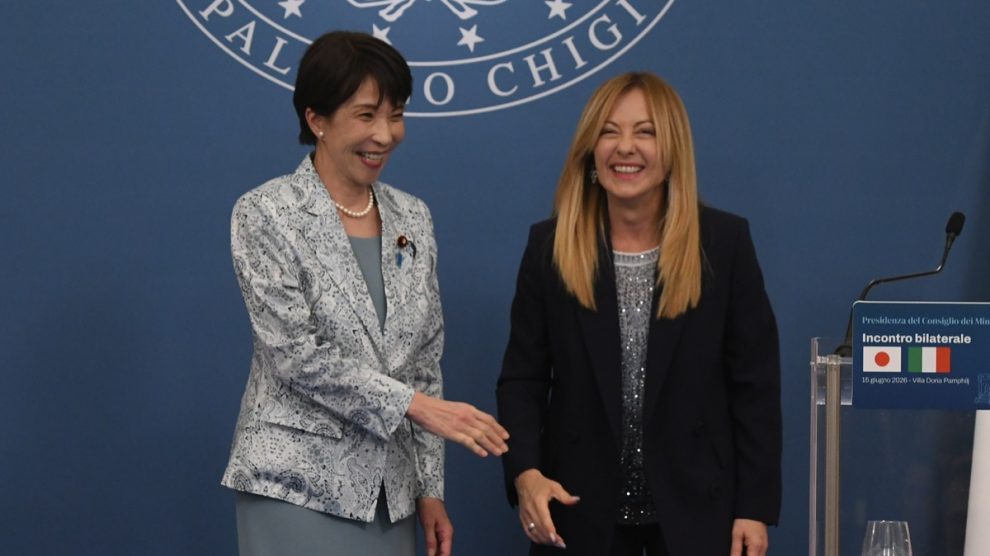
- The foundations for deeper cooperation already exist. Rome and Tokyo have signed an intergovernmental memorandum aimed at strengthening supply chain resilience, making economic security a growing component of their bilateral relationship. The partnership also forms part of a wider strategic convergence encompassing advanced technologies, industrial cooperation and defence.
One example comes from Japan’s efforts to develop technologies for extracting critical minerals from the seabed near Minamitorishima. The project remains technologically demanding and far from commercial viability, requiring years of sustained investment and experimentation.
- Its strategic significance lies in the time horizon of the policy itself. Reducing dependencies often requires decisions whose benefits may only materialise many years later.
The bottom line: The transformation reflected in the San Francisco Declaration makes this long-term perspective particularly relevant for both Japan and Italy. In an international system where security, technology and access to resources are increasingly interconnected, the ability to anticipate vulnerabilities matters as much as the capacity to respond to them.
- Igata captures the point in a remark that could serve as a message to policymakers in Rome: “The best time to start was yesterday.”